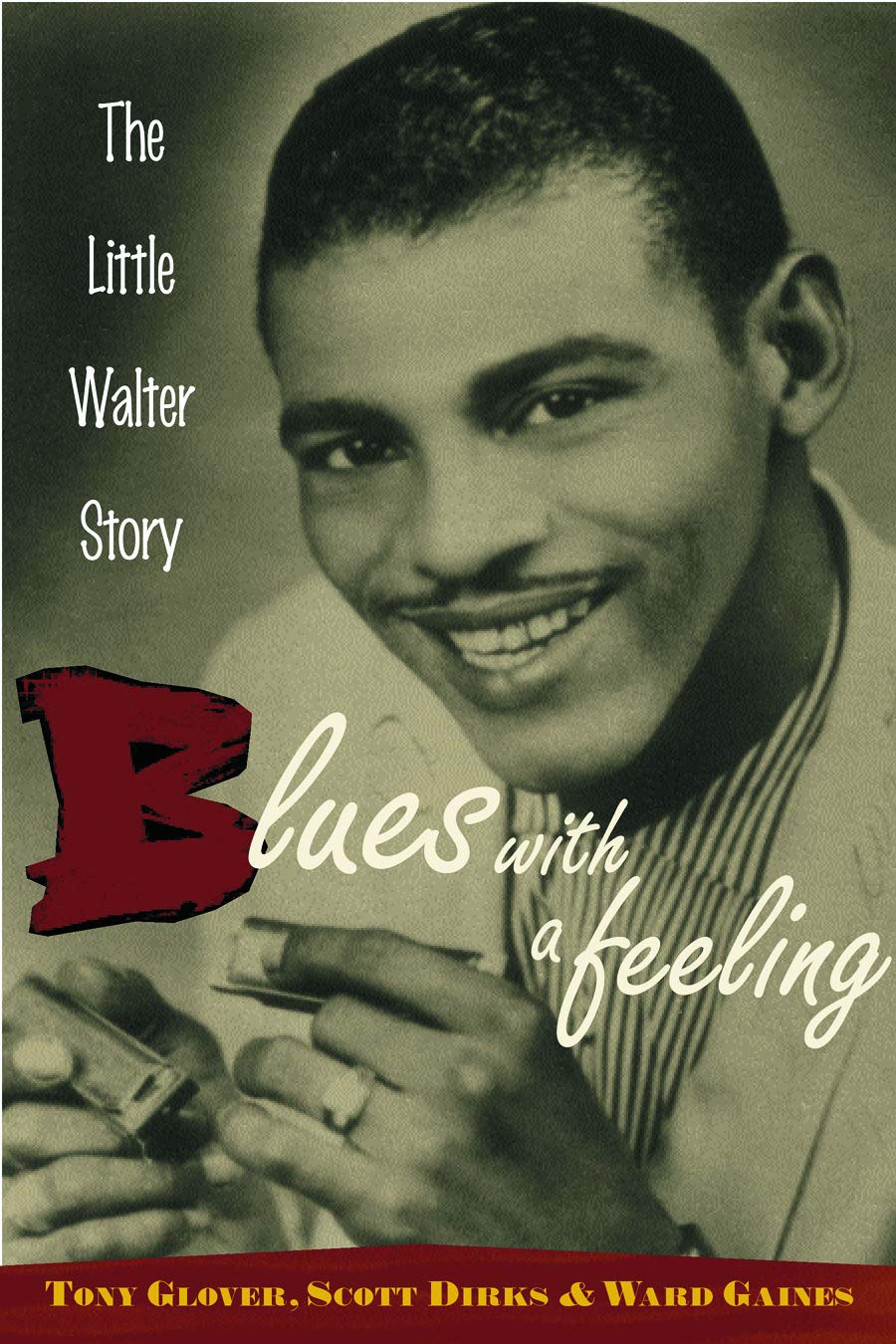



Whenever you hear the prevalent wailing blues harmonica in commercials, film soundtracks or at a blues club, you are experiencing the legacy of the master harmonica player, Little Walter. Immensely popular in his lifetime, Little Walter had fourteen Top 10 hits on the R&B charts, and he was also the first Chicago blues musician to play at the Apollo. Ray Charles and B.B. King, great blues artists in their own right, were honored to sit in with his band. However, at the age of 37, he lay in a pauper's grave in Chicago. This book will tell the story of a man whose music, life and struggles continue to resonate to this day. Little Walter (born Marion Walter Jacobs in 1930) was perhaps the finest Chicago-style blues harmonica player of all time. Learning from such greats as Sonny Boy Williamson, he rose to superstar status as sideman to blues giant Muddy Waters and took the lowly harmonica to a place of prominence as an expressive, powerful electrified lead instrument of almost vocal qualities. Collaborating via e-mail, noted blues scholars Glover, Ward Gaines, and Scott Dirks unearthed important information on the artist's shadowy life through interviews and library research. They paint a picture of Walter as a fiery, independent soul who lived fast and loose and died tragically as a result of a street fight at the age of 37. But for his vast musical contributions, all modern blues harmonica players certainly owe a debt to this musical pioneer. A pleasant read intended for a lay audience, this is the only biography available on Walter, and all public and music libraries with blues aficionados should add it to their collections. Bill Walker, Stockton-San Joaquin Cty. P.L., Copyright 2002 Cahners Business Information, Inc. Blues-harp blower Tony "Little Sun" Glover and his collaborators say Little Walter Jacobs "was to harmonica blues what Charlie Parker was to jazz saxophone." Jacobs' playing, much of it in Muddy Waters' band, "set the standard" for and "creat[ed] much of the musical language" of the modern blues harp. Bedeviled by a roving eye for the ladies (one of his best-known songs, "Boom Boom, Out Go the Lights," however, seems a simple statement of misogyny) and addictions that compromised his health, Jacobs was also the epitome of the urban bluesman. "Coupling his small 10-hole Hohner Marine Band harmonica with . . . cheap microphones," he "easily overloaded public address amplifiers" in the 1940s, but then he incorporated "the distortion and harsh tones produced when pushing amplifiers beyond their intended limits." That leads the authors to liken his innovations to the groundbreaking electric guitar tactics of Jimi Hendrix in the '60s. An excellent shelfmate for Robert Gordon's recent Muddy Waters biography, Can't Be Satisfied [BKL Ap 1 02]. Mike Tribby Copyright © American Library Association. All rights reserved "Maybe the best book I've ever read concerning music or any music personality." -- Blues Notes "Indispensable." -- The Times (London) "Noted blues scholars...paint a picture of Walter as a fiery, independent soul." -- --Library Journal "The story of this ultimately deeply-troubled genius progenitor of contemporary blues harmonica is unfolded in an enthralling manner by a triumverate of authors notably well-qualified for the task." -- Juke Blues "This is undoubtably the book that Walter's status merits and is recommended unreservedly." -- Juke Blues "Given his standing in the world of blues, it's amazing that it has taken so long for an in-depth book on Marion Walter Jacobs to appear, but be in no doubt that the wait has been well worth it. Reading like a novel, but one which even Walter Mosley might have struggled to plot with credibility, the story of the ultimately deeply-troubled genius progenitor of contemporary blues harmonica is unfolded in an enthralling manner by a triumvirate of authors notably well-qualified for the task." -- Bill Moodie, Juke Blues (UK) Tony Glover has been a professional musician/writer since 1962. He is the author of a best-selling guide to playing the blues harmonica, in continuous print for over 4 decades. He has performed in a legendary blues trio with "Spider" John Koerner and Dave Ray off and on since the 1960s. He lives in St. Paul, MN. Ward Gaines is a graphic designer, art restorer and professional musician, and is a noted writer and researcher on the blues. He lives in Washington, DC. Scott Dirks has written for blues magazines, hosted blues radio, produced blues recordings, and performed in blues bands over the last 20 years. He lives outside of Chicago, Illinois.