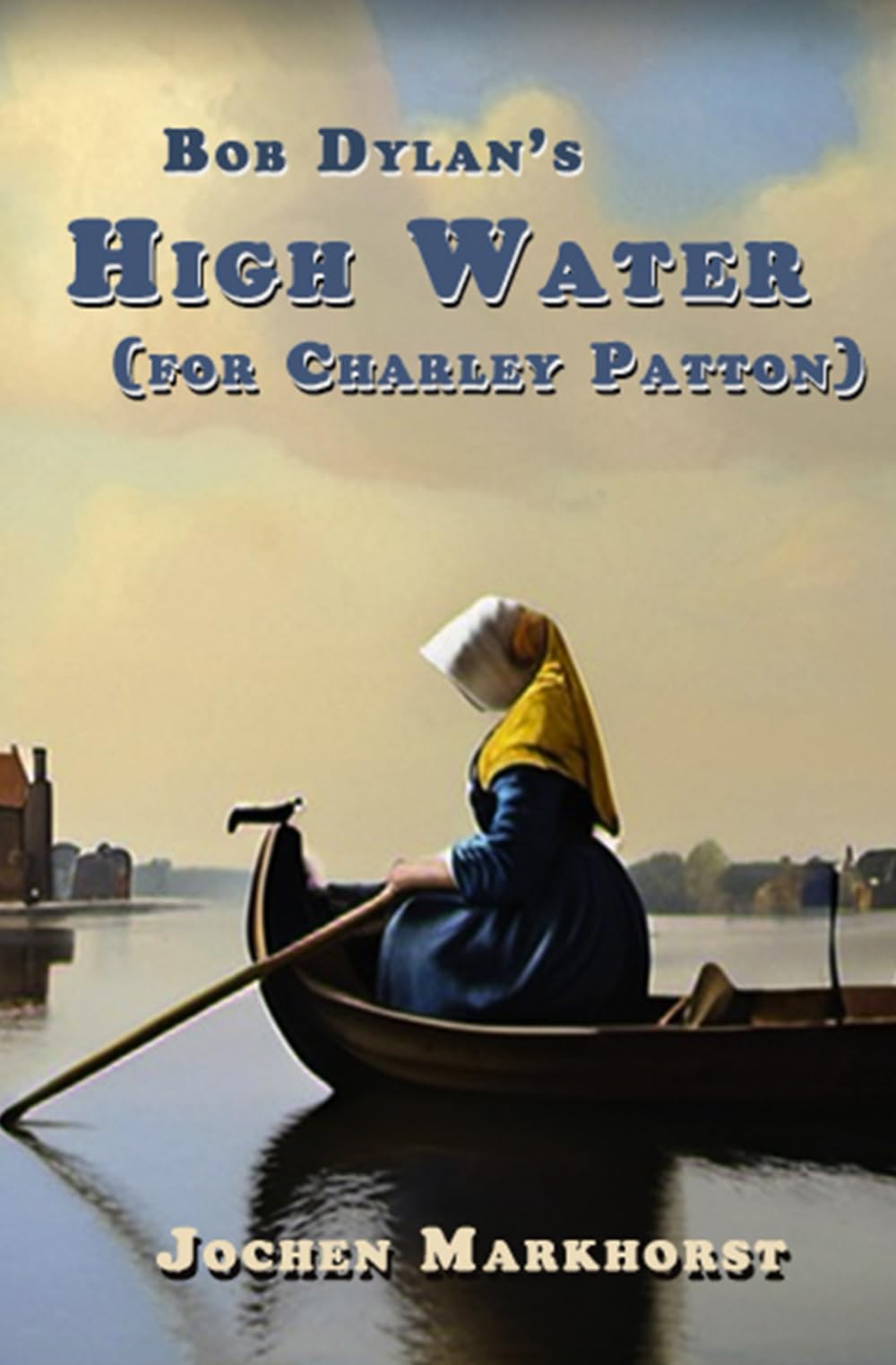
Bob Dylan's High Water (for Charley Patton) (The Songs Of Bob Dylan)
$10.00
by Jochen Markhorst



“Maybe you noticed that most of my songs are traditionally rooted. I don’t do that on purpose. Charley Patton’s 30’s blues has made a deep impression on me and High Water (for Charley Patton) is, in my opinion, the best song of this record,” says Dylan at the Rome press conference, July 2001. We know the stories about the man's encyclopaedic knowledge of and memory for songs, and have been hearing its fruits since his first record in 1962. The vast inner jukebox, the song treasure in his phenomenal working memory, plus his unerring sense of untapped gold in thirty centuries of world literature provide the “old elements” from which Dylan sculpted "Blowin’ In The Wind" and "The Times They Are A-Changin’", which gave us "All Along The Watchtower" and "Like A Rolling Stone", and which fill the tracklist of a late, next masterpiece some 40 years after that first record: “Love And Theft” , the then 60-year-old Nobel laureate's 31st studio album, released on 11 September 2001. The songs on the highly acclaimed album demonstrate that special skill, that talent for making “something new” out of “old elements” in extremis. and a highlight among the highlights is "High Water (For Charley Patton)", the traditionally rooted monument with which a 21st-century bluesman pays tribute to his predecessors. In Bob Dylan's High Water (For Charley Patton) , Dylan scholar Jochen Markhorst delves into the masterpiece’s overwhelming lyrics, irresistible musical accompaniment, rich music-historical and literary roots - showing why the song belongs in the outer category of songs like "Desolation Row", "Mississippi" and "I Contain Multitudes".