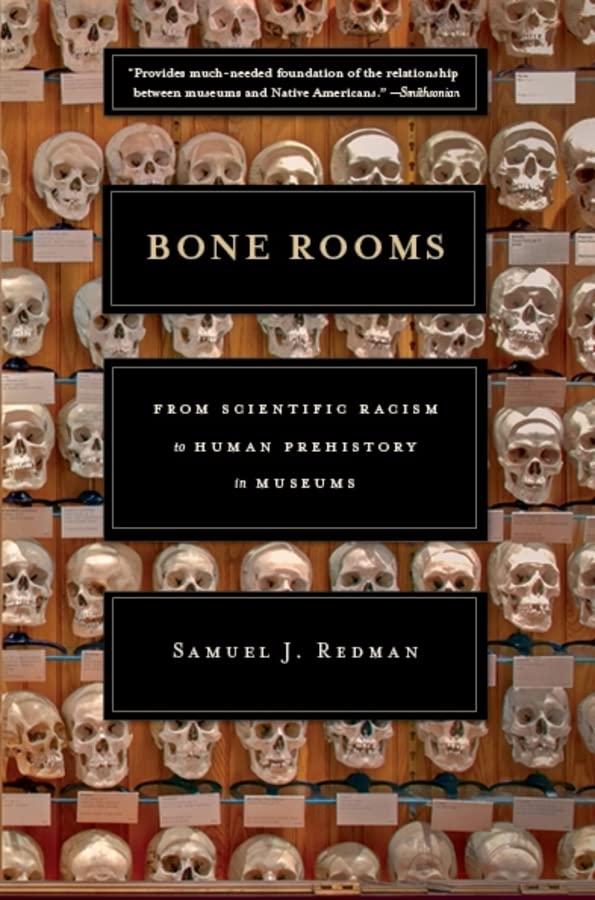
Bone Rooms: From Scientific Racism to Human Prehistory in Museums
$22.95
by Samuel J. Redman



A Smithsonian Book of the Year A Nature Book of the Year “Provides much-needed foundation of the relationship between museums and Native Americans.” ― Smithsonian In 1864 a US Army doctor dug up the remains of a Dakota man who had been killed in Minnesota and sent the skeleton to a museum in Washington that was collecting human remains for research. In the “bone rooms” of the Smithsonian, a scientific revolution was unfolding that would change our understanding of the human body, race, and prehistory. Seeking evidence to support new theories of racial classification, collectors embarked on a global competition to recover the best specimens of skeletons, mummies, and fossils. As the study of these discoveries discredited racial theory, new ideas emerging in the budding field of anthropology displaced race as the main motive for building bone rooms. Today, as a new generation seeks to learn about the indigenous past, momentum is building to return objects of spiritual significance to native peoples. “A beautifully written, meticulously documented analysis of [this] little-known history.” ―Brian Fagan, Current World Archeology “How did our museums become great storehouses of human remains? Bone Rooms chases answers…through shifting ideas about race, anatomy, anthropology, and archaeology and helps explain recent ethical standards for the collection and display of human dead.” ―Ann Fabian, author of The Skull Collectors “Details the nascent views of racial science that evolved in U.S. natural history, anthropological, and medical museums…Redman effectively portrays the remarkable personalities behind [these debates]…pitting the prickly Aleš Hrdlička at the Smithsonian…against ally-turned-rival Franz Boas at the American Museum of Natural History.” ―David Hurst Thomas, Nature “[A] remarkable examination of scientific racism, biological anthropology, and the mission of medical museums.” ― Publishers Weekly (starred review) “In exquisite detail, propelled by the captivating life stories of a diverse array of scientists and institutions, and backed by extensive archival research, Bone Rooms narrates the rise and fall of racial science in America, embodied in the imperial expropriation of people’s bones. This complicated and engrossing story is filled with unexpected twists and significant implications for the history of anthropology, the history of science and medicine, museum studies, the cultural and intellectual history of race in the United States, and American intellectual history more generally.” ― Matthew Dennis, author of Seneca Possessed “How did our museums become great storehouses of human remains? What have we learned from the skulls and bones of unburied dead? By following the careers of such figures as enigmatic physical anthropologist Aleš Hrdlička, Samuel Redman’s Bone Rooms chases answers to these questions through shifting ideas about race, anatomy, anthropology, and archaeology and helps explain recent ethical standards for the collection and display of human dead.” ― Ann Fabian, author of The Skull Collectors “ Bone Rooms details the nascent views of racial science that evolved in U.S. natural history, anthropological, and medical museums. These debates spilled into public museum spaces, arraying human bodies in sometimes controversial, even macabre, exhibits. Redman effectively portrays the remarkable personalities behind them, particularly pitting the prickly Aleš Hrdlička at the Smithsonian Institution in Washington, D.C., against ally-turned-rival Franz Boas at the American Museum of Natural History in New York City.” ― David Hurst Thomas , Nature “ Bone Rooms is a beautifully written, meticulously documented analysis of the little-known history of scientists, human remains, and museum visitors…We could not ask for a better introduction to a sometimes shameful chapter in our scientific past, driven by curiosity and greed, as well as scientific enquiry. Both the general reader and any scholar working on human remains will enjoy this important book.” ― Brian Fagan , Current World Archeology “ Bone Rooms is an engaging and lively book…[Redman] brings his characters alive, complete with egos and petty jealousies. But more, he encourages us to consider the changing values of human remains in museum collections and their role as the material basis for the disciplinary history of physical anthropology. Bone Rooms will hopefully appeal not only to historians of U.S. science and museums but also to a wider audience interested in the provenance of public collections.” ― Samuel J. M. M. Alberti , British Journal for the History of Science “Provides much-needed foundation of the relationship between museums and Native Americans.” ― Brian Wolly , Smithsonian.com “ Bone Rooms is an accessible piece of public history that can be appreciated by a general audience as well as scholars of the history of science…This book provides a contextualized history of the