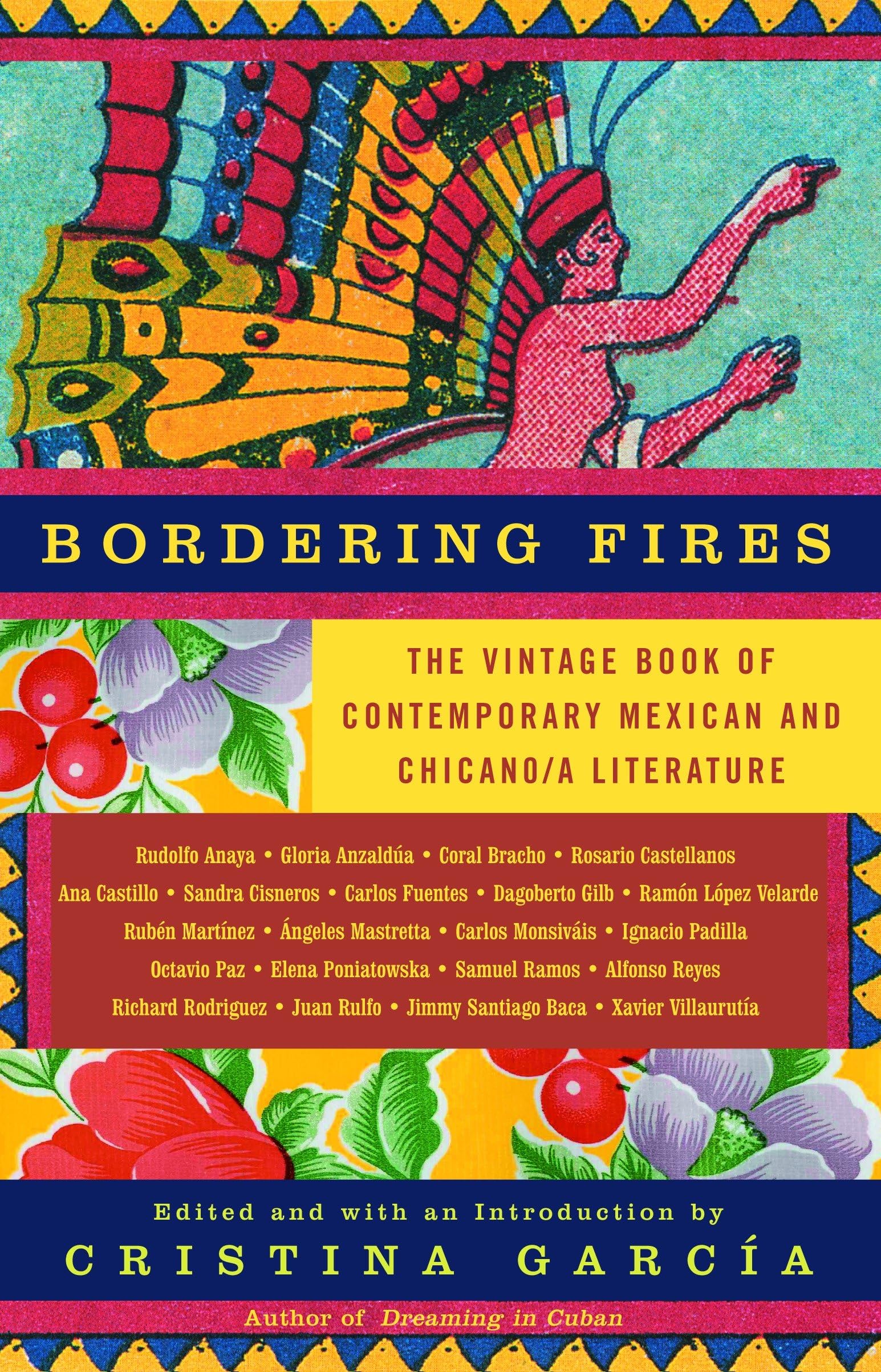
Bordering Fires: The Vintage Book of Contemporary Mexican and Chicana and Chicano Literature
$15.95
by Cristina García



“A marvelous introduction to some of the most luminous and illuminating voices to be found in the Chicano/a and Mexican literary traditions, offering a fascinating and resonant dialogue among them.” –Rafael Pérez-Torres, Professor of American Literature and Chicano Studies, UCLA As the descendants of Mexican immigrants have settled throughout the United States, a great literature has emerged, but its correspondances with the literature of Mexico have gone largely unobserved. In Bordering Fires , the first anthology to combine writing from both sides of the Mexican-U.S. border, Cristina García presents a richly diverse cross-cultural conversation. Beginning with Mexican masters such as Alfonso Reyes and Juan Rulfo, García highlights historic voices such as “the godfather of Chicano literature” Rudolfo Anaya, and Gloria Anzaldœa, who made a powerful case for language that reflects bicultural experience. From the fierce evocations of Chicano reality in Jimmy Santiago Baca’s Poem IX to the breathtaking images of identity in Coral Bracho’s poem “Fish of Fleeting Skin,” from the work of Carlos Fuentes to Sandra Cisneros, Ana Castillo to Octavio Paz, this landmark collection of fiction, essays, and poetry offers an exhilarating new vantage point on our continent–and on the best of contemporary literature. Adult/High School—This outstanding anthology includes a variety of literary forms (poems, essays, short stories, excerpts from novels) and cuts across time to present both early influences and contemporary pieces. Authors include earlier masters (Alfonso Reyes, Juan Rulfo), contemporary greats (Octavio Paz, Carlos Fuentes), Chicana/o voices (Sandra Cisneros, Rudolfo Anaya, Ruben MartÃnez), and new Mexican authors who are becoming internationally known (Carlos Monsiváis, Coral Bracho). Not surprisingly, many of the selections deal with questions of identity and allegiance. Garcia's excellent introduction gives valuable background on the authors and their work.— Sandy Freund, Patrick Henry Library, Fairfax County, VA Copyright © Reed Business Information, a division of Reed Elsevier Inc. All rights reserved. Migration is on the rise all around the globe, transforming cultures on both sides of every border. But perhaps no dividing line is more highly charged than the one between Mexico and the U.S. As the two worlds commingle, literature becomes an essential medium for engendering empathy and understanding. Novelist Garcia has created an anthology that is timeless in its artistry and timely in its topic. This vital and defining collection of poetry, fiction, and essays begins with four "masters who . . . left an unmistakable imprint on Mexican literature." Garcia then samples more current if equally revered Mexican writers, including Octavio Paz and Elena Poniatowska, Chicano writers Richard Rodriguez and Jimmy Santiago Baca, and Chicana writers Ana Castillo and Sandra Cisneros, followed by emerging Mexican writers. Each selection is distinct and resonant, tapping into deep and fluid truths and shaping a coalescing literary realm. To quote Coral Bracho, "On the border an abyss of tones, of sharp clarity, of forms. / One should enter lightly, darkly that instant of dance." Donna Seaman Copyright © American Library Association. All rights reserved “A marvelous introduction to some of the most luminous and illuminating voices to be found in the Chicano/a and Mexican literary traditions, offering a fascinating and resonant dialogue among them.” – Rafael Pérez-Torres, Professor of American Literature and Chicano Studies, UCLA "In an age that reduces lo mexicano to a nefarious stereotype, this assortment of literary delights will allow shrewd readers to appreciate the richness of a millenarian civilization." – Ilan Stavans, Professor of Latin American and Latino Culture, Amherst College Cristina García was born in Havana and grew up in New York City. Her first novel, Dreaming in Cuban, was nominated for a National Book Award and has been widely translated. Ms. García has been a Guggenheim Fellow, a Hodder Fellow at Princeton University, and the recipient of a Whiting Writers’ Award. She lives in Napa with her daughter and husband. ALFONSO REYES Major Aranda’s Hand Major Aranda suffered the loss of a hand in battle, and, unfortunately for him, it was his right hand. Other people make collections of hands of bronze, of ivory, of glass and of wood; at times they come from religious statues or images; at times they are antique door knockers. And surgeons keep worse things in jars of alcohol. Why not preserve this severed hand, testimony to a glorious deed? Are we sure that the hand is of less value than the brain or the heart? Let us meditate about it. Aranda did not meditate, but was impelled by a secret instinct. Theological man has been shaped in clay, like a doll, by the hand of God. Biological man evolves thanks to the service of his hand, and his hand has endowed the world with a new natural kin