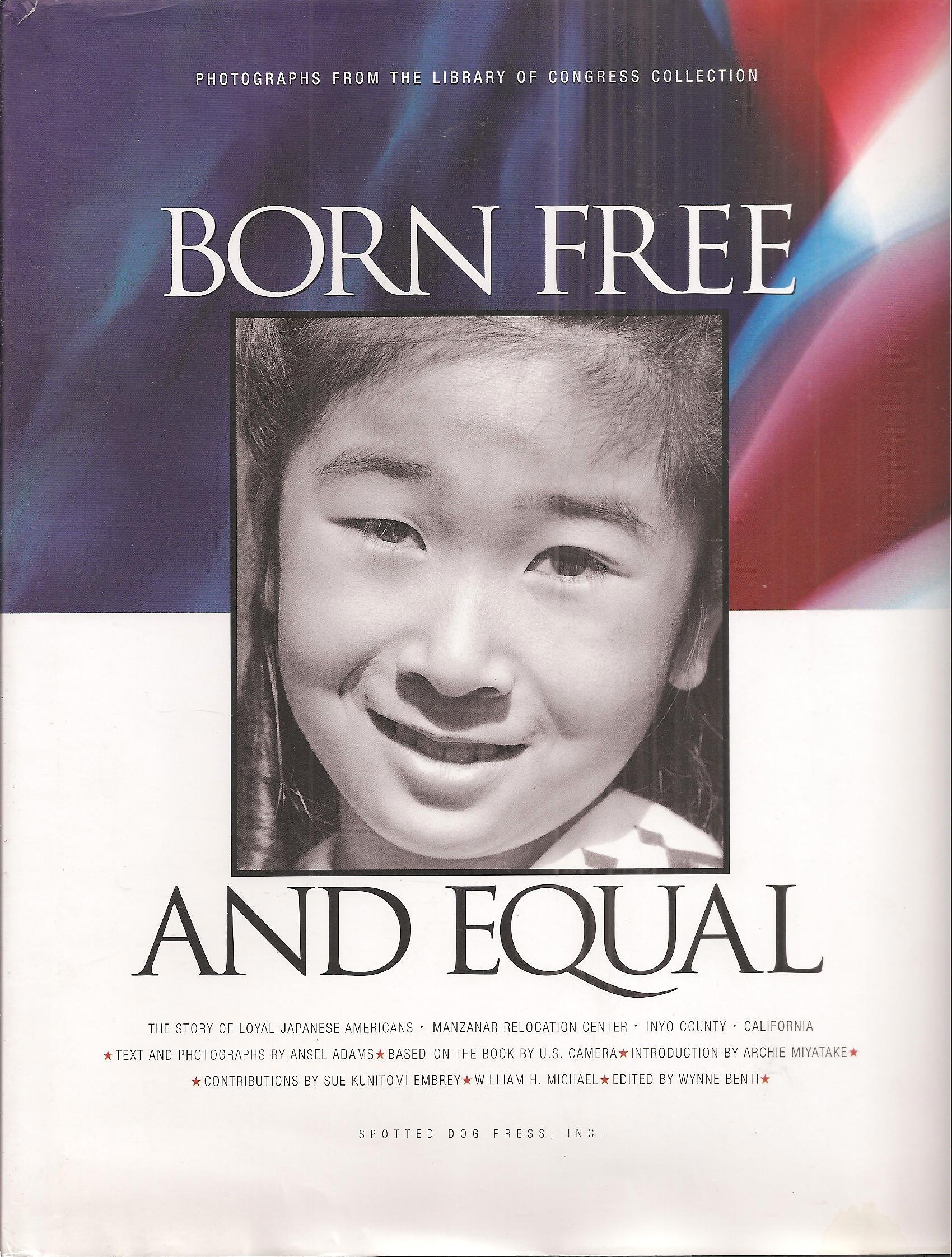



It was 1943. In Yosemite National Park, the magnificent Ahwahnee Hotel closed its doors to tourists, transformed into a temporary Naval convalescent hospital. Wartime shortages forced the rationing of gasoline, sugar, and film. Living with his wife, Virginia Best Adams and their children in Yosemite Valley, Ansel Adams, sought ways to help with the war effort. Too old to enlist, he volunteered for a number of assignments in which his photographic skills were put to the country's use. Among his contributions, he both escorted and photographed Army troops at Yosemite training for mountain warfare in Europe; he taught photography to the Signal Corps at Fort Ord, and traveled to the Presidio in San Francisco to print classified photographs of Japanese military installations on the Aleutian Islands. Despite his volunteer efforts, he was frustrated that he could not do more to help the war effort. That summer, friend Ralph Merritt asked Adams if he would be interested in creating a photographic record of a little-known government facility in the Owens Valley, on the east side of the Sierra Nevada. "I cannot pay you a cent," Merritt told Adams, "but I can put you up and feed you." Merritt was director of the Manzanar War Relocation Center, a collection of hundreds of tar-paper barracks hastily built to house more than 10,000 people, behind barbed wire and gun towers. All were of Japanese Ancestry, but most were American citizens, forcibly removed from their homes to ten relocation centers across the country by presidential order. The resulting effort was the book Born Free and Equal: The Story of Loyal Japanese Americans published by U.S. Camera in 1944 under the direction of the War Relocation Authority. While at Manzanar, Adams met Toyo Miyatake, the official camp photographer, interned with his wife and children. A student of the great photographer, Edward Weston, Miyatake had established his own respected professional photography studio in Los Angeles before the war. In the introduction to this book, MiyatakeÕs son, Archie, who was then 16-years old, recalls the visit made so long ago. In 1965, Adams wrote in a letter to Dr. Edgar Brietenbach at the Library of Congress: " . . . I think this Manzanar Collection is an important historical document and I trust it can be put to good use. . . " In the autumn of 2000, before the Manzanar photographs of Ansel Adams were available digitally and only available as 8x10 photographic reproductions, editor Wynne Benti spent two weeks in the collections of the Library of Congress and NARA, locating many, but not all of the photographs that appeared in the original book. The book went to press as two jets crashed into the World Trade Center, thus the addition of the American flag behind the cover photograph of Joyce Nakamura Okazaki. Spotted Dog Press republished Adams' work, Born Free and Equal, introducing it to new generations of Americans. "Born Free and Equal illustrates how prejudice and the denial of personal freedom can be overcome. . ." -- Photolife (Canada) "Magnificent . . . Ansel would have been proud." -- Mary Street Alinder, Adams' manager and biographer "This book should be regarded as one of the finest examples of documentary photography from the 20th century. . ." -- British Journal of Photography . . . a body of work to proud of. -- Photolife (January 2003) . . . historically factual book, accurately capturing with poetic realism a dark and controversial aspect of America's World War II history. -- The Midwest Book Review (May 2002) . . . one of the finest examples of documentary photography of the 20th century. -- The British Journal of Photography (August 2002) . . . the story belongs to us all. -- Rafu Shimpo, Los Angeles (May 2003) On February 19, 1942, U.S. presidential order forcibly removed more than 110,000 persons from their homes to one of ten "war relocation centers" across the country. All were of Japanese ancestry, but two-thirds were American citizens. Ralph Merritt, then director of Manzanar War Relocation Center, asked friend Ansel Adams to photograph the center, set against the remote mountains of California's Sierra Nevada. The resulting effort, Born Free and Equal: The Story of Loyal Japanese Americans, written and photographed by Adams, was released in 1944 to the American public as a book and exhibit at the Museum of Modern Art in New York. Reeling from the impact of the bombing of Pearl Harbor and unable to make the distinction between American citizens of Japanese ancestry and the Japanese enemy of war, Adams' message was essentially lost on the American public. In 1965, Adams donated his entire collection of Manzanar photographs to the Library of Congress. Archie Miyatake, interned at Manzanar with his family and father, Los Angeles photographer Toyo Miyatake, wrote the introduction to this new edition. His father smuggled into camp a contraband camera lens and ground glass, making a camera from scraps of wood