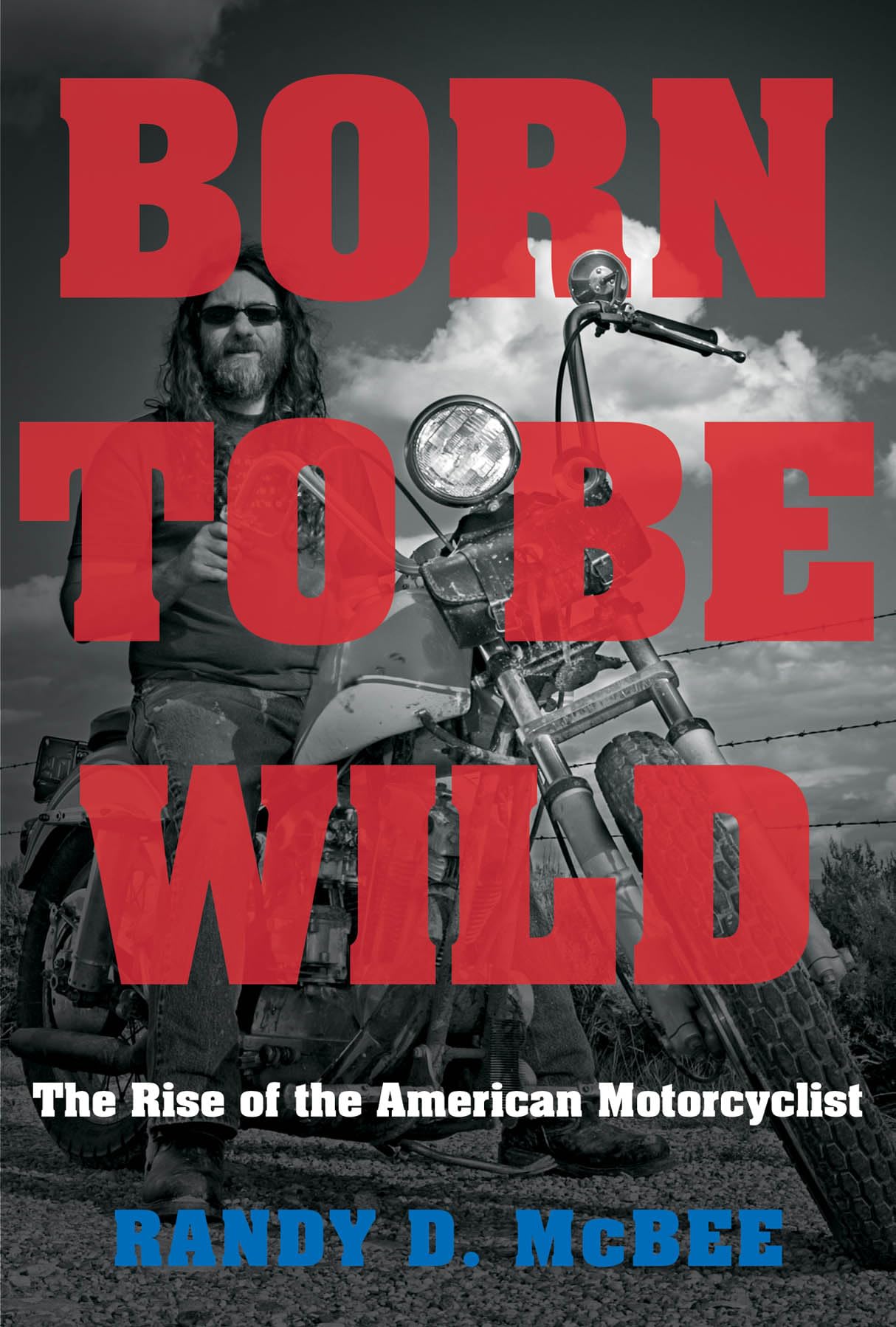



In 1947, 4,000 motorcycle hobbyists converged on Hollister, California. As images of dissolute bikers graced the pages of newspapers and magazines, the three-day gathering sparked the growth of a new subculture while also touching off national alarm. In the years that followed, the stereotypical leather-clad biker emerged in the American consciousness as a menace to law-abiding motorists and small towns. Yet a few short decades later, the motorcyclist, once menacing, became mainstream. To understand this shift, Randy D. McBee narrates the evolution of motorcycle culture since World War II. Along the way he examines the rebelliousness of early riders of the 1940s and 1950s, riders' increasing connection to violence and the counterculture in the 1960s and 1970s, the rich urban bikers of the 1990s and 2000s, and the factors that gave rise to a motorcycle rights movement. McBee’s fascinating narrative of motorcycling’s past and present reveals the biker as a crucial character in twentieth-century American life. “A comprehensive work of cultural history told from the American road.” — Wall Street Journal “Bikers, obviously, will rumble for this book, but they're not its only audience. Historians and pop-culture fans could also find Born to Be Wild is the best thing off two tires.” — Terri Schlichenmeyer, The Bookworm Sez “A great book that is accessible to bikers and college American culture professors alike.” — Pennsylvania Literary Journal “Fascinating, very well written, and full of interesting stories, facts and photos. . . . For anyone doing research on, or having a general interest in, the culture of motorcycles and their riders.” — CHOICE “This book deserves a place in every college and university library and on the shelves of everyone interested in American political, social, and cultural history.” — The Historian “ Born to Be Wild offers the definitive history of motorcycling in post@–World War II America. Drawing on meticulous primary research with great nuance and depth, Randy McBee provides a compelling and valuable corrective to books and films that have exploited minor, salacious incidents sparked by a minority of motorcyclists. His book will be an indispensable resource for scholars of motorcycling. Given its sustained attention to the complexities of gender, race, class, and ethnicity, Born to Be Wild should also be required reading for historians, sociologists, transportation enthusiasts, and those simply curious about this transformative period in American culture.” — Steven Alford and Suzanne Ferriss, authors of Motorcycle The first comprehensive history of motorcycle culture in America Randy D. McBee is associate professor of history at Texas Tech University.