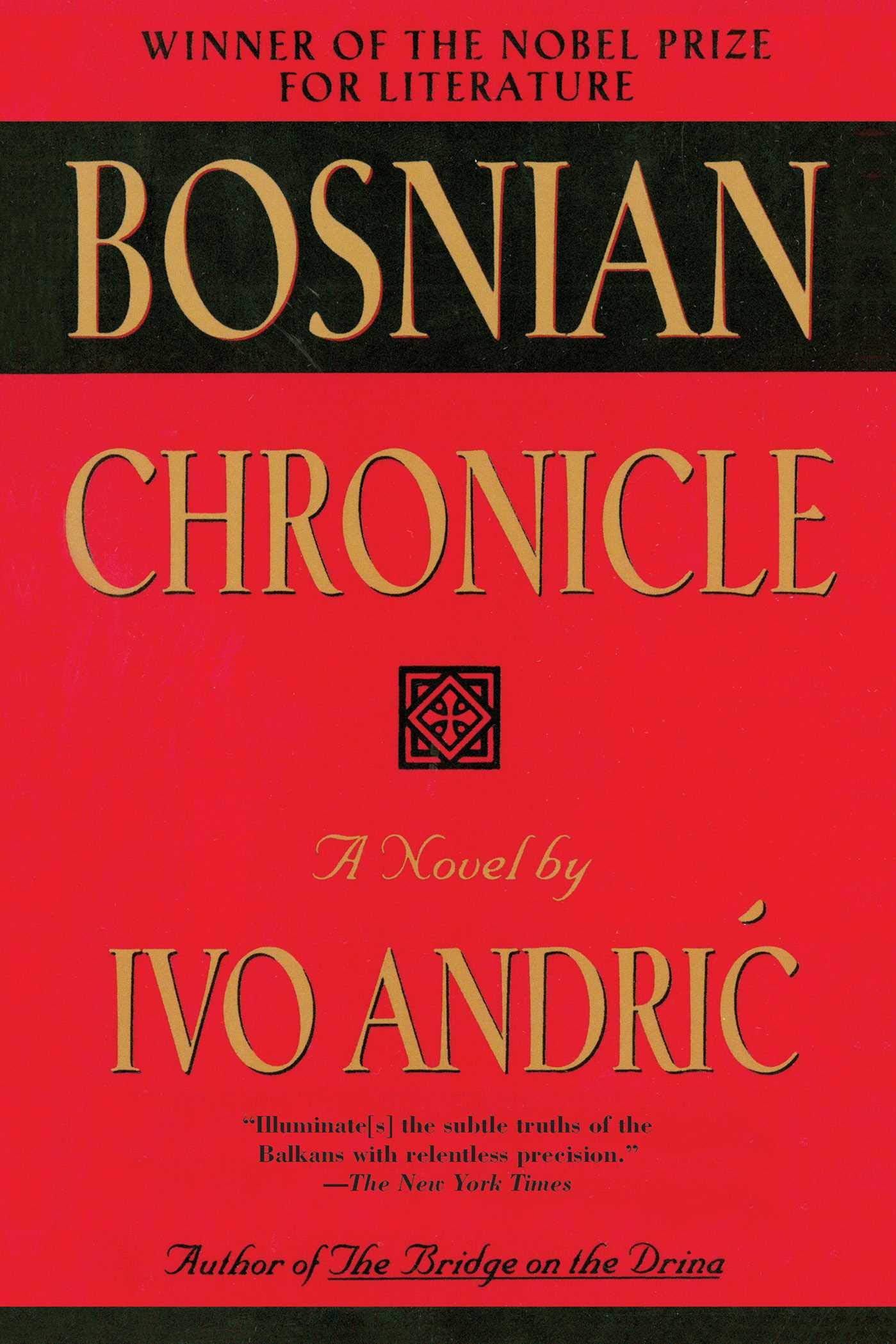



Set in the town of Travnik, Bosnian Chronicle presents the struggle for supremacy in a region that stubbornly refuses to submit to any outsider. The era is Napoleonic and the novel, both in its historical scope and psychological subtlety, Tolstoyan. In its portrayal of conflict and fierce ethnic loyalties, the story is also eerily relevant. Ottoman viziers, French consuls, and Austrian plenipotentiaries are consumed by an endless game of diplomacy and double-dealing: expansive and courtly face-to-face, brooding and scheming behind closed doors. As they have for centuries, the Bosnians themselves observe and endure the machinations of greater powers that vie, futilely, to absorb them. Ivo Andric's masterwork is imbued with the richness and complexity of a region that has brought so much tragedy to our century and known so little peace. Skyhorse Publishing, as well as our Arcade, Yucca, and Good Books imprints, are proud to publish a broad range of books for readers interested in fictionnovels, novellas, political and medical thrillers, comedy, satire, historical fiction, romance, erotic and love stories, mystery, classic literature, folklore and mythology, literary classics including Shakespeare, Dumas, Wilde, Cather, and much more. While not every title we publish becomes a New York Times bestseller or a national bestseller, we are committed to books on subjects that are sometimes overlooked and to authors whose work might not otherwise find a home. Once again, the story he is telling casts light on the dark path up which life so often throws us.” The New York Times Book Review Rich with humanity and the humor that comes with wisdom.” Library Journal Ivo Andric was born in Travnik in 1892 and as a student was imprisoned for his part in fighting for Bosnian independence from the Austrian Empire. Placed under house arrest during the Nazi occupation of the former Yugoslavia, he devoted himself to writing the Bosnian trilogy, of which Bosnian Chronicle is the first volume. He was awarded the Nobel Prize for Literature in 1961. Bosnian Chronicle A Novel By Ivo Andric, Joseph Hitre Skyhorse Publishing Copyright © 2015 Arcade Publishing All rights reserved. ISBN: 978-1-62872-418-9 CHAPTER 1 At the beginning of the year 1807 strange things began to happen at Travnik, things that had never happened before. No one in Travnik had ever supposed that the town was made for an ordinary life and for the workaday grind — no one, not even the last Moslem bumpkin from the mountain hinterland. This deep-seated feeling that they were somehow different from the rest of the world, that they were created and called for better and higher things, was as much a part of their life as the cutting winds from Vlashich, the cool waters of Shumech, and the sweet-tasting maize of the sunny fields around Travnik, and the people never lost this feeling, not even in sleep or the times of great difficulties or in the moment of death. This was especially true of the Moslems who lived in the town itself. But even the humble and the poor of the three faiths — the so-called rayah — scattered along the hilly outskirts or crowded together in separate suburbs, shared this feeling in their own way and each according to their station. And this was also true of their town itself, about whose situation and layout there was something special, typical, and proud. In reality, this town of theirs was a narrow and deep gorge which successive generations had in the course of time built up and brought under cultivation, a fortified passageway where men had paused and then settled down permanently, adapting themselves to it and it to themselves down the centuries. On both sides, mountains tumble down steeply and meet in the valley at a sharp angle, leaving barely enough room for a thin river and a road running beside it. It all reminds one of an oversize half-opened book, the pages of which, standing up stiffly on each side, are generously illustrated with gardens, streets, houses, fields, cemeteries, and mosques. No one has ever reckoned the number of hours of sunlight which nature has withheld from this town, but it is certain that here the sun rises later and sets earlier than in any other of the numerous Bosnian cities and small towns. The people of the town — Travnichani — do not deny it either, but they claim that, while it shines, it does so with a light that no other town can boast of. In this narrow valley, where the river Lashva flows along the bottom and the steep hillsides are full of the whisper of springs, rivulets, and watermill channels, a valley full of damp and drafts, there is hardly a straight path or piece of level ground where a man may step freely and without paying attention. All is steep and uneven, crisscrossed and angled, linked and chopped up by private right-of-ways, fences, blind alleys, gardens, wicket gates, graveyards, and shrines. Here by the water, that fickle, mysterious, and powerful element,