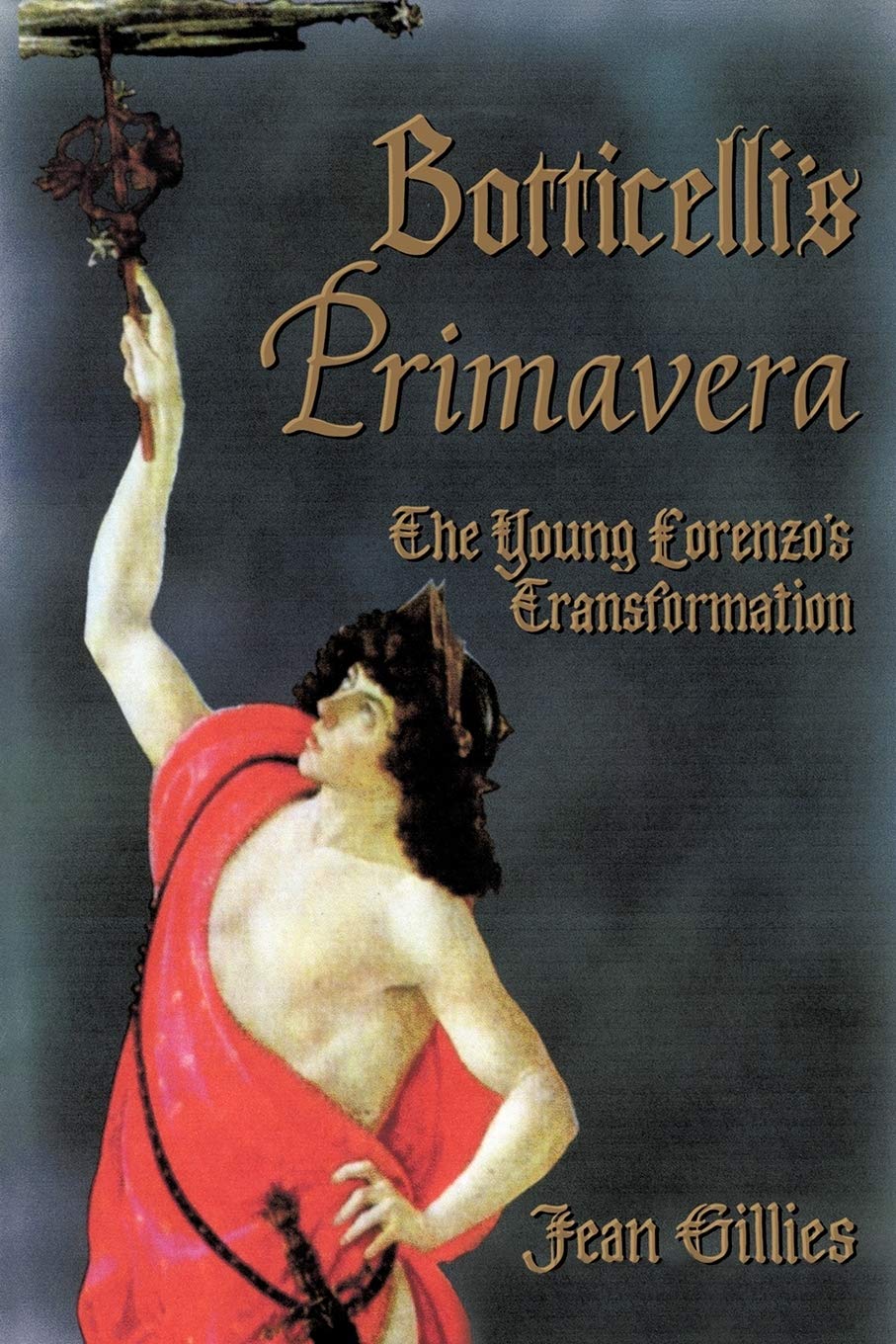



The meaning of Botticelli’s Primavera has intrigued art historians since the late nineteenth century. It has provoked much scholarly attention, but there has been no consensus regarding its meaning. One of the problems facing art historians has been the scarcity of historical data about the painting. Alessandro Filipepi, known as Sandro Botticelli, was practically forgotten after his death in 1510. Not until the late 19th century did his work again find an appreciative viewership. At that time, the only known reference to the Primavera was in the 16th century book, Lives of Seventy of the Most Eminent Painters, Sculptors and Architects, written by Giorgio Vasari, in which the author noted two paintings by Botticelli that were then at Duke Cosimo de’Medici’s (1519-1574) villa at Castello. It is generally agreed that he was referring to the Birth of Venus and the Primavera, which probably were painted between 1478 and 1480. In recent years, however, Medici records from around 1500 have come to light that establish that the Primavera was in the possession of the young Lorenzo di Pierfrancesco de’Medici (1463-1503), the second cousin of the famous Lorenzo il Magnifico. These inventories also show that the painting was hung in the antechamber to Lorenzo’s bedroom. Another probable source cannot be ignored. The 15th century philosopher and founder of the Medicean Neo-Platonic Academy, Marsilio Ficino, was a mentor to the young Lorenzo, and his letters show his influence on and deep concern for the boy. Finally, a careful examination of the medallion worn around the neck of the central figure in the painting reveals it to be a beveled crescent moon surrounding a red stone. This was an attribute of the Egyptian goddess, Isis. Clearly any interpretation of this painting must explain why this goddess rather than Venus dominates a work that was meant for a boy still in his teens. Until now, no one has proposed such a program. About the Author: Jean Gillies received a Ph.D. in art history from Northwestern University in Evanston, Illinois in 1970 and taught courses in that field at Northeastern Illinois University in Chicago for 29 years, retiring in 1999 as Professor Emerita. Other publications include articles in professional journals and reviews of relevant books. Botticelli's Primavera: The Young Lorenzo's Transformation By Jean Gillies iUniverse Copyright © 2010 Jean Gillies All rights reserved. ISBN: 978-1-4502-2161-0 Contents Acknowledgments, vii, Illustrations, ix, Introduction, 1, I. The Literature on the Primavera, 7, II. Compositional Analysis, 24, III. The Central Figure, 32, IV. The Goddess of Many Names, 44, V. Ficino's Astrology and the Hermetic Tradition, 59, VI. Ficino's Cosmology, 66, VII. Astrological Interpretations of Ficino's Letters and the Primavera, 81, VIII. Lorenzo's Horoscopes, 95, IX. The Astrological Charts and the Primavera, 105, X. The Alchemical Process and the Primavera, 125, XI. The Primavera's Alchemical Symbols, 135, XII. Conclusion, 146, Appendix I: Additional Analysis of the Literature, 159, Appendix II: Ficino's World Soul and World Spirit, 162, Appendix III: The Astrological Charts of May 13 and May 23, 1482 169, Endnotes, 175, Bibliography, 209, Index, 217, CHAPTER 1 The Literature on the Primavera The earliest significant interpretation of Botticelli's Primavera was Aby Warburg's "Sandro Botticelli's 'Geburt der Venus' und 'Frühling,'" originally published in 1893. This is a seminal work, since both its iconological methodology and its content have exerted a remarkably strong influence on later scholars' interpretations of the Primavera. Whether they have argued against Warburg's conclusions or have accepted his sources for the painting's imagery, no major contributors to the literature on this work have ignored Warburg's article. For this reason his study still warrants consideration. Warburg sought sources for the imagery of both the Birth of Venus and the Primavera in contemporary as well as classical literature. In the case of the Primavera, two sources cited by Warburg generally have been accepted. The first is the description of the three Graces in Leon Battista Alberti's Della Pittura, which Warburg showed to be based on Seneca's De beneficiis, iii, 2-7. What shall we say too about those three young sisters, whom Hesiod called Egle, Euphronesis and Thalia? The ancients represented them dressed in loose transparent robes, with smiling faces and hands intertwined; they thereby wished to signify liberality, for one of the sisters gives, another receives and the third returns the favor, all of which degrees should be present in every act of perfect liberality. Botticelli's Graces are not smiling, but it seems reasonable to accept the possibility that the artist took Alberti's advice, using the motif of the Graces in his painting for his own purposes. Also convincing is Warburg's contention that Botticelli u