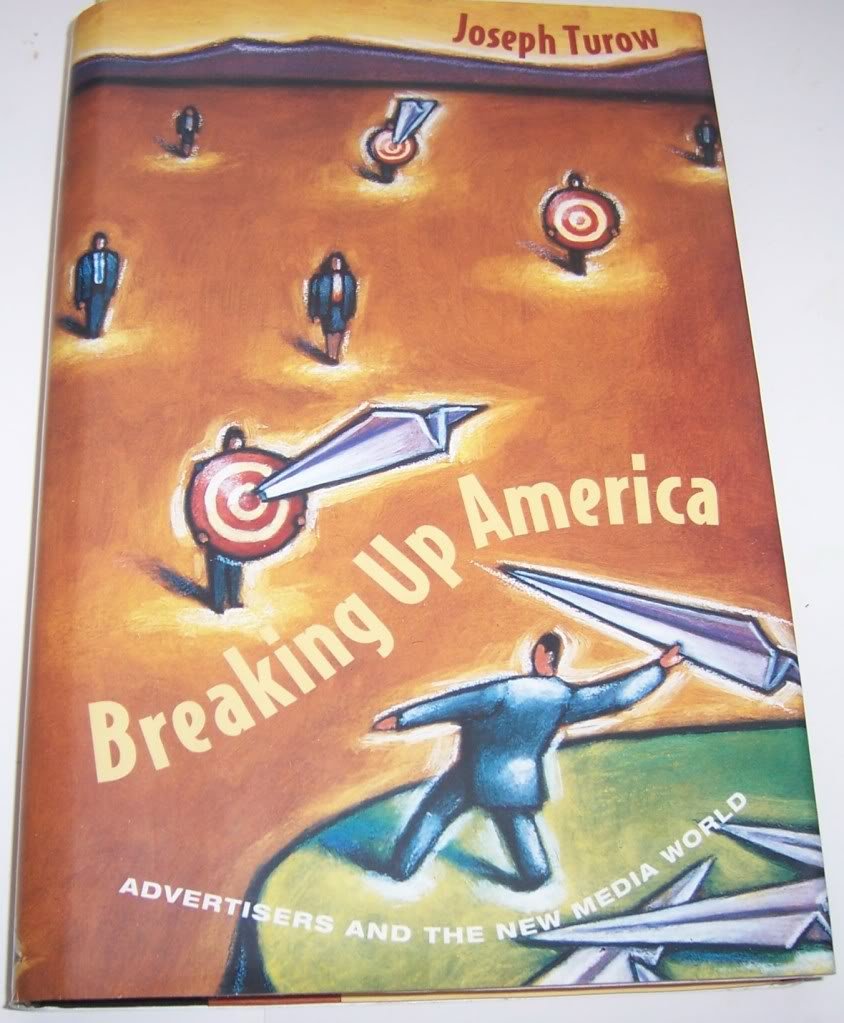



Combining shrewd analysis of contemporary practices with a historical perspective, Breaking Up America traces the momentous shift that began in the mid-1970s when advertisers rejected mass marketing in favor of more aggressive target marketing. Turow shows how advertisers exploit differences between consumers based on income, age, gender, race, marital status, ethnicity, and lifesyles. "An important book for anyone wanting insight into the advertising and media worlds of today. In plain English, Joe Turow explains not only why our television set is on, but what we are watching. The frightening part is that we are being watched as we do it."—Larry King "Provocative, sweeping and well made . . . Turow draws an efficient portrait of a marketing complex determined to replace the 'society-making media' that had dominated for most of this century with 'segment-making media' that could zero in on the demographic and psychodemographic corners of our 260-million-person consumer marketplace."—Randall Rothenberg, Atlantic Monthly Now that Americans are dividing up into militias and staking out a few acres of inviolable homeland, perhaps it's time to ask how the country came to be so deeply fragmented. Joseph Turow points to the ways that the techniques of "target marketing" by advertising agencies exploited and exacerbated existing fissures in U.S. society. Turow is too subtle a thinker to believe that advertising is responsible for the differences between people, but he makes a strong case that the way those differences have been used to distinguish different markets for different products has, simply by defining and presenting various subcultures, furthered those differences. This vicious cycle of targeting and producing target markets is analyzed both historically and politically to show the difficult effects of assuming that Americans are not united, except against each other. This book is about the way the advertising industry has been fragmenting America and what that may mean for the media and society. The advertiser's aim has been to package individuals, or groups of people, in ways that make them useful targets. But the ad industry's vision of America is one of a fractured population of self-indulgent, suspicious individuals who reach out only to people like themselves, and the ads it creates both reflect and promote this view. Combining shrewd analysis of contemporary practices with a historical perspective, Turow traces the momentous shift that began in the mid-1970s when advertisers rejected mass marketing in favor of ever more aggressive target marketing. It is a strategy that includes all marketing vehicles, from cable TV to catalogs, direct mail to radio, newspapers to supermarket promotions. Turow shows how advertisers exploit differences between consumers based on income, age, gender, race, marital status, ethnicity, and lifestyles. With increased technology, advertising can easily enter individuals' private spaces - their homes, cars, and offices - with news, entertainment, and commercial messages aimed specifically at them. As the major support system of American media, the ad industry has encouraged market segmentation and the creation of customized media. Ultimately, Turow predicts this trend will cause an erosion of tolerance and cooperation within U.S. society. Joseph Turow is the Robert Lewis Shayon Professor of Media Systems & Industries Emeritus in the Annenberg School of Communication at the University of Pennsylvania. He is the author of thirteen books and the editor of five, including The Voice Catchers: How Marketers Listen In to Exploit Your Feelings, Your Privacy, and Your Wallet ; The Aisles Have Eyes: How Retailers Track Your Shopping, Strip Your Privacy, and Define Your Power ; and The Daily You: How the New Advertising Industry Is Defining Your Identity and Your Worth .