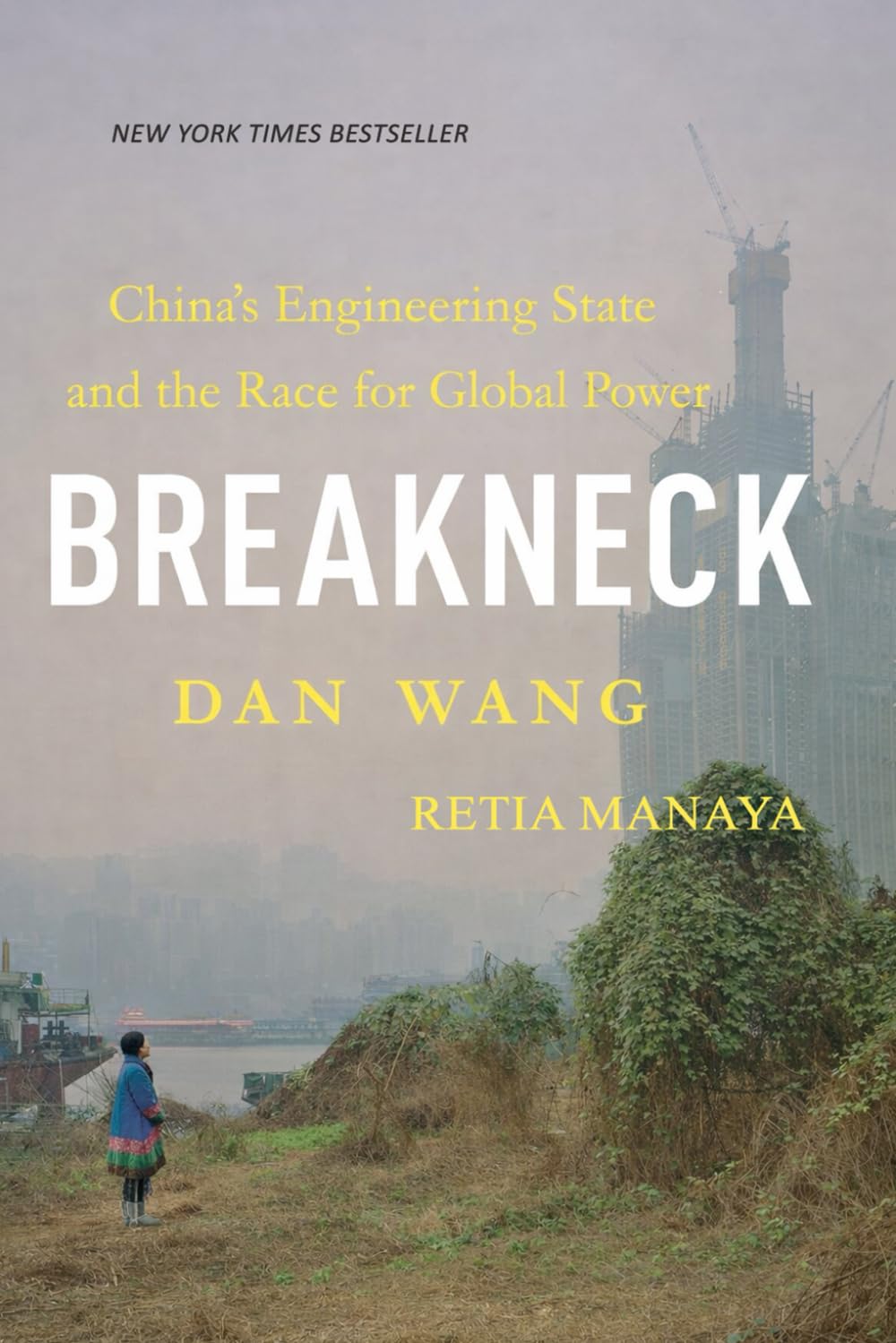
Breakneck: China’s Engineering State and the Race for Global Power, 2025 Paperback
$18.99
by Retia Manaya



Breakneck: China’s Engineering State and the Race for Global Power offers a sharp and compelling exploration of how modern China has transformed itself into one of the most powerful forces shaping the twenty-first century. Drawing on years of firsthand experience living and traveling across China, Wang reveals how the country’s rapid rise is driven by what he calls an “engineering state” —a system in which leaders trained as engineers approach national challenges through large-scale construction, industrial planning, and technological ambition. From high-speed rail networks and massive bridges to cutting-edge manufacturing and artificial intelligence, China has built infrastructure and industrial capacity at extraordinary speed. In contrast, Wang argues that the United States has increasingly become a “lawyerly society,” where regulation, litigation, and procedural complexity often slow development and public projects. Through vivid reporting, historical insight, and thoughtful analysis, the book shows how these two different governing philosophies shape the global balance of power. Traveling from the skyscrapers of Shanghai to the mountains of Guizhou, Wang examines China’s remarkable achievements as well as the darker consequences of rapid state-driven modernization. He explores the country’s infrastructure boom, industrial strategy, technological ambitions, and strict political control, revealing both the strengths and vulnerabilities of China’s development model. Insightful and provocative, Breakneck provides readers with a fresh framework for understanding the growing rivalry between China and the United States. By examining how nations build, govern, and innovate, the book sheds light on one of the most important questions of our time: which system will shape the future of global power and technological progress. Perfect for readers interested in geopolitics, global economics, technology policy, and China’s rise, Breakneck delivers a clear and engaging analysis of the forces transforming the modern world.