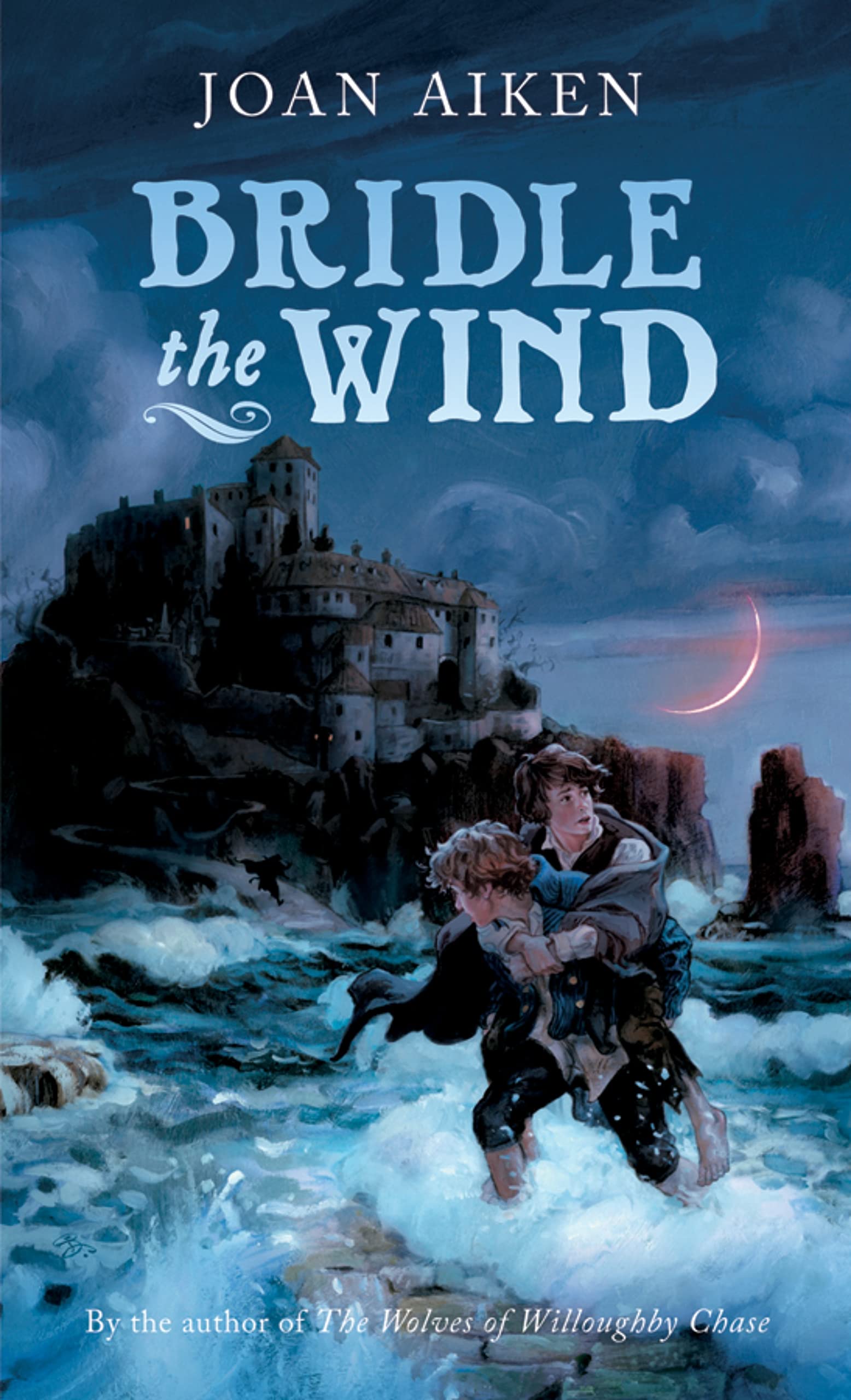
Bridle the Wind: A Journey Adventure About Two Boys' Escape Through Europe for Kids (Ages 10-12)
$14.05
by Joan Aiken



After visiting his family in England, Felix is on his way back to Spain when he's shipwrecked off the coast of France. He is taken in by monks to recover from his ordeal--but it soon becomes clear to him that he is actually being held prisoner. Felix encounters an injured boy, Juan, on the grounds of the monastery and saves him from death. The two boys escape and continue on to Spain together--but a gang is pursuing Juan, and the journey is more dangerous than they imagined. "Joan Aiken has outdone herself here . . . In its ambition, its invention, its maturity of vision and its verbal artistry, Bridle the Wind puts most novels for adults to shame."-- Washington Post Book World Joan Aiken, daughter of the American writer Conrad Aiken, was born in Rye, Sussex, England, and has written more than sixty books for children, including The Wolves of Willoughby Chase . 1 In which I am shipwrecked and lose my way and my memory; am privileged to witness a miraculous healing; find myself in some sort a prisoner, and resist the temptation to escape. How wretched and grim is the sight of a seashore when a ship has been wrecked upon it! All across the flat white sand are strewn ragged portions of woodwork, wrenched and smashed by the waves, with splinters and pegs protruding like broken fingers; snapped masts and torn sails lie tossed here and there, barrels and chests bob in the rolling surf; all the careful craft and handiwork that go to build and furnish a vessel have been spoiled and destroyed with a fearful speed, perhaps even as quickly as I can write these words. Such were my thoughts while I dragged myself, wet and shivering, up the slope of some strand—I knew not whether French or Spanish, for our hooker had been blown far to the east from its intended port of San Sebastian, which lies close to the frontier. A wild January gale, severe even for the Bay of Biscay, had swept down upon us with hail and thunder, breaking our mainmast like a daffodil stalk, and while the crew were struggling to make good this damage, wind and tides had carried the helpless vessel to an unsheltered stretch of coast where rocky reefs, lying some half-mile from the shore, had broken up the hull, and the furious pounding waves had soon reduced our ship to fragments. The crew and passengers were lucky that the in-rolling tide had carried them, clinging to spars, casks, and pieces of wreckage, into shallow water whence they could scramble ashore, I among them. Now the sailors were attempting to rescue what they could of the ship’s cargo. For myself, I had no more than I stood up in, woolen breeches, buckled shoes, shirt, and a striped fustian jacket with steel buttons. My thick boat-cloak I had cast off when the ship struck rock and I was hurled into the waves; now I much regretted its loss, for the winter wind blew keen as a razor, and there was no shelter in the wide open bay where we had been flung. Inland lay a series of ragged sand dunes, crested with rough grass; about a mile off, at the northern end of the bay, the land rose to a low cliff and broke off abruptly, to reappear in the form of an island some quarter-mile out to sea; on this island I thought I could detect buildings, though at such a distance, and in the flying rain and spume, it was hard to be sure. Otherwise there were no houses at all to be seen in this cheerless landscape, which seemed hardly more welcoming than the sea from which we had escaped. “You, there—you, boy!” bawled the captain. “Come here and lend a hand hauling on the rope!” Evidently, although I had paid good money for my passage from England to Spain, he considered that, due to my lack of years, he had a right, in the present emergency, to order me about. Indeed I was very willing to help the men with their task of salvage; hauling on the rope was a vigorous and warming activity and gave me the feeling, at least, that we were doing something to remedy our dismal state. By and by, I supposed, some natives of the nearest town or village would arrive to claim their share of the cargo and furnish us with beds, fires, food, and information as to where we had been cast up. So far none had appeared; glancing to and fro, between tugs on the rope, I could see that steep wooded slopes ran up at the southern end of the bay, and steeper mountains rose behind them, one great triangular peak shrouded in snow and cloud. Nowhere could I descry any dwellings, but any number of houses might be concealed behind those tree-covered ridges. They were some considerable distance away, though; indeed, as I later discovered, behind the bay stretched a wide, marshy, uninhabited region, which was why nobody had yet appeared to give us succor. An hour’s work sufficed to drag ashore a fair portion of the cargo, which consisted of woolen goods, and some of the ship’s furnishings; though most of these were thrown up by the waves themselves which came surging and pounding onto the beach like white mountains of wate