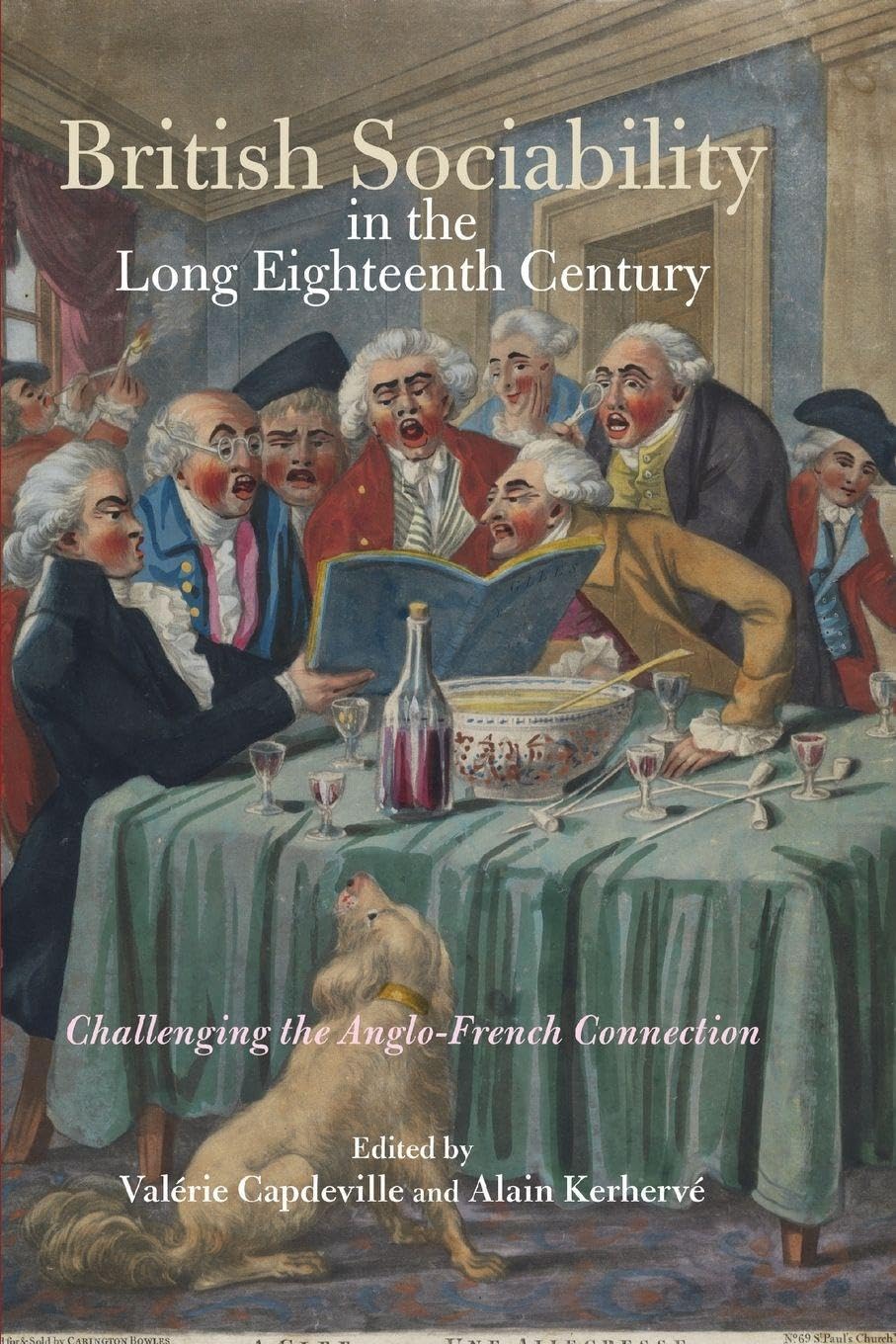
British Sociability in the Long Eighteenth Century: Challenging the Anglo-French Connection (Studies in the Eighteenth Century, 3)
$36.30
by Valérie Capdeville



This innovative collection explores how a distinctively British model of sociability developed in the period from the Restoration of Charles II to the early nineteenth century through a complex process of appropriation, emulation and resistance to what was happening in France and other parts of Europe. The study of sociability in the long eighteenth century has long been dominated by the example of France. In this innovative collection, we see how a distinctively British model of sociability developed in the period from the Restoration of Charles II to the early nineteenth century through a complex process of appropriation, emulation and resistance to what was happening in France and other parts of Europe. The contributors use a wide range of sources - from city plans to letter-writing manuals, from the writings of Edmund Burke to poems and essays about the social practices of the tea table, and a variety of methodological approaches to explore philosophical, political and social aspects of the emergence of British sociability in this period. They create a rounded picture of sociability as it happened in public, private and domestic settings - in Masonic lodges and radical clubs, in painting academies and private houses - and compare specific examples and settings with equivalents in France, bringing out for instance the distinctively homo-social and predominantly masculine form of British sociability, the role of sociabilitywithin a wider national identity still finding its way after the upheaval of civil war and revolution in the seventeenth century, and the almost unique capacity of the British model of sociability to benefit from its own apparent tensions and contradictions. This volume is a great tribute to the exciting and vibrant research taking place in the history of eighteenth-century British sociability. . . . Wide-ranging and eclectic in its methodological and thematic approach, it is clear that this volume will appeal to a wide range of scholars, whether approaching this from a historical, literary, philosophical, political, or social perspective. ― H-NET [...] it is impossible to miss the relevance and significance of this publication's exploration of the limits, paradoxes, and conditions of eighteen-century sociability. -- James Harriman-Smith ― Eighteen-Century Studies This wide-ranging collection illuminates the development of national social and political formations. ― FAMILY AND COMMUNITY HISTORICAL RESEARCH SOCIETY (FACHRS) NEWSLETTER VALÉRIE CAPDEVILLE is Professor of British History and Civilisation at the University of Rennes 2. ALAIN KERHERVÉ is Professor of British Studies at the Faculté des Lettres et Sciences Humaines Victor Segalan, University of West Brittany (UBO Brest). MICHÈLE COHEN is emeritus Professor of Humanities, Richmond, American International University in London, UK. BRIAN COWAN is an Associate Professor of History at McGill University. MARKMAN ELLIS is Professor of Eighteenth-Century Studies at Queen Mary University of London.