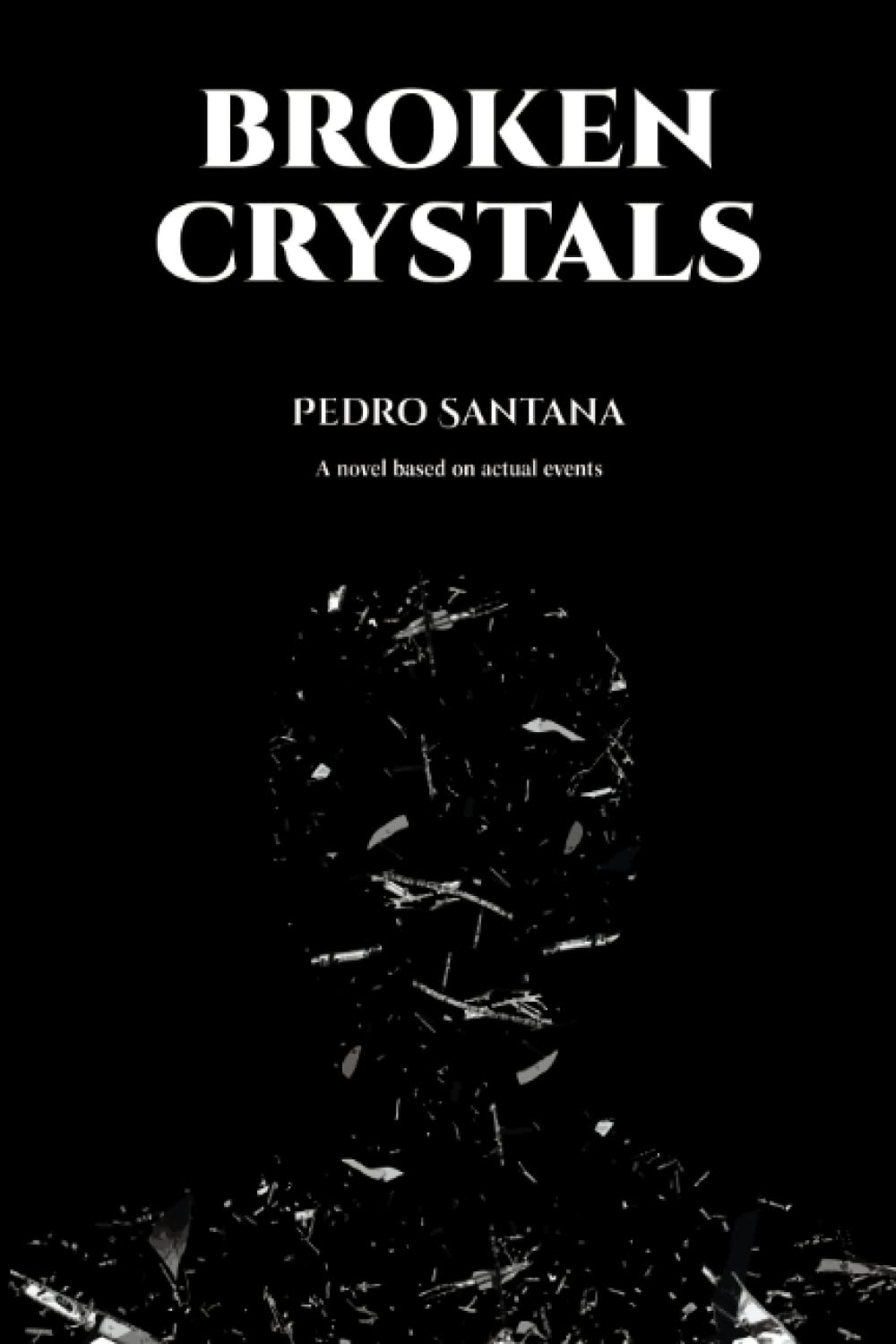



Broken Crystals shows the dark and hostile aspects of life for those who emigrate to the United States, but the story also demonstrates the consequences they face, the errors they make that sow the seeds of their own personal failures. These errors are made when people forget that they alone are responsible for guiding their destiny, and in doing so, lead themselves to the edge of a cliff. Pedro Santana pays meticulous attention to this phenomenon in his novel, which is a literary, and not a didactic, work. In doing so, he is able to achieve an aesthetic quality that is truly enjoyable for the reader. The novel addresses social problems in the world of the author, his worldview and ultimately his desire to improve the society he is forced to be a part of. Stylistically, Pedro Santana is well versed in the literary language he chooses to craft his narrative, and which stands in contrast to the discursive language of didactic, journalistic or scientific works. As is the case, novelists must infuse their words with a multidimensionality that cannot be found in other written genres. Hence, the author is tasked with endowing words with a significance that points to something far beyond the simple definitions we find in dictionaries. Pedro Santana achieves this feat with passionate flair, provoking emotions through the events detailed, and describing the psychological forces acting upon each character. Pedro Santana does not use his storytelling abilities to perform verbal pirouettes, rather, he uses his talents to achieve a marvelous verbal simplicity. I believe that Pedro Santana has created a dynamic novel; one that comes alive with its complexity while remaining accessible to the casual reader, who may not have the talents afforded to one by a rigorous course of academic studies. Readers may enjoy and assimilate the author’s work regardless of whether or not they are widely versed in literary texts. —Rafael Peralta Romero