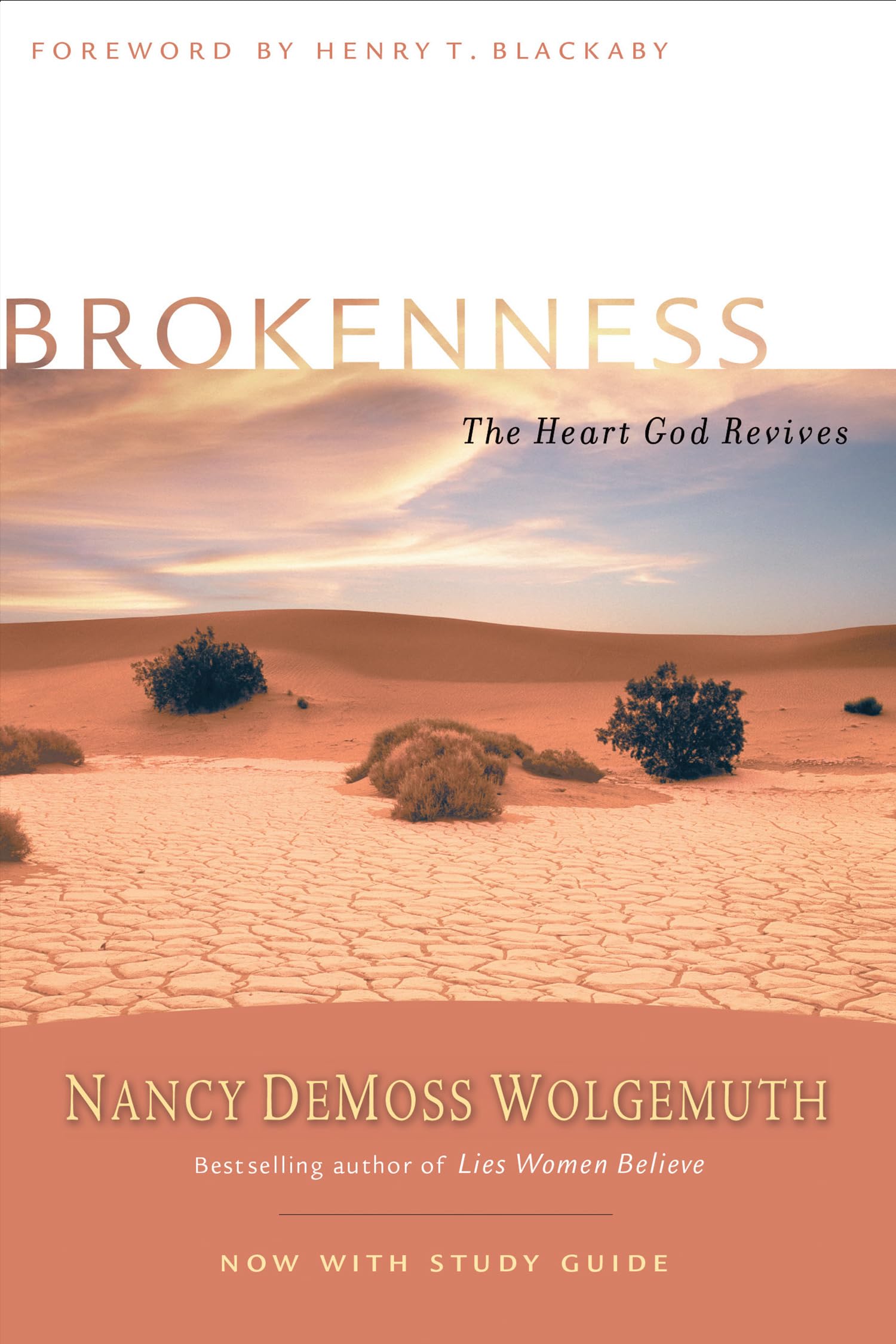



Every great movement of God is preceded by a season of humility and repentance. It is a time of tearing down walls, of getting honest with God and others about your true spiritual condition. It may be hard. It may hurt. But in the end, God will use your brokenness to restore your 'first love' for Jesus, rekindle your spiritual fire, reconcile your relationships, and repair your life. A richer, deeper, more God-filled life is waiting for you. And it all begins with Brokenness, the first book in The Revive Our Hearts Series , which has sold well over 80,000 copies! "I am convinced that there is no way to have an intimate, dynamic, and fruitful relationship with God, apart from the truths Nancy presents in this book. I saw this firsthand when, in the summer of 1995, He used her message on brokenness to impact the staff of Campus Crusade for Christ in a way I could never have imagined." -Bill Bright, Campus Crusade for Christ "Nancy has my enthusiastic applause and heartfelt blessing as she seeks to fan into flame the fire of revival through her teaching on brokenness." -Anne Graham Lotz, AnGel Ministries Do you need a fresh encounter with God? Are you ready for Him to pour out His grace on the dry, thirsty ground of your heart? Nancy DeMoss Wolgemuth has discovered an irrefutable spiritual principle: before every great movement of God there is always a time of deep repentance. Here is her moving, true account of how God created that brokenness in others--and the astonishing revival that followed. NANCY DEMOSS WOLGEMUTH is the founder and lead Bible teacher for Revive Our Hearts , a ministry dedicated to calling women to freedom, fullness, and fruitfulness in Christ. Nancy's love for Christ and passion for helping women cultivate a vibrant devotional life are evident through her writing, digital, and conference outreaches and her two daily audio teachings— Revive Our Hearts and Seeking Him . Her books have sold millions of copies and are reaching the hearts of women around the world. Nancy and her husband, Robert, live in Michigan. I believe one of the reasons many believers are afraid of the idea of brokenness is that they have misconceptions about what brokenness really means. As is true in so many other areas, our idea of brokenness and God's idea of brokenness are usually quite different. For example, some people think of brokenness as always being sad or gloomy. Others think of brokenness as being morbidly introspective: "Oh, woe is me! I've confessed every sin I can possibly think of; but surely there must be something I've missed. Oh, what a worm I am!" False humility and morbid introspection are, in fact, the opposite of brokenness, as they reveal a preoccupation with self, rather than Christ. So what is true brokenness? Someone has said that brokenness, like a fragrance, is easier to detect than to define.