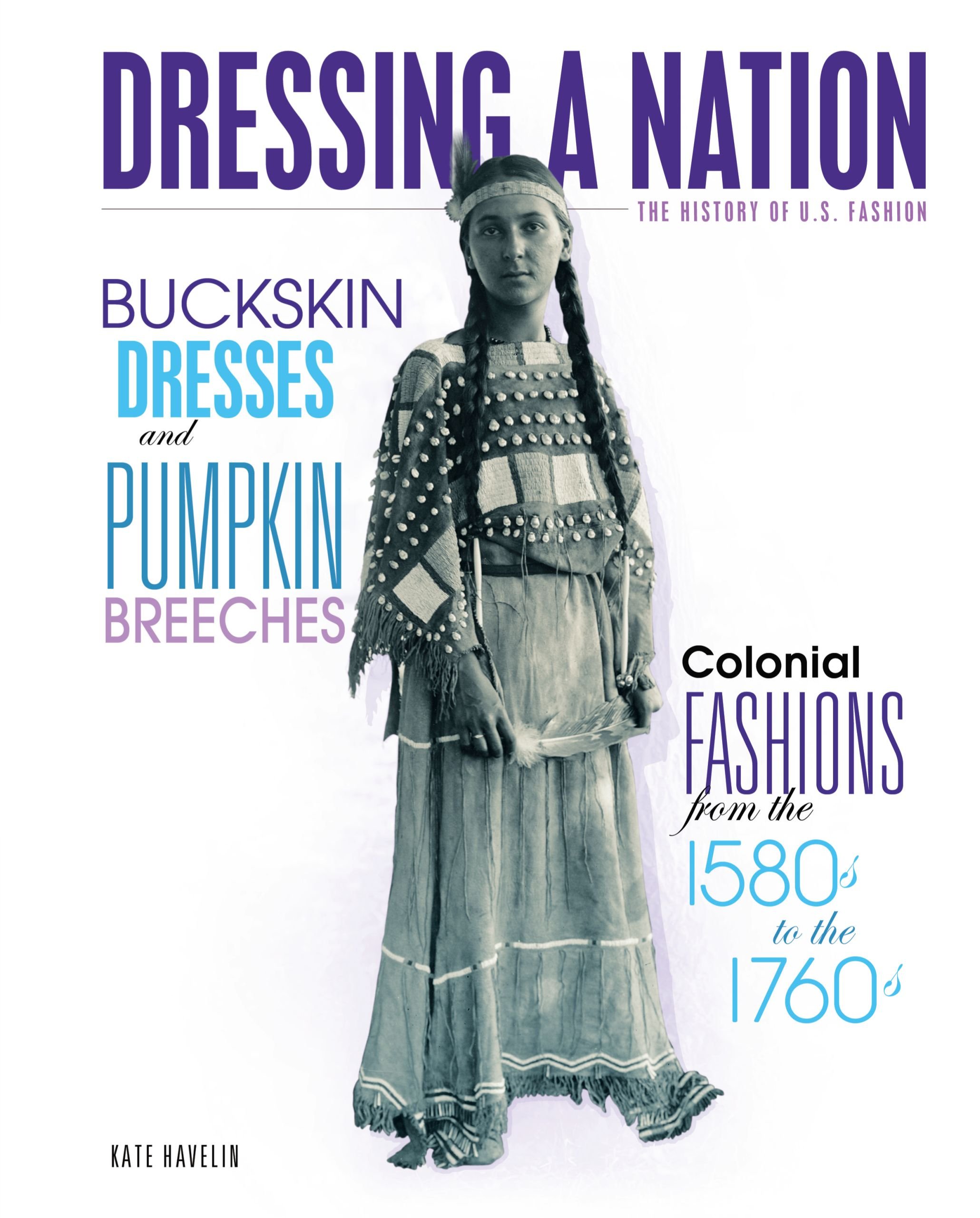
Buckskin Dresses and Pumpkin Breeches: Colonial Fashions from the 1580s to the 1760s (Dressing a Nation: The History of U.S. Fashion)
$22.87
by Kate Havelin



What would you have worn if you lived during the Colonial era? It depends on who you were! For example, many Native American women made skirts or dresses out of deerskin, and they completed the look with jewelry crafted from metal, shells, stones, pearls, or animal bones. But in European settlements, women of fashion dressed in many layers. One of the first layers was a stay―a corset-like garment made of whalebone that tied or laced around the chest. On top of that, they put on a bodice, a waistcoat or a jacket, and several heavy petticoats. Read more about Colonial fashions―from wigs to beaver-pelt hats and linen caps―in this fascinating book! " These well-written and appealing books place clothing and fashion, from underwear to headgear, in the larger context of American history, emphasizing that for most of our past, clothing signified status and reinforced societal roles, especially for women. The series includes information about the clothing of many groups, notably Native Americans, African Americans, soldiers, and children. It also discusses regional and ethnic differences in dress and traces how clothing styles and forms reflected changes in society. Large, attractive period illustrations and color and archival photos and boxed quotes enhance the texts. This series is certain to draw both researchers and browsers. " -- School Library Journal , Series Made Simple ( Journal ) Kate Havelin has written more than a dozen books for young people, including biographies of Queen Elizabeth I, Ulysses Grant, and Che Guevara. The Amelia Bloomer Project included her Victoria Woodhull: Fearless Feminist in its recommended list of books. Havelin has also written two trail guidebooks for adults, Minnesota Running Trails: Dirt, Gravel, Rocks & Roots and Best Hikes of the Twin Cities , both of which received awards from the Midwest Book Awards. When she's not writing, she likes to read, run, hike, kayak, ski, or snowshoe. Havelin lives in St. Paul with her husband and two teenage sons.