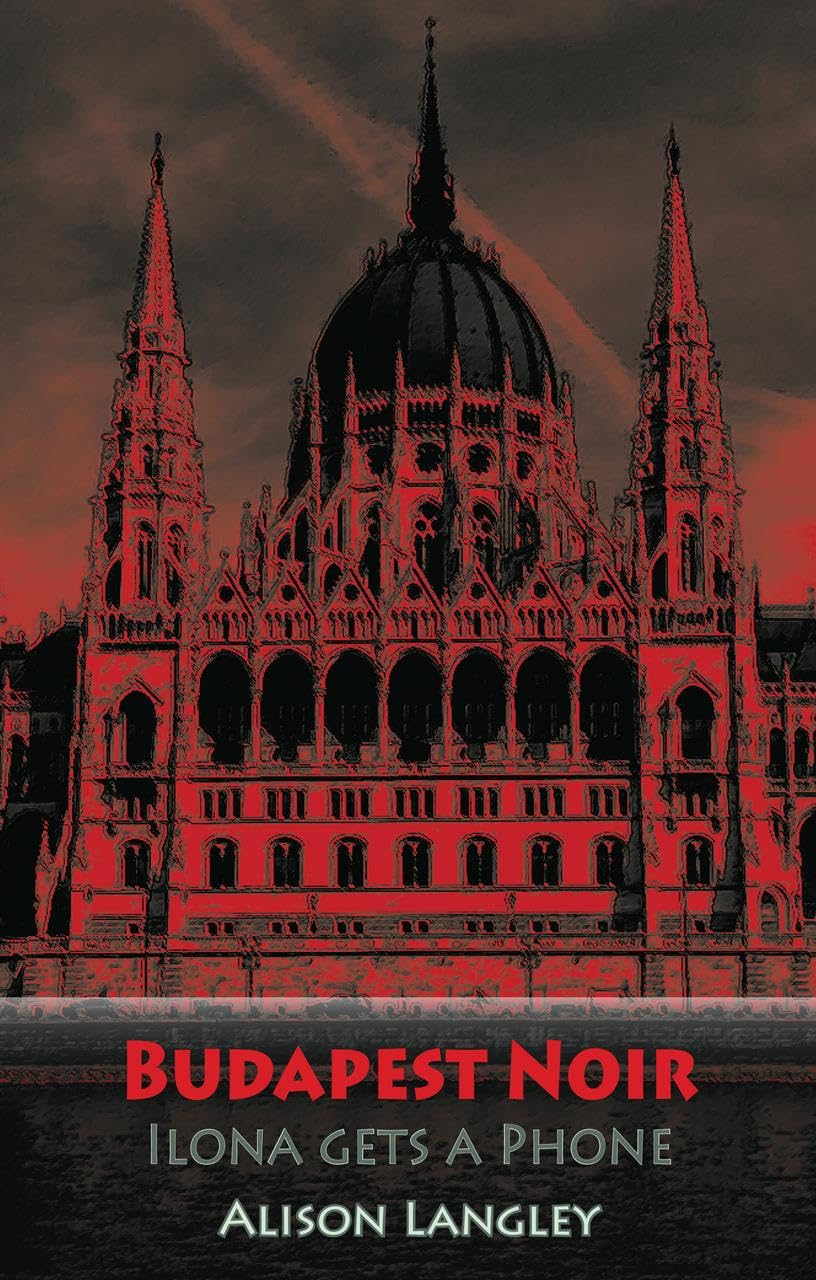



In Budapest Noir 1945, 1956 and 1974 merge into 1991 and a nation is allowed to remember the dark days of its past and come to terms with its history before seeking to move on to a different future. The novel starts with Ilona getting a phone installed in 1991. This banal act has huge significance as before the fall of the Communist government Ilona was not allowed to have a phone as her husband took part in the 1956 Uprising and her son escaped in 1974. In 1991 with the aid of a Fullbright Scholarship with his wife and small child Ilona’s son Emil returns to Budapest for the first time to create an exhibition about Hungary’s transition to democracy. Ilona wants her son to get back what had been stolen from them by the Communists and make them rich while Emil just wants to make art and learn about the past. This clash of values nearly spells disaster. There are flashbacks to the Russian army arriving in 1945 and the uprising in 1956. The novel recounts the dark and tragic events which took place. It is hard not to be moved to tears by what Ilona and her family had to endure. Her story is one that she shared with countless others in Budapest and Hungary during those dark days. Ilona never complains and never talks about the past, it is a weight she carries in silence. "For those of us who first encountered Hungary in the early 1990s, Langley’s novel is evocative. It captures the rough & ready atmosphere of a modern country being improvised into being. Langley was herself a journalist covering those changes & she artfully ‘textures’ her descriptions in regard to both emotional tenor & physical setting. The mix of excitement, disappointment, & (seemingly paranoid) fearfulness that competed in social life & individual psyches comes across clearly ―sometimes manifested by a single speaker during a conversation...To those who lived through the social trauma of market reforms accompanying the sale of state firms to foreign investors during the ‘Wild East’ period, the appeal of a strongly nationalist & ‘sovereignist’ message is obvious. Langley’s narrative exploration of social problems elucidates how those choices became possible & insight makes this book useful to those who want to understand Hungary better." - Alexander Faludy in The Hungarian Observer "For me the most interesting part of this book was less the family issues that occur and far more the various issues that arise both as Hungary gains its freedom from communism, and very much struggles with that freedom – converting from communism to capitalism and all that that implies, bribery and corruption, Western influence, not always positive, and a range of economic issues – as well as the reckoning with the past, tricky for any country." - John Alvey in The Modern Novel Alison Langley was born in Missouri, but grew up in Minnesota. After graduating from the University of Minnesota, she worked as a journalist in Connecticut and Maryland before moving in 1986 to Europe, where she covered events in Germany, Hungary, Austria and Switzerland. Most recently she taught journalism in Vienna. She lives in the Swiss Alps with her Irish husband and their dog Guido. Budapest Noir is her first novel