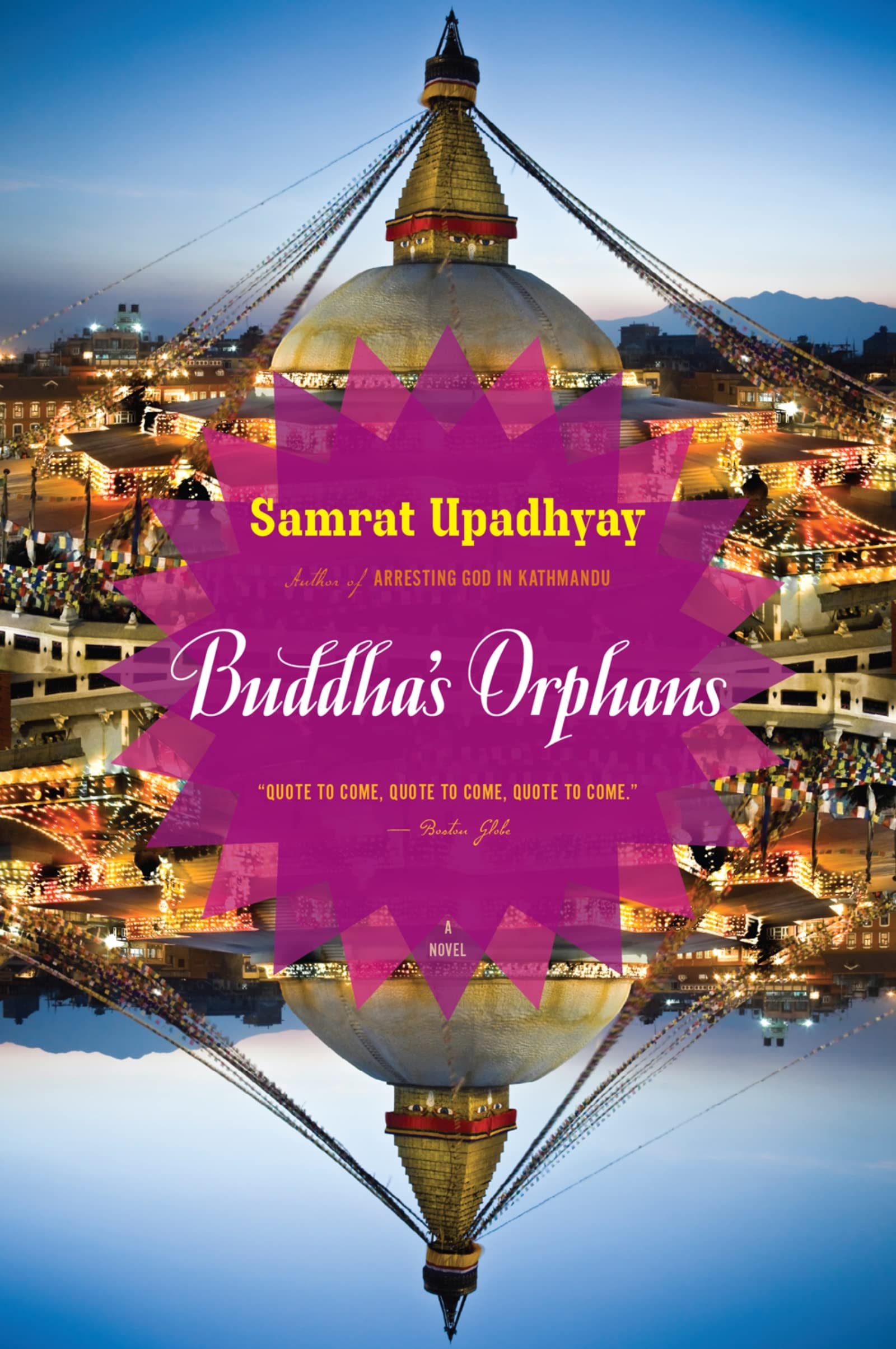
Buddha's Orphans: A Literary Historical Romance – Fated Love That Transcends Time
$19.16
by Samrat Upadhyay



Called “a Buddhist Chekhov” by the San Francisco Chronicle, Samrat Upadhyay’s writing has been praised by Amitav Ghosh and Suketu Mehta, and compared with the work of Akhil Sharma and Jhumpa Lahiri. Upadhyay’s novel, Buddha’s Orphans , uses Nepal’s political upheavals of the past century as a backdrop to the story of an orphan boy, Raja, and the girl he is fated to love, Nilu, a daughter of privilege.Their love story scandalizes both families and takes readers through time and across the globe, through the loss of and search for children, and through several generations, hinting that perhaps old bends can, in fact, be righted in future branches of a family tree. Buddha’s Orphans is a novel permeated with the sense of how we are irreparably connected to the mothers who birthed us and of the way events of the past, even those we are ignorant of, inevitably haunt the present. But most of all it is an engrossing, unconventional love story and a seductive and transporting read. "In this novel, Upadhyay has masterfully blended history, tragedy, politics and romance to create the arresting story of a family that is at once unique and universal, set against the backdrop of a vibrant, complicated, modern Nepal that will fascinate readers." — Chitra Divakaruni, author of One Amazing Thing and Palace of Illusions "Buddha's Orphans is an extraordinary achievement. It has the sweep and romantic grandeur of a great old-fashioned Russian novel, and, at the same time, the precision and intimacy of a beautiful collection of linked stories. Samrat Upadhyay has created a remarkable work, one to be savored and remembered." —Dan Chaon, author of Await Your Reply Raja and Nilu are fated to fall in love. They have both been abandoned he through his mother s suicide in the public pond, she through her mother s constant escape into drink. He has grown up on the streets, she in a crumbling mansion. And yet, they find each other, again and again. First, when they are children. Then, when they are young lovers. And, finally, after they both fear they have lost their marriage. But the events of the past, even those we are ignorant of, inevitably haunt the present. And Raja and Nilu s story is not only their own. Buddha s Orphans traces the roots of this love story and follows its growth through time, across the globe, through the loss of and search for children, and through several generations, hinting that perhaps old bends can, in fact, be righted in future branches of a family tree. Using Nepal s political upheavals as backdrop to demonstrate how we are irreparably connected to past and home, Buddha s Orphans is an engrossing, unconventional love story, a seductive, transporting read, and further evidence that Samrat Upadhyay is one of our finest writers, thoroughly deserving of his acclaim as "the Buddhist Chekhov" and comparisons to Amitav Ghosh, William Trevor, and Jhumpa Lahiri. " Raja and Nilu are fated to fall in love. They have both been abandoned—he through his mother’s suicide in the public pond, she through her mother’s constant escape into drink. He has grown up on the streets, she in a crumbling mansion. And yet, they find each other, again and again. First, when they are children. Then, when they are young lovers. And, finally, after they both fear they have lost their marriage. But the events of the past, even those we are ignorant of, inevitably haunt the present. And Raja and Nilu’s story is not only their own. Buddha’s Orphans traces the roots of this love story and follows its growth—through time, across the globe, through the loss of and search for children, and through several generations, hinting that perhaps old bends can, in fact, be righted in future branches of a family tree. Using Nepal’s political upheavals as backdrop to demonstrate how we are irreparably connected to past and home, Buddha’s Orphans is an engrossing, unconventional love story, a seductive, transporting read, and further evidence that Samrat Upadhyay is one of our finest writers, thoroughly deserving of his acclaim as "the Buddhist Chekhov" and comparisons to Amitav Ghosh, William Trevor, and Jhumpa Lahiri. SAMRAT UPADHYAY is the author of Arresting God in Kathmandu , a Whiting Award winner, The Royal Ghosts , and The Guru of Love , a New York Times Notable Book and a San Francisco Chronicle Best Book of the Year. He has written for the New York Times and has appeared on BBC Radio and National Public Radio. Upadhyay directs the creative writing program at Indiana University. Orphan RAJA’S MOTHER HAD abandoned him on the parade ground of Tundikhel on a misty morning before Kathmandu had awakened, then drowned herself in Rani Pokhari, half a kilometer north. No one connected the cries of the baby to the bloated body of the woman that would float to the surface of the pond later that week. The School Leaving Certificate exam results had just been published in Gorkhapatra, so everyone deduce