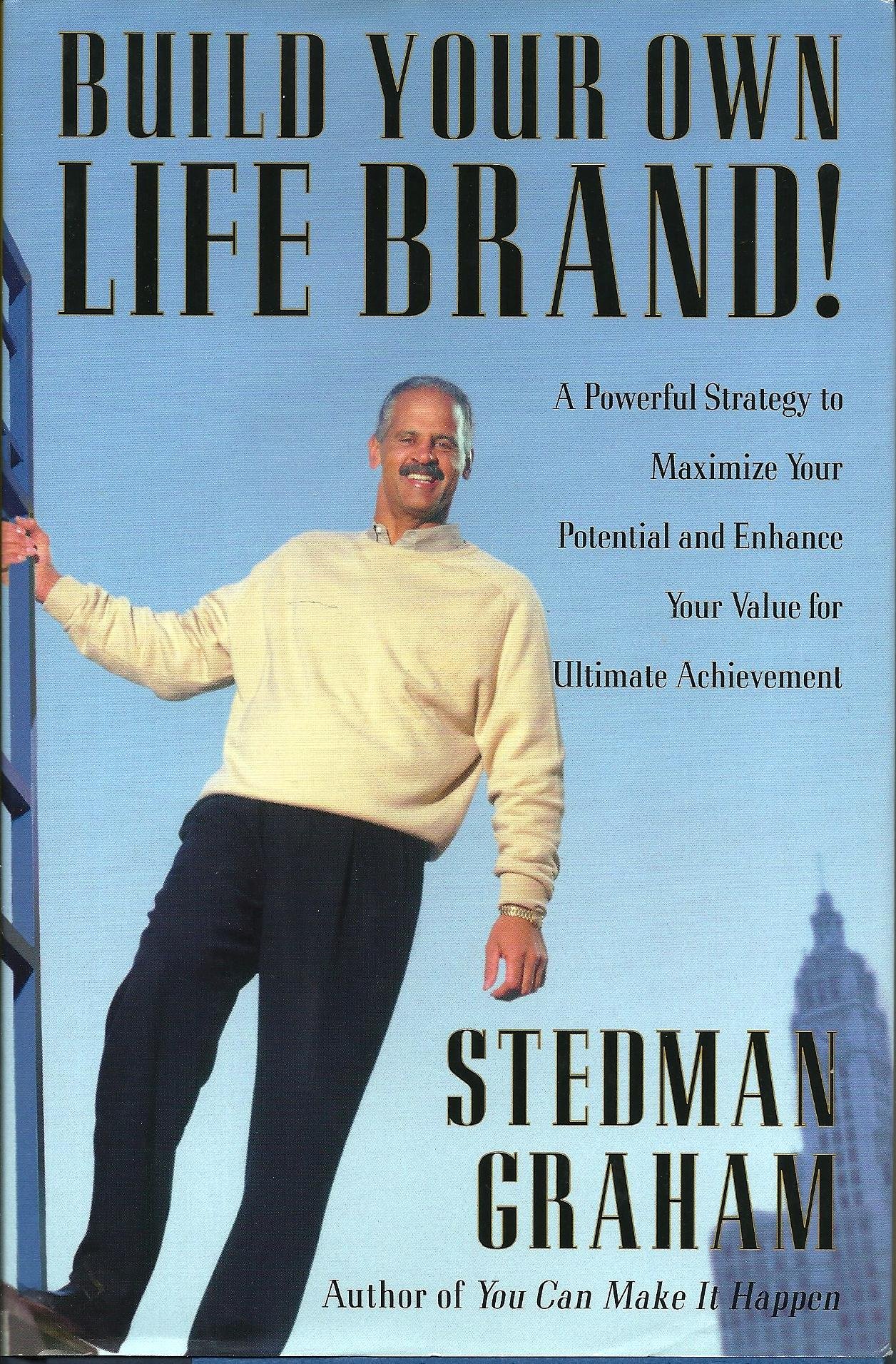
Build Your Own Life Brand! : A Powerful Strategy to Maximize Your Potential and Enhance Your Value for Ultimate Achievement
$8.62
by Stedman Graham



Encourages readers to create a strong, unique personal "life brand" they can carry with them into every circumstance to enrich their own lives and the lives of others in their workplace, their family, and their community. Even though Graham runs his own management and marketing consulting firm and founded Athletes Against Drugs, he is best known--rightly or wrongly--as Oprah Winfrey's boyfriend. Furthermore, Graham is a coauthor of The Ultimate Guide to Sport Event Management and Marketing (1995) and has taught sports marketing at Northwestern University's business school. He also co-taught "Dynamics in Leadership" there with Oprah during her much publicized foray into academia. Other books by Graham are the motivational You Can Make It Happen: A Nine-Step Plan for Success (1997) and a heartfelt spin-off called Teens Can Make It Happen: Nine Steps to Success (2000). Graham suggests that this new book complements and expands the ideas he presented in those two earlier titles. He acknowledges that personal branding is no longer a novel tactic, but he applies his own unique perspective. He discusses the concept of branding, explains how it can be applied to one's life, and offers up plenty of examples. David Rouse Copyright © American Library Association. All rights reserved Stedman Graham is chairman and chief executive officer of S. Graham & Associates, an educational company that creates customized corporate training and leadership development programs. He is also the author of two New York Times bestsellers, You Can Make It Happen and Teens Can Make It Happen, as well as being an adjunct professor at the Kellogg Graduate School of Management at Northwestern University, a distinguished visiting professor at Coker College, and a visiting professor at George Washington University. Graham is the founder of The Leadership Institute of Chicago, a nonprofit education and research organization dedicated to promoting effective leadership, and is a member of the National Board of Junior Achievement. He received a bachelor's degree in social work from Hardin-Simmons University and a master's degree in education from Ball State University. Chapter One: Build a Brand Name for Yourself When I was playing high school basketball many years ago, there was one name that stood out in every game: Chuck Taylor. Chuck wasn't a big scorer or a great rebounder. In fact, he was constantly underfoot on the court. More accurately, he was on our feet. Before there were Nikes or Reeboks, Converse Chuck Taylor All Stars was the brand. It was the most popular basketball shoe of my high school generation. Back then, when you made the varsity team, you just had to get a pair of Chuck Taylor high-tops. All the players that I admired in high school, college, and the pros were wearing them, so I associated Chuck Taylor with success on the basketball court. I grew up like everyone else, with hundreds of other brand-name products around me -- top brands such as Wheaties, Pepsi, and Ford Thunderbird -- but my desire to have a pair of Chuck Taylors marked the real beginning of my brand awareness as a consumer. A brand product is one with a unique identity intended to set it apart from similar products. The cereal brand Wheaties is "the breakfast of champions." The Pepsi soft drink brand is "the joy of cola." Compaq brand computers offer "better answers," according to an ad in a magazine on my desk. We are so bombarded by product brands that we are hardly conscious of them much of the time, but most of us have at least some level of brand awareness. We can sing the jingles of our favorite brands. It's the real thing! We can repeat their ad slogans. Just do it! Most important for the companies that make brand-name products, we look for them when we shop. Increasing a product's brand awareness is one of the jobs performed by my management and marketing consulting company, S. Graham & Associates. Marketing and working with brands are the primary roles of my firm, which provides strategic planning, marketing, consulting, and program execution to companies seeking to target general and multicultural markets. Our clients come to us for help in creating, expanding, and revitalizing their brand names. Our speciality is to build upon what they have already accomplished with their brands by helping them sell their products to multicultural consumers whom they may not be reaching effectively. We also help new companies develop and establish their brands by determining what their primary target markets are and how they can best explain the value of their product to consumers. A BRAND-NEW WAY OF LOOKING AT YOUR LIFE "Everything is a brand. Most people don't recognize that. Where you live, the house you live in, the street you live on...they are all brands. And people are brands," Frank Delano, president of the New York-based Delano & Young, a brand-image firm, told the Chicago Tribune recently. - "We're all brands, in t