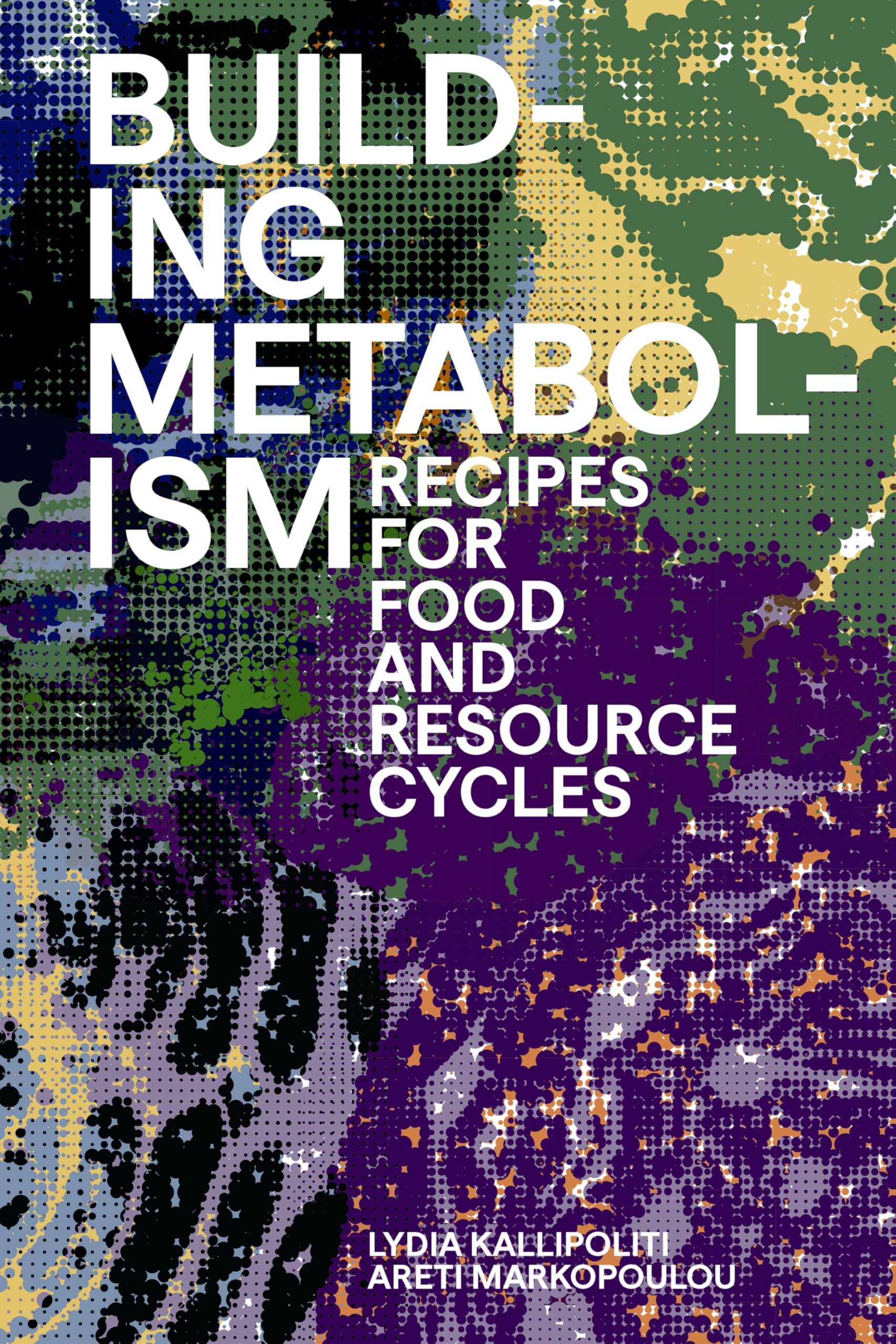



How can we design the architecture of metabolism? How can architecture redefine resources, produce nutrients and contribute to regenerate land and protect communities at risk? Building Metabolism aims to reveal how architecture constructs, distributes, and leverages power via material recycling, interspecies alliances, biopolitics and excremental processes. This book, stemming from the expanded work produced for the 2022 Tallinn Architecture Biennale—themed EDIBLE and curated by the authors—reimagines the “home” on both domestic and planetary scales as a digestive system, processing human output in its various forms and converting it into actionable resources. This portrayal of the “home” urges readers to look at resources in a visceral way; via the raw ecologies of our bodies and the understanding that the social problems related to climate justice are not simply statistical, abstract, and disembodied. Instead, they are intertwined with our own production and living processes, and they are landed on bodies: on the food we eat, the water we drink, and the air we breathe. Envisioning an architecture that produces resources, digests its waste, and decomposes itself, Building Metabolism challenges the extractive, consumptive, and contaminating logics of the built environment. Moving beyond an understanding of metabolism as a collection of inhabitable machines—which is a reading that carries the heavy burden of modernism—the book explores metabolism as patterns of energy and material generation and distribution within a multiverse. This reality does not tolerate traditional dichotomies of nature and artifice, humans and non-humans, resource, and waste; rather, it urges the emergence of a novel network of life and death and alternative forms of matter, including non-human agents, but also technological and cultural others. Building Metabolism aims to explore the potential of all natural and technological expressions to mitigate the contaminating and extracting nature of our desires and protocols related to the production of the built environment. With Contributions of Lydia Kallipoliti, Areti Markopoulou, Andrés Jaque, Mark Wigley, Barbara Penner, Design Earth, Lateral Office, and Feifei Zhou among others. "Colorfully illustrated throughout and thoroughly 'reader friendly' in organization and presentation, knowledgeably compiled and deftly co-edited Lydia Kallipoliti and Areti Markopoulou, "Building Metabolism: Recipes for Food and Resource Cycles" is a an extraordinary and thought-provoking contribution to the growing library of contemporary architectural studies and a unique, essential, unreservedly recommended acquisition for personal, professional, corporate, and college/university library Contemporary Architecture collections and supplemental Architectural Studies curriculums." —Midwest Book Review Lydia Kallipoliti is an architect, engineer, and scholar whose research focuses on the intersections of architecture, technology and environmental politics. She is the Director of the MS in Advanced Architectural Design and an Associate Professor at Columbia University [GSAPP] in New York. Kallipoliti is the author of The Architecture of Closed Worlds, Or, What is the Power of Shit (Lars Muller Publishers, 2018), Histories of Ecological Design: An Unfinished Cyclopedia (Actar, 2024) and the editor of EcoRedux, an issue of Architectural Design in 2010. Her work has been awarded, published and exhibited widely including the Venice Biennial, the Istanbul Design Biennial, the Shenzhen Biennial, the Oslo Architecture Trienalle, the Onassis Cultural Center, the Lisbon Triennale, the Royal Academy of British Architects, the Storefront for Art and Architecture in New York and the London Design Museum. Areti Markopoulou is a Greek PhD architect, researcher and urban technologist working at the intersection of architecture and digital technologies. Her research and practice focus on redefining urban and architectural paradigms through an ecological and technological lens, integrating design with biotechnologies, innovative materials, digital fabrication, and big data. She is the Academic Director at IAAC in Barcelona, where she leads the Advanced Architecture Group, a multidisciplinary research lab exploring how design and science can transform the built environment. Founder of the Master in AI for Architecture & the Built Environment and the Master in City & Technology, she has led and coordinated academic research and European-funded projects on ecological and circular construction, urban regeneration through data science, and multidisciplinary education in the digital age. Food organizes and establishes territorial sovereignty and political struggle, which are largely hidden behind power regimes that maintain aesthetic and lifestyle desires while changing the earth. The appearance of edibles, as well as the ways in which they are ingested and then wasted, are entangled with political protocols that manufactur