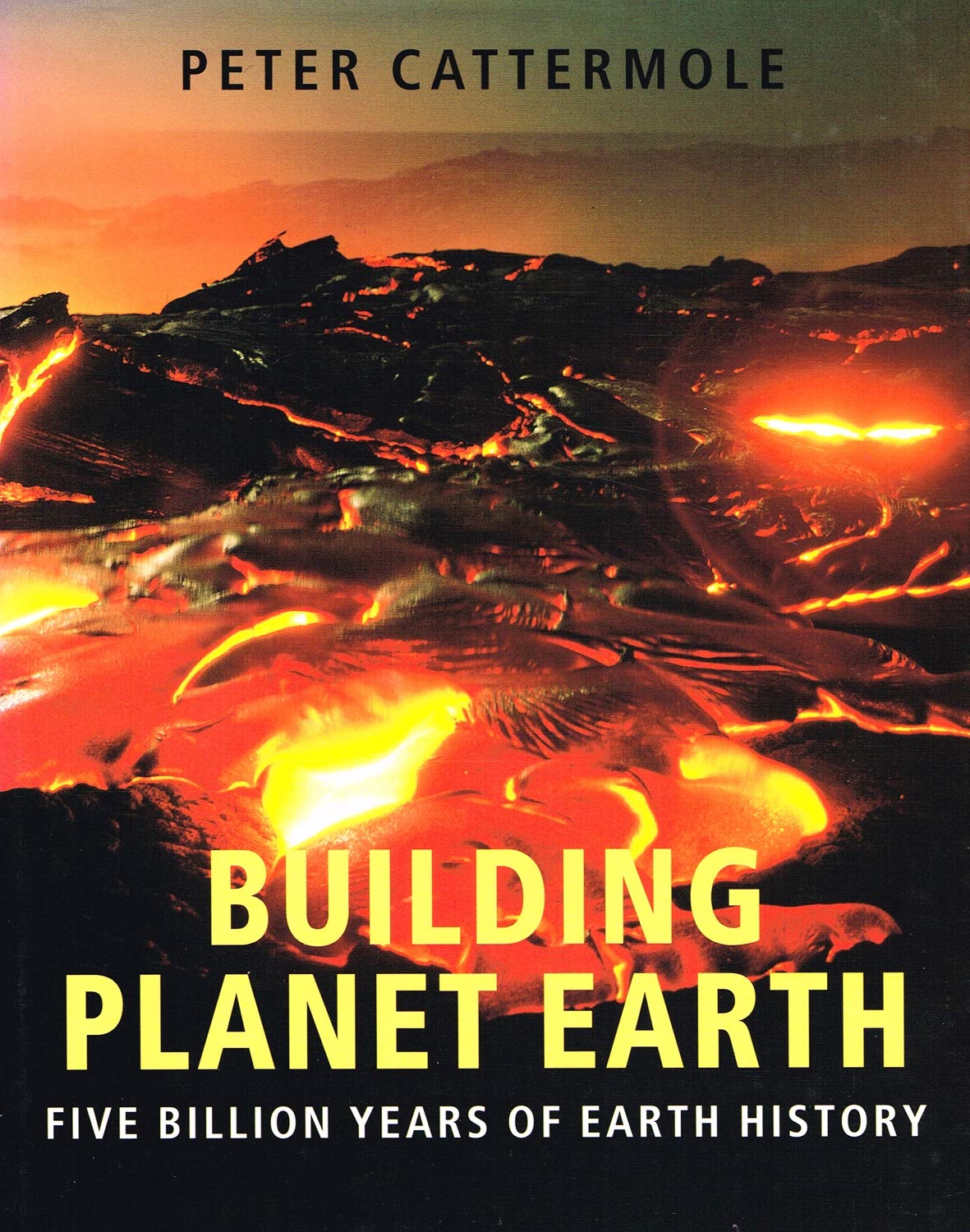



Continental plates, moving as fast as human hair grows, collide, mountains buckle, the ocean abyss sucks in the Earth's crust, and volcanos explode. Here is a story that Hollywood wished it could option: the dynamic cycle of geological destruction and renewal that has stretched across billions of years and shaped our planet in its current image. Scene by scene, this action-packed blockbuster can be experienced in Building Planet Earth. Peter Cattermole begins the story by describing a cloud of matter that surrounds a primitive Sun. Out of this the Earth was formed through compaction and internal heating to the point at which it became a stable, layered structure with a core, mantle, and crust. Using eye-catching images, artwork, and diagrams, Building Planet Earth presents this geological development and goes on to discuss what is happening to our planet now and what we can expect in the future. Cattermole covers in fascinating detail the impact of mass extinctions, global-warming, and ozone holes. The book features 241 illustrations--128 in full-color--and a number of useful appendices. For anyone who has ever wondered how this miraculous planet continues to thrive and surprise, this elegantly-written book will be an essential read. Peter Cattermole is a principal investigator with NASA's Planetary Geology and Geophysics Program. He has written several books on geology and astronomy as well as numerous articles for both scholarly and popular media, including Atlas of Venus (Cambridge University Press, 1997) and The Story of the Earth (Cambridge University Press, 1985). Building Planet Earth superbly illustrates and describes the geology of Earth; how it formed, became structured, and evolved into the planet as we know it, with its present distribution of continents, oceans, and dazzling diversity of life. This 4.6 billion-year history of the third rock from the sun is an extraordinary story, and understanding Earth's main geological processes has become increasingly important for ensuring our future on this crowded planet. Designed for the general reader, Building Planet Earth explains these fundamental Earth processes: how the atmosphere interacts with the oceans to produce our changing climates; how the heat from the Earth's central core drives surface processes, such as plate tectonics with its related earthquakes, fault movements, and volcanism; how mountains are formed and sediments deposited to form layers of strata, including the economically important hydrocarbons that fueled the industrial revolution; and how life prospered and declined through evolution and extinction, sometimes being abruptly terminated by catastrophic events from outer space. The combination of good graphics, artwork, and photographic illustration makes this a visually attractive, accessible read, complete with short bibliography, glossary, and index. --Douglas Palmer, Amazon.co.uk "...offers visually rich forays into earth science." American Scientist "Building Planet Earth would be my choise to get first-year undergraduates thinking about the wide spectrum of geological disciplines and their various applications. With an abundance of photos, it looks good on the coffee table too." Bokks and Multimedia Review "Well-written and easy to grasp, this book lays out the geology of earth's history." Northeastern Naturalist 2002 Highly illustrated and accessible account of Earth's history, geology, climate and more. Used Book in Good Condition