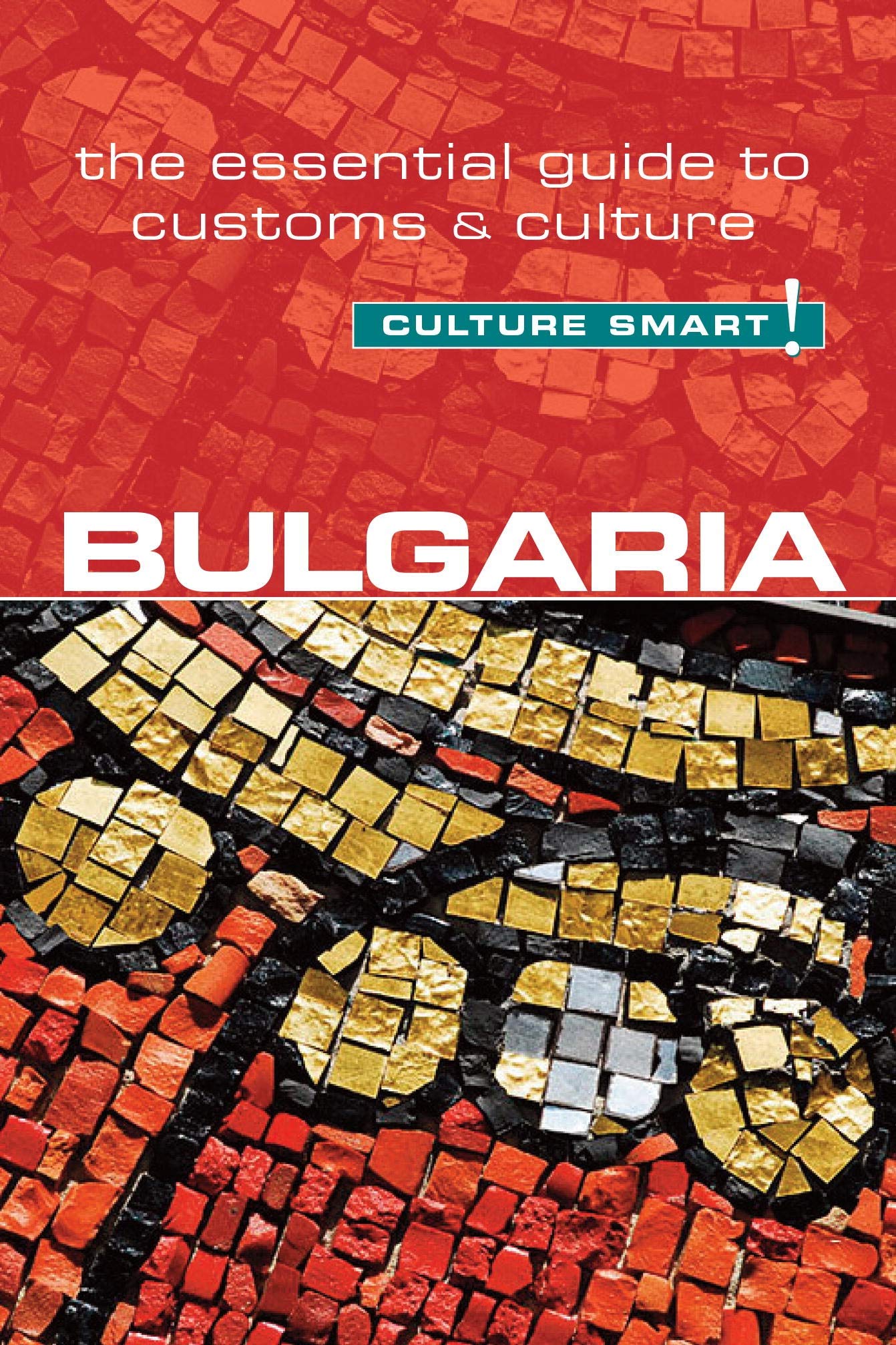
Bulgaria - Culture Smart!: The Essential Guide to Customs & Culture
$31.81
by Juliana Tzvetkova



Bulgaria, situated in southeastern Europe on the Black Sea, is one of Europe’s best-hidden secrets. A haven for nature and history buffs, this beautiful sunny country welcomes the traveler with bread and salt, a red rose, and ? wooden vessel full of sparkling wine. These three emblems of ancient treasures, rose oil, and natural beauty symbolize its distinctive culture. This youngest member of the European Union has been riding a roller-coaster of radical transformation since emerging from the Eastern Bloc and becoming a market economy twenty years ago, changing dramatically in many ways and yet preserving its own particular charm and slow-paced way of life. Invasions and waves of migration, dating back to neolithic and classical times, have contributed to a unique cultural mosaic. The country boasts the oldest hoard of gold treasure in the world. The seventh-century Bulgarian empire dominated the Balkans and was a powerhouse of Slavonic culture. Later, Ottoman conquest and Soviet influence left their mark on the national psyche. Culture Smart! Bulgaria provides a key to understanding the Bulgarian people. It outlines their long and complex history, shows you what everyday life is like there today, and offers advice on what to expect and how to behave in different circumstances. This is a small country of proud and persevering people. More than the golden sands of the “Bulgarian Riviera,” the vast thickly forested expanses of the Rhodopes or the Rila and Pirin ranges with their snow-capped peaks and emerald-green lakes, the music and dances and the warmth and cordiality of the Bulgarians will conquer your heart and bring you back time and again. Bulgaria By Juliana Tzvetkova Bravo Ltd Copyright © 2015 Kuperard All rights reserved. ISBN: 978-1-85733-713-6 Contents Cover, Title Page, Copyright, About the Author, Map of Bulgaria, Introduction, Key Facts, Chapter 1: LAND AND PEOPLE, Chapter 2: VALUES AND ATTITUDES, Chapter 3: CUSTOMS AND TRADITIONS, Chapter 4: MAKING FRIENDS, Chapter 5: THE BULGARIANS AT HOME, Chapter 6: TIME OUT, Chapter 7: TRAVEL, HEALTH, AND SAFETY, Chapter 8: BUSINESS BRIEFING, Chapter 9: COMMUNICATING, Further Reading, Acknowledgments, CHAPTER 1 LAND & PEOPLE GEOGRAPHY Situated in southeastern Europe on the northeast part of the Balkan Peninsula, the Republic of Bulgaria, covers 42,685 square miles (110,994 sq. km), and is Europe's sixteenth-largest country. Greece and Turkey are its southern neighbors; Serbia and the Former Yugoslav Republics of Macedonia and Montenegro lie to the west; the Danube River separates it from Romania to the north; and the Black Sea coast delineates its eastern border. Despite its comparatively small size, Bulgaria has an amazing variety of landforms. More than 65 percent of its territory is covered by plains and plateaus, while a quarter of the rest is mountainous. There are four main regions from north to south. Marking most of Bulgaria's northern border with Romania, the Danube flows through a vast plateau that extends south, reaching the Balkan range. The Danubian Plain lies between the Serbian border to the west and the northern Black Sea coast to the east. It rises gently from cliffs along the river to 3117 feet (950 m) before reaching the mountain range. This plateau contains Bulgaria's most fertile soil, which produces most of its wheat, sunflowers, grapes, sugar beet, and tobacco. The Balkan Mountains stretch from the Timok Valley in Serbia to the Sofia Basin in west-central Bulgaria, and thence eastward to the Black Sea. The range is about 370 miles (600 km) long and up to about 30 miles (50 km) wide. Mount Botev, the highest point, rises to 7,795 feet (2,376 m). The range then reaches and juts into the Black Sea as Cape Emine. Stara Planina (the Old Mountain), as the range is known in Bulgaria, is composed of granite and crystalline rock, but is much better known for the quality timber of its forests, which has led to the deforestation of large parts. The Balkan Mountains divide Bulgaria into two almost equal drainage systems. The larger system drains northward to the Black Sea by way of the Danube. This system includes the entire Danubian Plain and a stretch of land running inland from the coastline. The second system drains the Thracian Plain and most of the higher lands of the south and southwest to the Aegean Sea. Bulgaria has only one navigable river, the Danube, but many of its other rivers and streams are used for the production of hydroelectric power and for irrigation. To the south of the Balkan range are the Lowlands and Sredna Gora, a narrow ridge nearly a hundred miles (about 160 km) long and not very high. There lie more fertile valleys, the Valley of the Roses being the most famous among them for the production of rose oil. The southern slopes of the Balkan Mountains and the Sredna Gora merge into the Thracian Plain. Roughly triangular in shape, the plain begins east of the mountains near