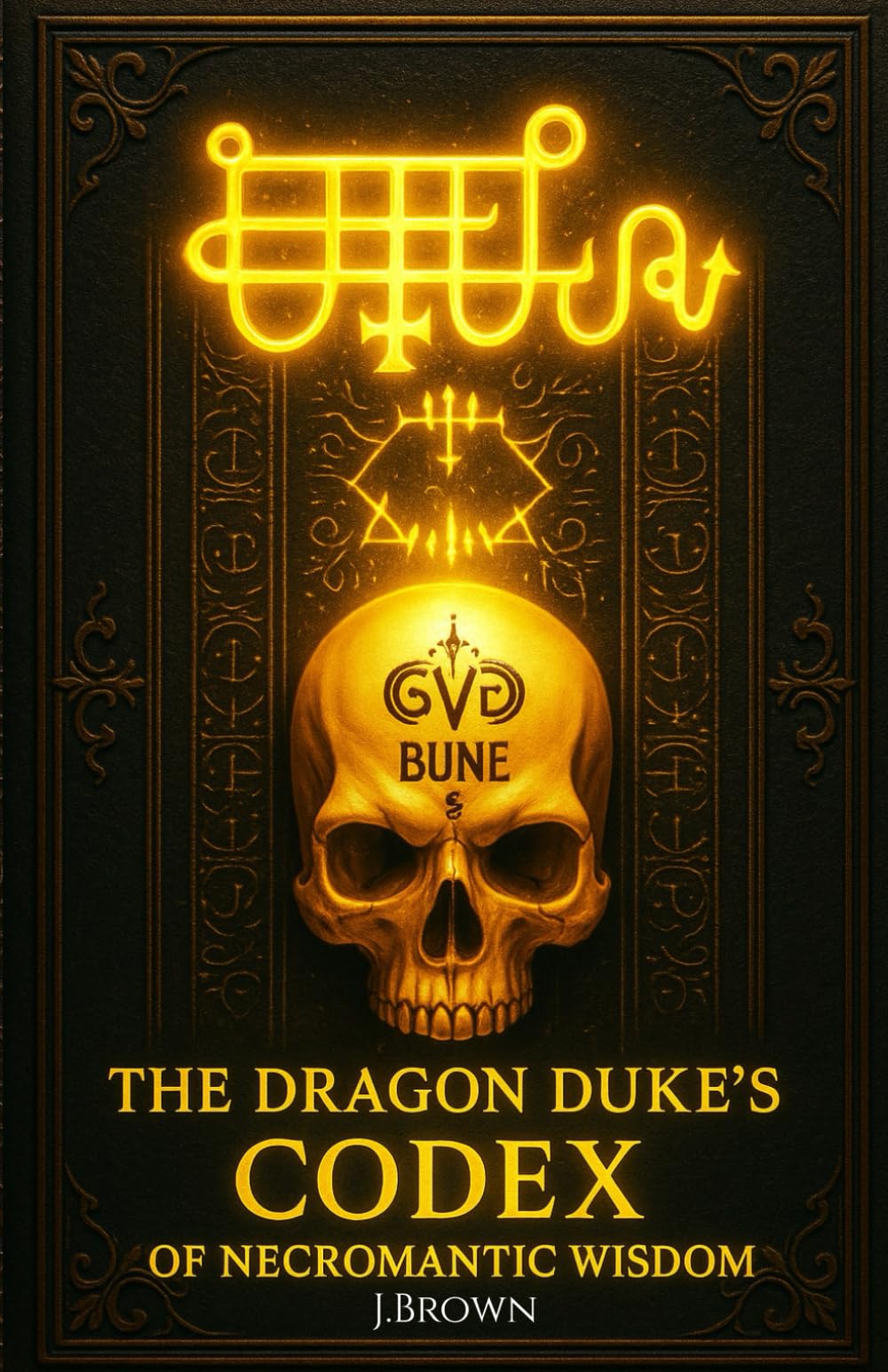



Bune: The Dragon Duke’s Codex of Necromantic Wisdom is a work of mythic philosophy—a literary grimoire that transforms the language of demonology into a meditation on mortality, consciousness, and renewal. Inspired by the medieval Ars Goetia yet freed from its dogma, the book re-imagines Bune, the Dragon Duke of ancient legend, as an archetype of transformation: guardian of endings, keeper of equilibrium, and teacher of the holy art of change. Across three illuminated “Books” and twenty-five chapters, The Ars Bune guides the reader through an interior pilgrimage. Book I , The Origins of the Flame , recounts the fall and re-ascension of knowledge—how light is born from shadow and wisdom from grief. Book II , The Codex of Balance , gathers allegories such as The Asmodean Covenant , The Corpse Candle Path , and The Glossarium Daemonica , where each so-called spirit embodies a human virtue or vice awaiting comprehension. Book III , The Ars of Invocation , reveals creation itself as the highest ritual: the invocation of awareness through art, humility, and compassion. The cycle concludes with the Colophon of the Scribe , where the narrator lays down his pen in gratitude, recognizing that endings are merely beginnings understood. Written in the solemn cadences of Renaissance mysticism, The Ars Bune joins the tradition of Dante’s Commedia and Blake’s Marriage of Heaven and Hell —works that employ myth to illuminate the human psyche. Its pages contain no formulas of power, only metaphors of responsibility; no literal spirits, only the personified forces that dwell within every thoughtful mind. It is at once a poem, a philosophy, and a mirror: a manual for self-transformation disguised as an ancient book of magic. Readers who enter its labyrinth will find reflections of themselves in every parable: fear transmuted into vigilance, passion tempered by purpose, mortality recast as meaning. The Ars Bune invites scholars, mystics, and lovers of symbolic literature to approach darkness not with dread but with dignity—and to discover, as its final line declares, that “to meet the Dragon is to meet oneself—terrible, beautiful, and awake.”