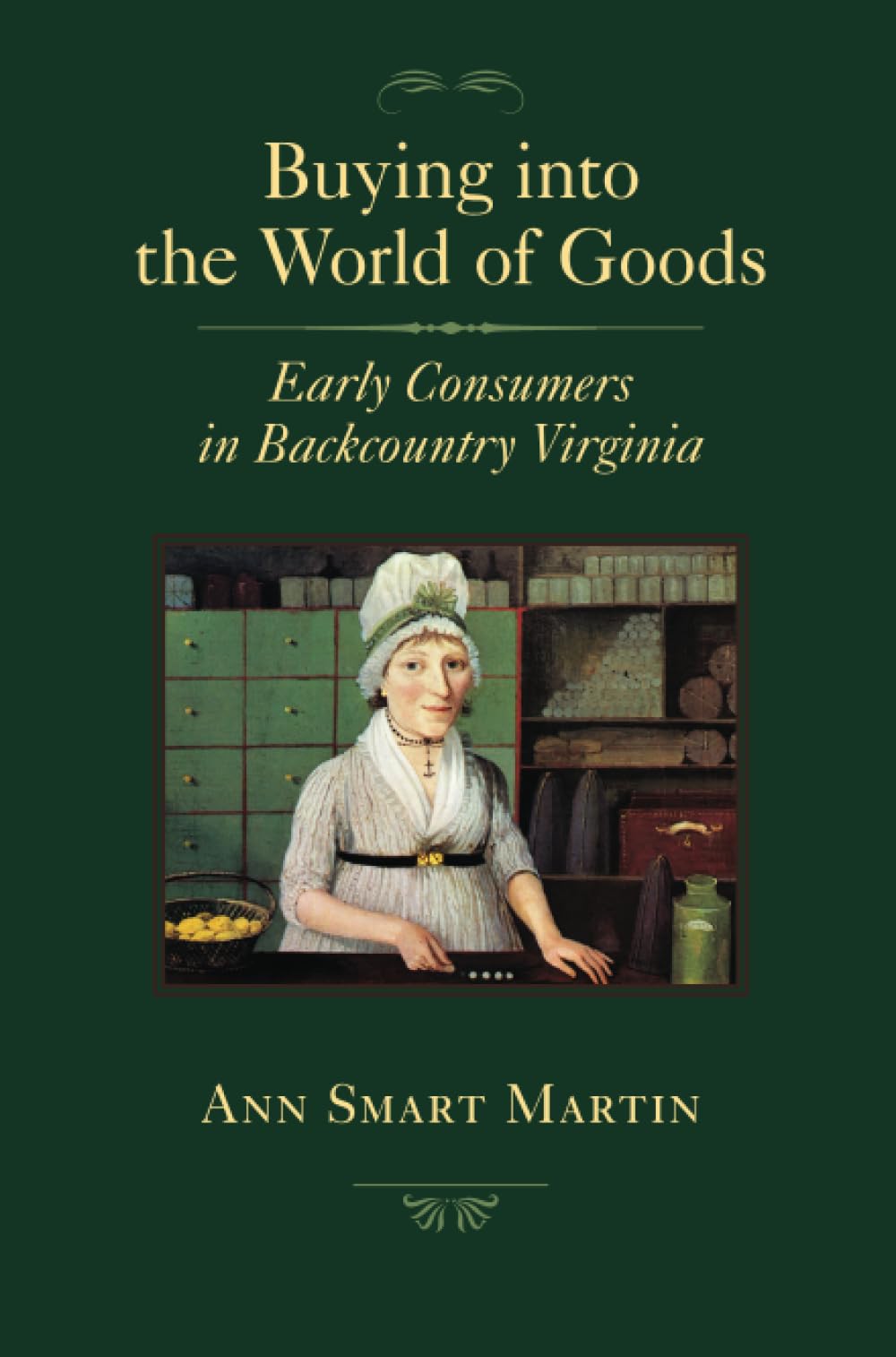
Buying into the World of Goods: Early Consumers in Backcountry Virginia (Studies in Early American Economy and Society from the Library Company of
$30.95
by Ann Smart Martin



Cowinner, 2008 Fred Kniffen Book Award. Pioneer America Society/Association for the Preservation of Landscapes and Artifacts How did people living on the early American frontier discover and then become a part of the market economy? How do their purchases and their choices revise our understanding of the market revolution and the emerging consumer ethos? Ann Smart Martin provides answers to these questions by examining the texture of trade on the edge of the upper Shenandoah Valley between 1760 and 1810. Reconstructing the world of one country merchant, John Hook, Martin reveals how the acquisition of consumer goods created and validated a set of ideas about taste, fashion, and lifestyle in a particular place at a particular time. Her analysis of Hook's account ledger illuminates the everyday wants, transactions, and tensions recorded within and brings some of Hook's customers to life: a planter looking for just the right clock, a farmer in search of nails, a young woman and her friends out shopping on their own, and a slave woman choosing a looking glass. This innovative approach melds fascinating narratives with sophisticated analysis of material culture to distill large abstract social and economic systems into intimate triangulations among merchants, customers, and objects. Martin finds that objects not only reflect culture, they are the means to create it. A wonderful book. It is impressively researched, logically organized, and well written. And far more than most accounts of the colonial backcountry, it introduces real people making choices about how to construct their worlds and how to present themselves to their neighbors and friends. ―Daniel B. Thorp, Journal of Southern History By salvaging and examining the transactions of one merchant operating in the Atlantic economy of the period, [Martin] reveals much that is valuable about the world of goods and indicates several possible directions for future study. ―Michelle Craig McDonald, Business History Review The writing is lively and easily understandable, and the mixture of methods used to study the accounts of Hook and the vast variety of topics addressed result in a book that would have broad appeal to antique and historic house enthusiasts, re-enactors and local historians. ―Mary Ferrari, Roanoke Times The best study we have to date of early American consumerism. ―Paul G. E. Clemens, Reviews in American History An important contribution to the study of consumption in early America that also provides wonderful insight into the significant role of objects in illuminating the past. ―Adrienne D. Hood, William and Mary Quarterly This is a book that quite forcefully offers an interdisciplinary analysis based on the abilities of the art historian and the economic historian, a person at ease with artifacts and dusty will books and skilled at describing local vernacular architecture and long-distance consumer behavior. It joins the list of must-read books for anyone interested in economic behavior and consumer practices in the early modern Atlantic basin. ―Peter C. Mancall, Winterthur Portfolio Exceptional. An analytical model that will advance the field of material culture. ―Trudy Eden, The Historian An impressive example of what thinking in multidisciplinary ways about the uses and meaning of material culture can reveal about past lives . . . Martin has melded several approaches to her subject to great effect, and this work will be incredibly useful not only to those interested in the eighteenth-century Virginia backcountry, but also to any historical scholar who wishes to understand consumerism and its relationship to things and individual identity. ―Jamie C. Brandon, Enterprise and Society Winner, Hagley Prize in Business History, The Business History Conference Cowinner, Fred Kniffen Book Award, Pioneer America Society/Association for the Preservation of Landscapes and Artifacts Reconstructing the world of one country merchant, John Hook, Ann Smart Martin reveals how the acquisition of consumer goods created and validated a set of ideas about taste, fashion, and lifestyle in a particular place at a particular time--the upper Shenandoah Valley between 1760 and 1810. Her analysis of Hook's account ledger illuminates the everyday wants, transactions, and tensions recorded within and brings some of Hook's customers to life: a planter looking for just the right clock, a farmer in search of nails, a young woman and her friends out shopping on their own, and a slave woman choosing a looking glass. The best study we have to date of early American consumerism.-- Reviews in American History A wonderful book. It is impressively researched, logically organized, and well written. And far more than most accounts of the colonial backcountry, it introduces real people making choices about how to construct their worlds and how to present themselves to their neighbors and friends.-- Journal of Southern History The writing is lively and easily