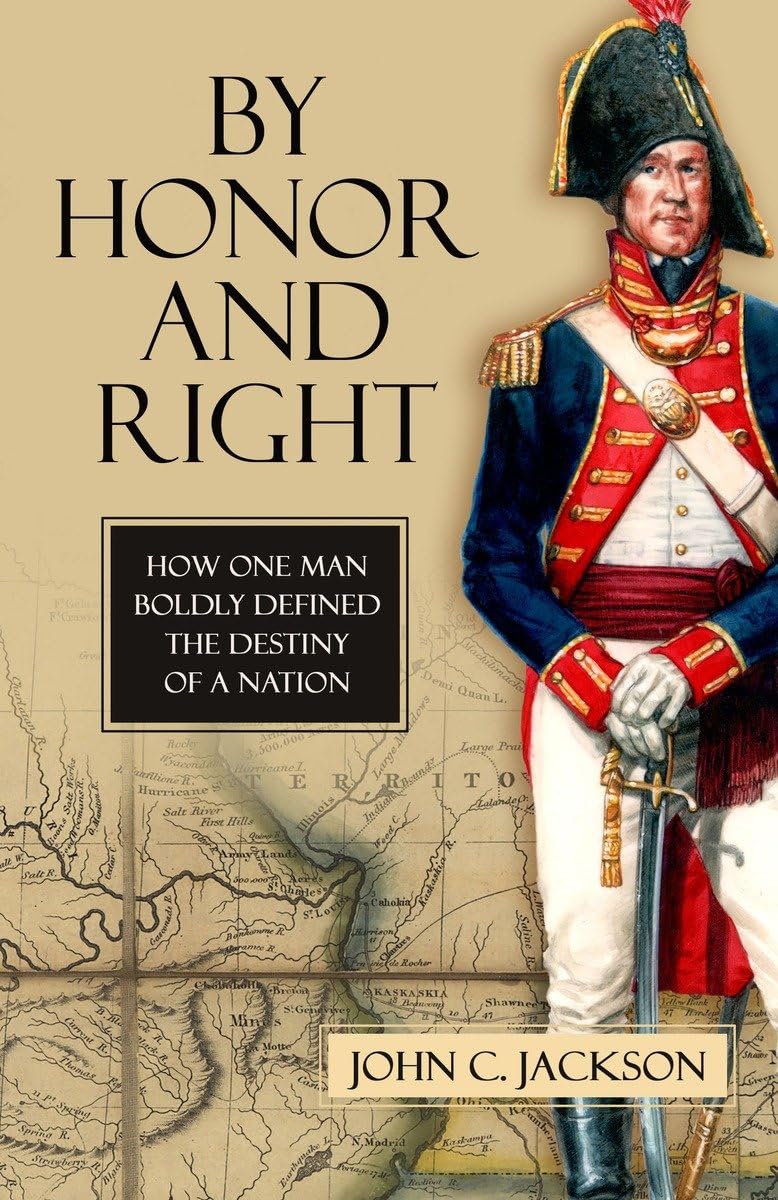
By Honor and Right: How One Man Boldly Defined the Destiny of a Nation
$15.99
by John C. Jackson



The story of Captain John McClallen has long been neglected as a mere footnote to the history of the American West. But as this probing piece of historical detective work makes clear, McClallen played a crucial, if largely unrecognized, role in American western history. This is the first full study of an enigmatic figure who undertook to represent the interests of the United States when there was no one else to do it and paid a tragic price for his initiative. The author compellingly argues that McClallen deserves to be recognized as a national hero. Jackson reconstructs the life and astonishing audacity of the first United States officer to follow the Lewis and Clark Expedition. With the original intent of opening up the Santa Fe Trail, McClallen was twice deflected from this task by circumstances beyond his control. Instead the mysterious traveler entered the Pacific Northwest, discovered a practicable route across the continent, and for a brief but crucial moment blocked British expansion of trade to the upper Columbia River. As the author demonstrates with careful analysis and painstaking documentation, if McClallen had not taken the bold (and unauthorized) step of unilaterally declaring the United States right to the Pacific Northwest, British interests might have brought a stronger claim to the Columbia River and Pacific Slope south of the forty-ninth parallel. For devotees of American Western history as well as mystery lovers, this book will prove to be engrossing reading. John C. Jackson (Olympia, WA) is the author of five books on the history of the Pacific Northwest, including The Piikani Balckfeet: A Culture Under Siege and Jemmy Jock Bird: Marginal Man on the Blackfoot Frontier. He is the coauthor with Thomas Danisi of Meriwether Lewis . BY HONOR AND RIGHT HOW ONE MAN BOLDLY DEFINED THE DESTINY OF A NATION By JOHN C. JACKSON Prometheus Books Copyright © 2010 John C. Jackson All right reserved. ISBN: 978-1-61614-219-3 Contents Foreword by William E. Foley........................................7Preface.............................................................91. A Gunner of the Republic.........................................132. Capt. John McClallen.............................................233. Gen. James Wilkinson.............................................334. Floating into the West...........................................515. The Officers and Gentlemen of St. Louis..........................636. Western Horizons.................................................757. Victims of Circumstance..........................................878. "Behold the Mexican Traveler"....................................979. Lewis and Clark and Pinch Me.....................................11110. At the Rubicon..................................................12111. "Away You Rolling River"........................................13312. "Reather a Speculative Expedition"..............................14713. Peace in Mountain Time..........................................16114. Top of the World................................................17515. Following Western Waters........................................18716. "I Could Not Altogether Indianify My Heart".....................19917. Cokalarishkit, the Protein Road.................................21518. A Step into the Abyss...........................................22519. Postscript to Lost Letters......................................239Acknowledgments.....................................................255John McClallen Timeline.............................................257Indian Tribes and Their Variant Names...............................261Notes...............................................................263Bibliography........................................................331Index...............................................................341 Chapter One A GUNNER OF THE REPUBLIC On September 17, 1806, the United States Corps of Discovery was descending the Missouri River on the last leg of their twenty-eight-month trip to the mouth of the Columbia River. They were pleased to meet the boat party of a brother officer whom Meriwether Lewis had known since 1801 when he recommended his retention in the United States Army. Their relationship was unusual because Lewis was a Virginia planter with Republican ideals and John McClallen was the product of northern mercantilism with Federalist views. What they shared was an overriding sense of duty. After telling the explorers that they had been given up for dead, the recently resigned captain of artillery explained that he was taking an outfit of fine merchandize to open an overland trade to Santa Fe. Instead of drinking at the mythic fountain of continental waters, the place in the mountains from which all western rivers flowed, which William Clark believed they had discovered, McClallen's thirst appeared to be for the silver of New Mexico. That night, as Lewis