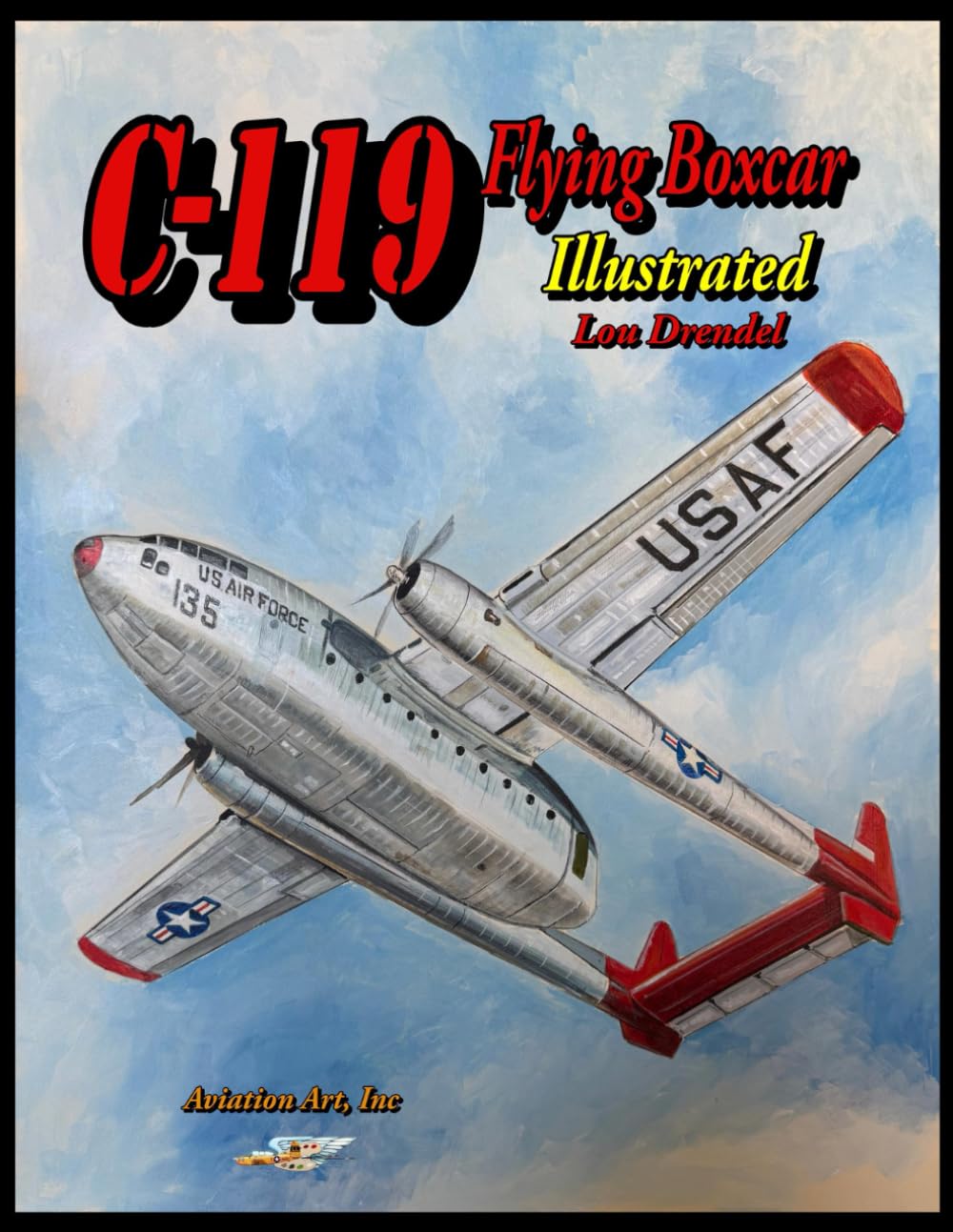



The C-119 Flying Boxcar revolutionized tactical airlift. Those seven words summarize the career of the C-119, but a complete description of this leading-edge airplane requires a whole lot more in the way of text and images. The “Dollar Nineteen”, as it came to be known by those who flew and maintained her was loved and reviled at turns. First of all, what self-respecting pilot (and most pilots are that in abundance) would reply “Boxcar” when asked what he flew….hence, the “Dollar Nineteen” nom de guerre. The mission of tactical airlift that the C-119 was designed for had previously been flown by airplanes that were designed as civil airliners. The C-47, C-46, and C-54 were adaptable enough as trash haulers, and the old Gooney Bird did most of the airborne troop drops in World War II, but all of the above had side-loading cargo doors, which made loading large items difficult and time-consuming. The C-47 and C-46 , being “tail draggers” had a cargo hold floors that were tilted, and the C-54 cargo door was well above the bed of any delivery truck. The C-119 was the first airplane designed specifically for that mission. Paratroopers can jump from any airborne conveyance, but combat airlift of heavy equipment and other supplies requires speed and flexibility. The answer to this pressing need was the C-82/C-119 design of a pod fuselage, with the engines installed in twin booms. The aft end of the fuselage was enclosed with clamshell doors which opened to allow loading. The floor of that fuselage was the same height as the standard “deuce and half” truck bed. That decidedly square fuselage had the same capacity as a railroad boxcar. Those clamshell doors could also be removed to allow aerial delivery of supplies via parachute. When the C-119 went to war in Korea, it more than proved the efficacy of that design, delivering paratroopers and supplies, including the “impossible-to-airdrop” bridge sections that allowed the Marines to succeed in their “attack in a different direction” as they escaped the trap of the Chosin Reservoir. The ”Dollar Nineteen” soldiered on into the 1960s, and a different war, where it’s load-carrying capability allowed a conversion to another mission. The AC-119 was another evolution of the mission of gunship. Armed with side-firing Miniguns and Vulcans, directed by radar and night vision, the Stinger Gunship roamed the night skies of South Vietnam and the web of the Ho Chi Mihn Trail. The unlovely-to-look-at trash hauler became a Shadow feared by the communists, and celebrated by troops in need of night time air support. Retired from military service, the Flying Boxcar proved its worth again as a civilian firefighter, as that large cargo compartment delivered the fire retardant needed to battle the raging forest fires of the West. The C-119 was indeed a remarkable airplane, illustrated herein with the colors and markings of peace and war, and in the service of several nations.