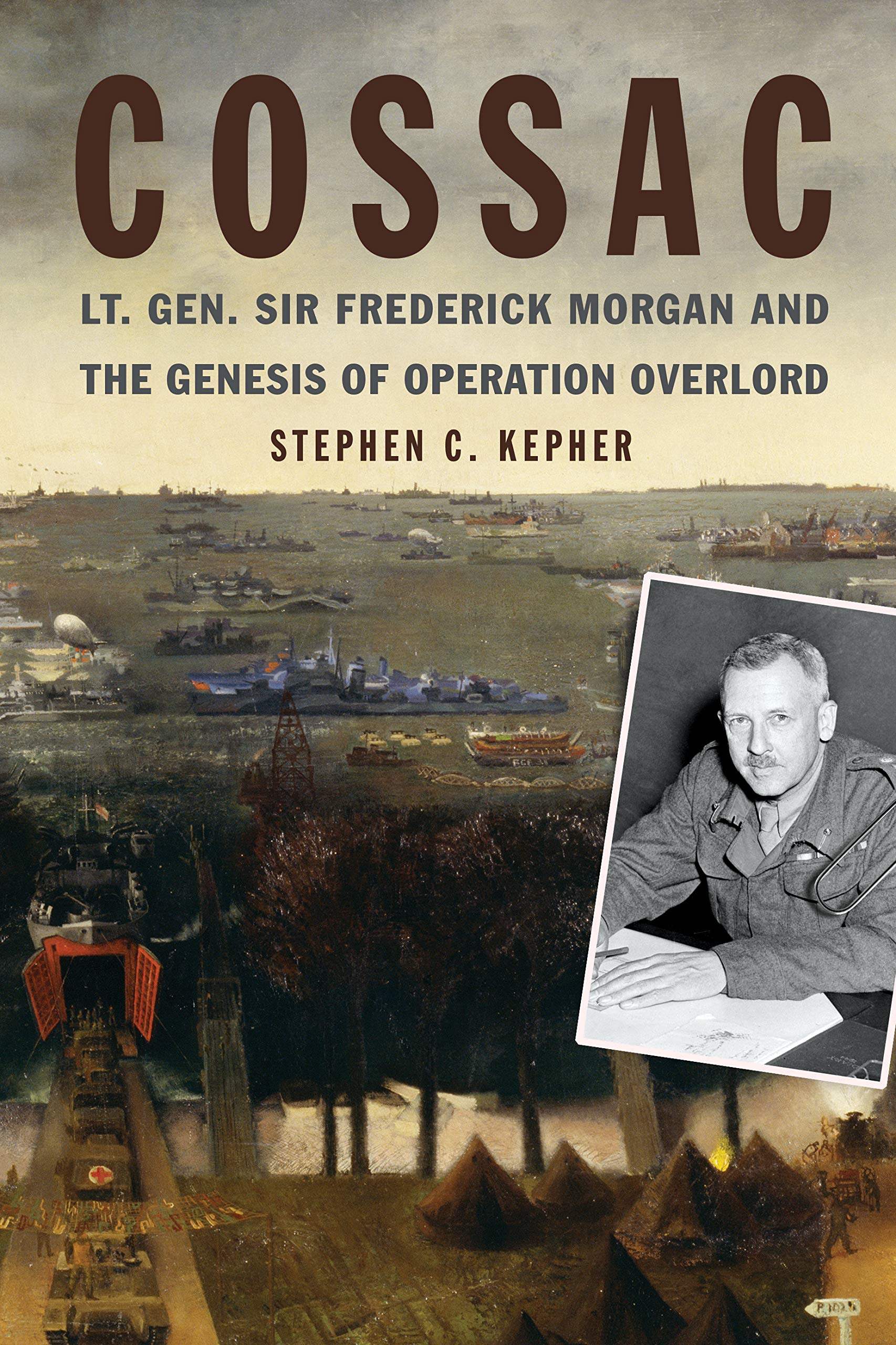
COSSAC: Lt. Gen. Sir Frederick Morgan and the Genesis of Operation OVERLORD (Studies in Naval History and Sea Power)
$34.67
by Stephen Kepher



When Frederick Morgan was appointed COSSAC (Chief of Staff to the Supreme Allied Commander), in the spring of 1943, there was no approved plan for a cross-Channel attack and no commander. There was not even agreement about when the re-entry into the Continent would occur. The western Allies were in the midst of a great debate about the strategy or strategies to defeat Nazi Germany. COSSAC's primary task was to create a plan that would be approved by the inter-allied Combined Chiefs of Staff. To gain that authorization, Morgan had to decide where the attack was to take place, address the need for improvised shelters for the transport ships until a port could be captured; create all the structure necessary for a multi-national force that would liberate countries, not occupy them; and convince his superiors that it could be done with the limited forces they were willing to provide. COSSAC presents a new interpretation of Morgan's vital contributions to the development of the OVERLORD plan by exploring his leadership, his unorthodox approach to problem-solving, and his willingness to disregard or modify orders he thought wrong. By constantly taking the initiative to move the discussions forward, Morgan secured the needed political approval of a concept for the Normandy landings that Montgomery and Eisenhower would modify into the D-Day operational plan. “A story of leadership, determination, networking, international engagement, and an understanding of the broader operational picture, there is a lot to learn from the story of LTGEN Sir Morgan and COSSAC . A study into this story is a must for any junior officer early in their career, to understand how important it is to plan effectively and work in a joint environment. This book would serve well as a case study at the Australian Defence Force Academy through the Joint Military Education and Training program, prompting the future leaders of the ADF to think outside the box. This would drive home the importance of joint operations, proving that it is just as, if not more important now, than what it was in 1943.” —Grounded Curiosity “This is a very readable and highly recommended book.” —The Royal United Services Institute of Victoria “Stephen Kepher has produced a well-written, thoroughly researched book on one of the lesser-known aspects of the Normandy invasion. He draws upon a well-selected list of primary and secondary sources, including the diary and personal papers of General Morgan. Also included are useful appendices for the British and American command structures and the outline plan (abridged) for Operation Overlord. This volume certainly adds to the scholarship of World War II in general and to the Normandy invasion in particular. It will appeal to the general as well as specialist reader.” —Cercles “[This book] has all the necessary references for deeper study of this important achievement of Allied planning… [and] the inter-allied politics are well-covered. Recommended.” —The Naval Review “Using numerous memoirs and official records, Kepher has written a must-have volume for any student of D-Day to show just how challenging and risky the Normandy landings were and highlight the remarkable story of the small team of planners who overcame significant odds to help plan the liberation of a continent from tyranny.” —New York Journal of Books “[ COSSAC provides] plenty of interesting bits. . . . [It's] fully annotated, plus [contains a] bibliography, index, appendices, a few photos, and a couple of maps.” —Stone & Stone “Thanks to that most skillful historian, Stephen O. Kepher, who uses his research with extraordinary knowledge of each topic presented, the reader is enjoined to personally ‘know’ Morgan, the man, husband, and father, on an intimate level, then admire him as one of the three greatest mobilization, battlefield combat, and long-distance strategic planners modern warfare had yet produced.” —Argunners “This work serves as an excellent reference for anyone (military or civilian) undertaking a role in which they are working with a consortium of different nationalities, industries or political affiliations... A high-quality book that [showcases] ... one of the most complex military operations in recent times as well as an excellent professional development tool. Highly recommended for the casual and professional historian alike.” —The Military Reviewer “ COSSAC offers a significant contribution to our understanding of that most venerated of d-days; it is a requisite read for any and all seeking to comprehend the genesis of operation OVERLORD and the genius of its primary planner, Lt. General Sir Frederick Morgan.” —New Books Network “This is a research monograph that anyone with a serious interest in how Operation OVERLORD came to be mounted in 1944 should read.” —History: Reviews of New Books “In COSSAC , independent scholar and former U.S. Marine Kepher takes the first serious look at Morgan’s life an