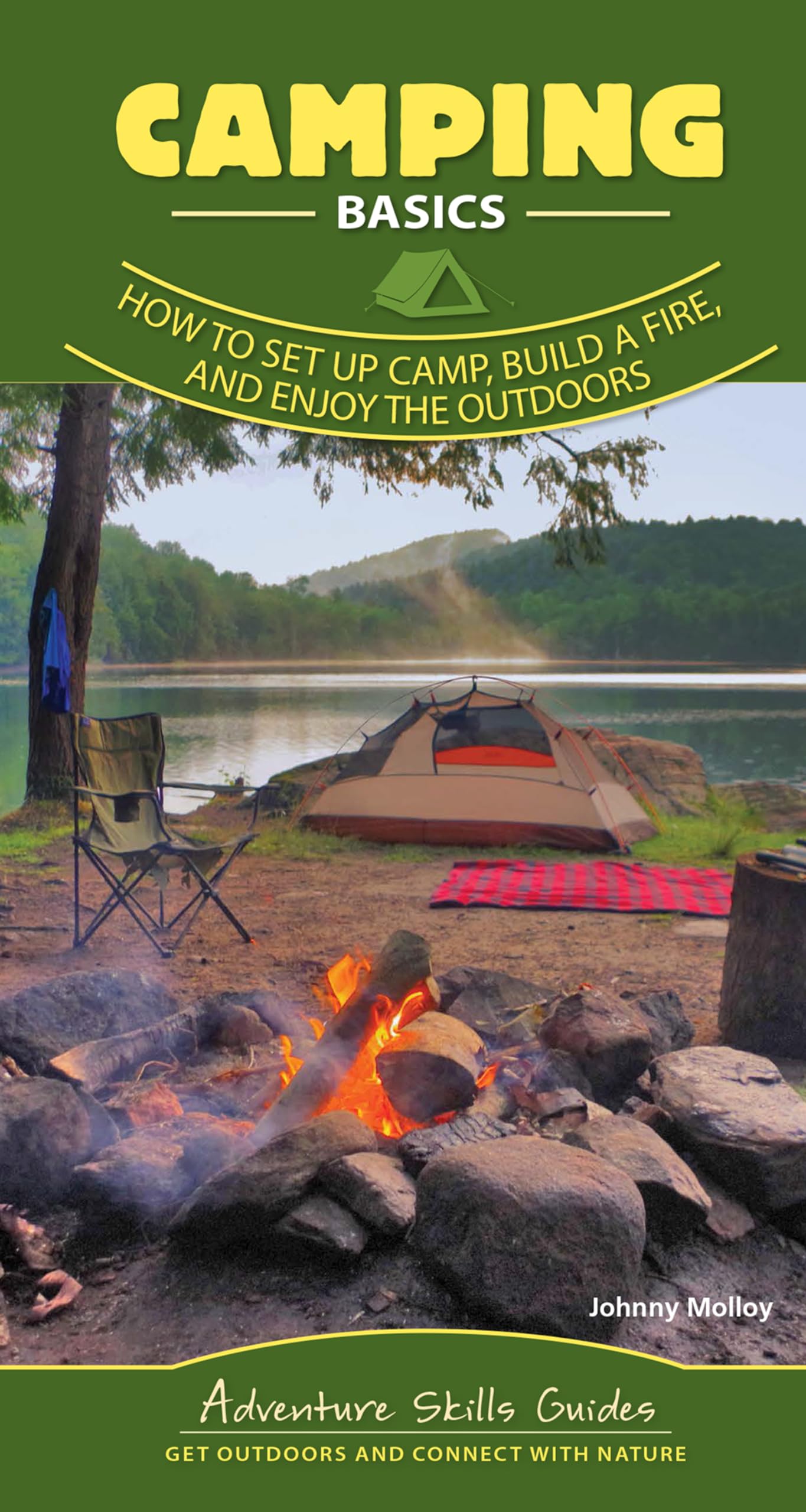
Camping Basics: How to Set Up Camp, Build a Fire, and Enjoy the Outdoors (Adventure Skills Guides)
$8.76
by Johnny Molloy



Your Simple Guide to Essential Camping Skills Camping is both thrilling and relaxing. It’s a wonderful way to escape from everyday life and to connect with nature. The beauty, the solitude, the campfire, the wildlife―it’s a perfect opportunity to recharge your mind, body, and spirit. But if you’ve never gone before or if you’ve only camped a few times, the idea might seem intimidating. Worry not; you can get started with the right information. Expert camper and outdoors enthusiast Johnny Molloy gives you all that you need to know in a simple, concise, quick guide. Make the most of your overnight adventures by putting Johnny’s wisdom to use. Pitch your tent in the correct spot. Deal with bugs, rain, and other unpleasantries with ease. Johnny leads you through the steps and considerations to maximize your experience, from choosing a destination and packing gear to food storage and animal safety. His expertise comes from more than 4,500 nights in a tent, in locations that range from Alaska to Florida. Special sections within this skills guide explain how to build a fire and also provide a checklist of essential items to bring along. Perhaps the most valuable part of the entire booklet is Johnny’s “Top 10 Pieces of Camping Advice.” You’ll learn about weather safety, what to do when nature calls, the best practices for camping with kids and/or your dog, and more. Good camping skills lead to the best outdoors experiences. So take the “rough” out of “roughing it.” Keep Johnny’s information on hand; the pocket-sized guide is easy to bring along. Then enjoy all that the natural world has to offer. Johnny Molloy is a writer and adventurer based in Johnson City, Tennessee. His outdoor passion was ignited on a backpacking trip in Great Smoky Mountains National Park while he was attending the University of Tennessee. That first foray unleashed a love of the outdoors that led Johnny to spend over 4,500 nights backpacking, canoe camping, and tent camping over the past three decades. Friends enjoyed his outdoor adventure stories; one even suggested he write a book. He pursued his friend’s idea and soon parlayed his love of the outdoors into an occupation. The results of his efforts are over 75 books and guides. His writings include hiking guidebooks, camping guidebooks, paddling guidebooks, comprehensive guidebooks about a specific area, and books about true outdoor adventures throughout the eastern United States. Though primarily involved with book publications, Johnny writes for varied magazines and websites. He continues writing and traveling extensively throughout the United States, pursuing a variety of outdoor endeavors. Johnny is a Gideon and an active member of the First Presbyterian Church in Johnson City. His non-outdoor interests include reading, ancient and American history, and University of Tennessee sports. Weather Safety Campers live and die with the weather and the seasons. Knowing the weather can be invaluable when camping. You can bring gear and clothing appropriate for the situation―or call the trip off altogether. For obtaining weather information, in addition to your smart phone, consider bringing a portable weather radio with 24/7/365 weather broadcasts from the National Oceanic and Atmospheric Administration (NOAA). NOAA not only predicts forthcoming weather, but it also gives short-term forecasts, alerting you to potentially life-threatening storms. Marine forecasts, including wind speed and direction, as well as tides, are given near the ocean. With your phone, you can look at predicted weather, real-time radar, hourly and even minute-by-minute forecasts, and NOAA-issued inclement weather watches and warnings. When it comes to weather, knowledge is not only power―but safety. No matter what, check the weather before leaving home, including average highs, lows, and precipitation to help you prepare for your camping trip. In extreme weather―heat, cold, rain, or snow―your attitude is the most important thing you can control. Keeping a positive frame of mind can not only make the situation more tolerable, it can also help you make sound decisions if weather conditions become dangerous. Secondly, quality matters: good tents, tarps, raingear, jackets, boots, socks, etc. can be the difference between staying warm and dry or cold and wet.