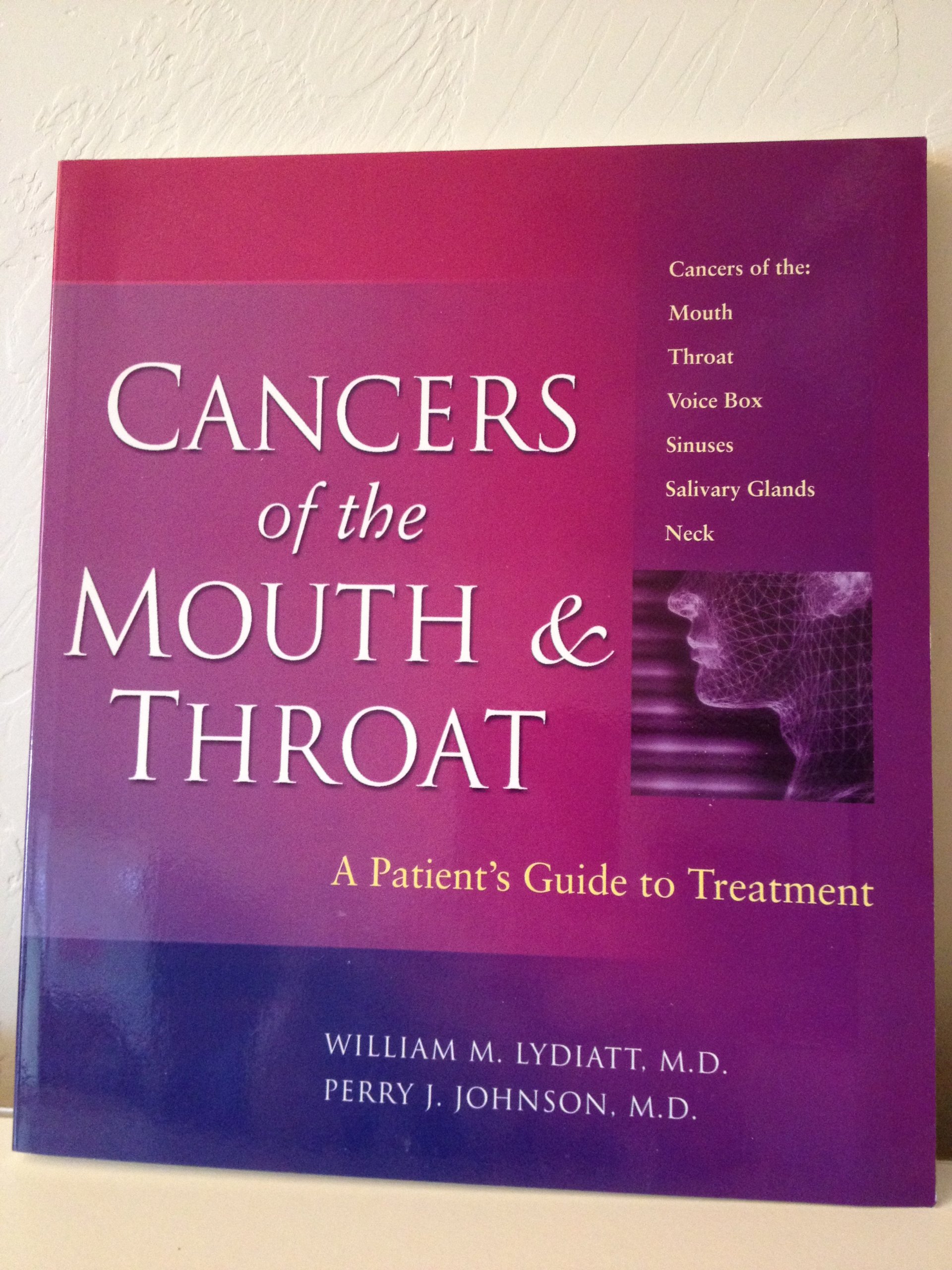
Cancers of the Mouth and Throat: A Patient's Guide to Treatment
$9.85
by William M. Lydiatt MD



William Lydiatt, M.D. and Perry Johnson, M.D., have worked with hundreds of mouth and throat cancer patients. They understand the emotional turmoil patients and their families go through after a cancer diagnosis, and they know how being informed can relieve some of that stress. Topics covered in this book include how early detection leaads to high cure rates; symptoms that could mean cancer; the emotional side of the cancer; how doctors make a diagnosis; staging the cancer and why it so important; surgery, radiation, and chemotherapy—how they kill cancer; reconstructive surgery; and experimental treatment through clinical trials. Patients and family members seeking comprehensive coverage of mouth and throat cancers will get little help from this latest guide by otolaryngologist Lydiatt and plastic and reconstructive surgeon Johnson. Sadly, this well-written and easy-to-read guide falls short in detailing the specifics. For example, the chemotherapy section presents a good overview of how cancer drugs fight the disease but fails to name or provide data on the specific drugs used to combat each type of cancer. Similarly, the surgery chapter is supplemented in the appendix by brief explanations of each mouth and throat operation, but these explanations do not explain clearly the unique features, risks, and complications of each procedure. Patrons would be better advised to look at chapter "Head and Neck Cancers" in The American Cancer Society's Informed Decisions (NAL, 1999) until a more thorough, patient-friendly text is available. Not recommended.AGail Hendler, Memorial Sloan-Kettering Cancer Ctr., New York Copyright 2001 Reed Business Information, Inc. Since tobacco and alcohol are major causes of many mouth and throat cancers, steering clear of them will lessen the number of their sufferers. Lydiatt and Johnson, however, concentrate primarily on the diseases, not prevention, beginning with their diagnosis and warning signs. From those topics, they turn to how to choose a good doctor--a matter many other patient-oriented books address only near the end. Its appearance here emphasizes its importance, especially in the early stages of disease. Much of the rest of the book is concerned with treatment, including surgery, outcomes, and rehabilitation. Radiation and chemotherapy are clearly discussed; clinical trials are described but not overemphasized; and pain management and end-of-life issues aren't scanted. Aided by the warmth of several poems by Ted Kooser, Lydiatt and Johnson touch on the emotional as well as the physical effects of mouth and throat cancers. William Beatty Copyright © American Library Association. All rights reserved “...touches on the emotional as well as the physical effects of mouth and throat cancers.” — Booklist Dr. William Lydiatt practices head and neck surgical oncology at the University of Nebraska Medical Center in Omaha, Nebraska. Dr. Lydiatt has authored thrity scientific publications and given dozens of local, national, and international presentations on head and neck cancer. Dr. Perry Johnson is a board-certified plastic and reconstructive surgeon. He is also board-certified in otolaryngology—head and neck surgery. He practices at the University of Nebraska Medical Center in Omaha, Nebraska. Dr. Jonnson has authored twenty scientific publications and has presented nationally and internationally on topics of plastic and reconstructive surgery. Cancers of the Mouth & Throat A Patient's Guide to Treatment By William M. Lydiatt, Perry J. Johnson, Jack Kusler Addicus Books, Inc. Copyright © 2012 William Lydiatt, M.D., and Perry Johnson, M.D. All rights reserved. ISBN: 978-1-886039-44-5 Contents Acknowledgments, Introduction, PART I - Understanding Cancers of the Mouth & Throat, 1 Cancers of the Mouth and Throat, 2 Getting a Diagnosis, 3 Staging Cancer, 4 The Emotional Side of Cancer, PART II - Treatment Options, 5 Surgery, 6 Radiation Therapy, 7 Chemotherapy, 8 Treating Mouth & Throat Cancer by Stage, 9 Clinical Trials, 10 Pain Management, PART III - Post-Treatment Considerations, 11 Follow-up Care, 12 End-of-Life Issues, Appendix, Resources, Glossary, Index, About the Authors, CHAPTER 1 Cancers of the Mouth and Throat If you have cancer, you are not alone. Each year, nearly 50,000 Americans develop a cancer of the lip, mouth, tongue, tonsils, throat, larynx, salivary glands, nose, and sinuses. Nearly 75 percent of these new cases are men. The incidence of mouth and throat cancer among women is, however, on the rise. As many as 500,000 are survivors of these cancers. What Is Cancer? Cancer is a group of cells growing out of control. Let's take a closer look at how this process occurs. Our cells contain a complicated set of instructions called DNA. These instructions tell a cell how to perform its job — that is, how to be a skin cell, a brain cell, a liver cell, and so on. They also tell the cell when to reproduce