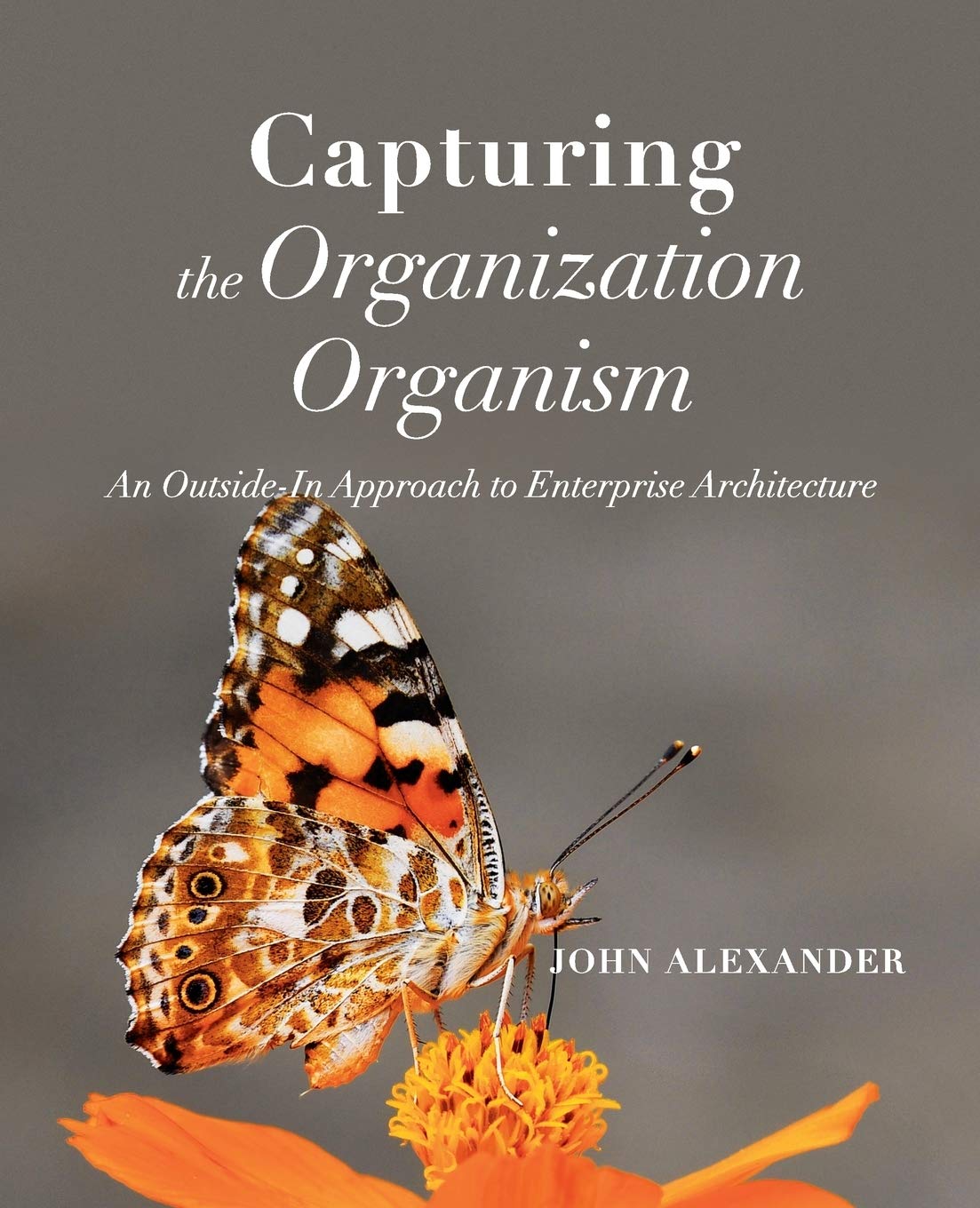
Capturing the Organization Organism: An Outside-In Approach to Enterprise Architecture
$51.31
by John Alexander



This book will demystify Enterprise Architecture (EA), demonstrate its usefulness, and empower you to make EA an integral part of your organization's business management and forward planning. An organization is like a living organism. The architecture of an organism's internal structures must allow that organism to thrive within the environment in which it is operating. These "internal structures" within an organism might be organs or tissues; in an organization, though, they are the "information systems". As an organism's environment changes, its internal systems and structures must adapt. We will use this analogy as a starting point to discuss the "why" and "what" questions of enterprise architecture for information systems in organizations. To begin this process, we must switch from the traditional EA approach of looking only at internal factors, to a new, holistic view that considers the external environment. In other words, while most EA discussions are "inside-out," in this book, we will attempt to go "outside-in." Capturing the Organization Organism : Outlines a structure for organizations which is common to all organizations, regardless of the enterprise that they are involved with. - Uses data subject areas from one part of enterprise architecture, the enterprise data model artifact, to describe what is internal and what is external to the organization. - Provides connections between what is external and what is internal. This means describing how change is transmitted from external to internal environments, and how that change affects the architecture. - Defines the enterprise architecture of business functions and business application systems that, at a broad level, are common to all organizations. - Explores how common business application systems for organizations need to be different due to the different business environments in which they operate. - Explains the integration requirements across an organization's business application systems, and how to address these requirements with a disparate COTS-based portfolio, while also exploring the Artificial Intelligence (AI) possibilities of an integrated environment. - Reveals six key questions to help get started in understanding the organization and its operating environment. Having started his career in industrial relations in the Australian shipping industry, John eventually grew frustrated listening to "people problems." He decided to switch to programming computers, where the problems were solvable (at least, until SQL Cartesian products came along). From there, John never refused a new challenge, venturing into data analysis and data management, then enterprise architecture, onto project management, and finally senior consulting. His consulting work landed him in various roles and organizations, mainly telecoms companies, in many different countries. On one such gig in the mid 1990's during a serious discussion (lubricated with beer), a question was asked that John felt compelled to answer. There were some things outside organizations that drove changes to their enterprise architectures - but what were these and what were the links? John's search for the answer to this question led him to even more unique experiences in different places, and finally to the writing of this book.