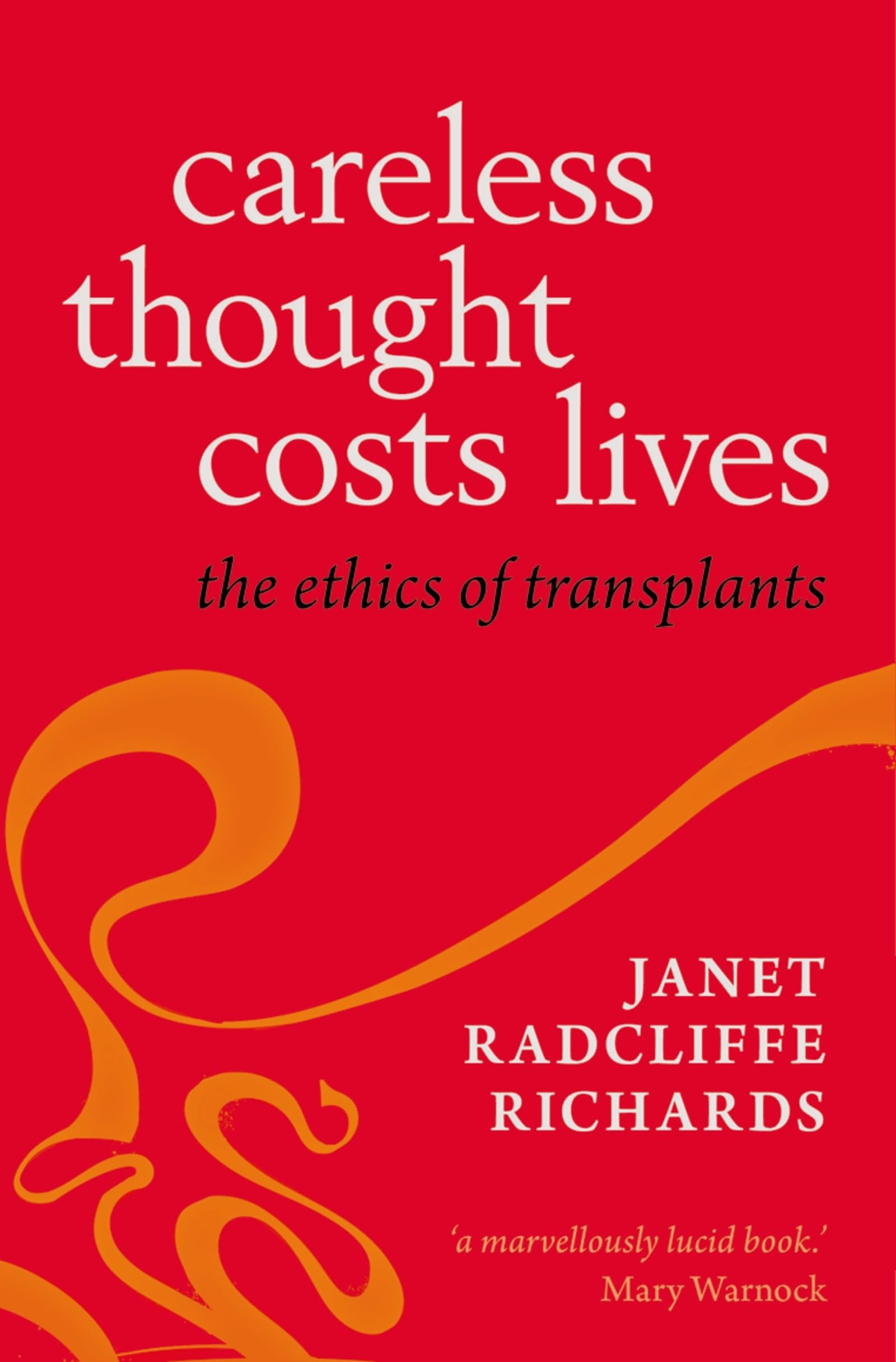



Everyone knows that transplantation can save and transform lives, but thousands die every year on waiting lists because there are not enough organs available. If more people could be persuaded to donate, more lives could be saved. But is individual reluctance to donate the root of the problem? Individual choices are made against the background of prevailing laws, conventions and institutions, and many of those present direct or indirect obstacles to organ procurement, from both the living and the dead. If any of those cannot be justified, the deaths they cause are similarly unjustified. In The Ethics of Transplants , Janet Radcliffe Richards, a leading moral philosopher and author of The Sceptical Feminist and Human Nature after Darwin , casts a sharp critical eye over these institutional barriers to organ procurement, and the logic of the arguments offered in their defense. Her incisive reasoning forces us to confront the implications of unexamined intuitions, leads to several unexpected conclusions, and in doing so demonstrates the crucial importance of clear thinking in public debate. "A marvellously timely and lucid book. Janet Radcliffe Richards's arguments have an irresistible power to make one think about one's own taken-for-granted assumptions and go to the hidden roots of one's prejudices." --Mary Warnock "This is applied ethics at its very best. Janet Radcliffe Richards's incisive, clear reasoning often yields surprising insights. This short book compels us to take a much more sceptical look at common assumptions concerning organ procurement, through selling or otherwise, from the living and the dead." --Peter Singer "A concentrated weight of thoughtfulness that takes little time and no effort to be enthralled by." --Druin Burch, Times Literary Supplement "A cogently argued and wonderfully written book." --Peter Foster, Financial Post "Without doubt, takes the debate [about organ transplants] forward." --John Forsythe, The Lancet Aa leading moral philosopher and author of The Sceptical Feminist and Human Nature after Darwin , casts a sharp critical eye over these institutional barriers to organ procurement, and the logic of the arguments offered in their defense. Janet Radcliffe Richards, Distinguished Research Fellow at the Oxford Uehiro Centre for Practical Ethics; Distinguished Research Fellow at the Oxford Uehiro Centre for Practical Ethics Janet Radcliffe Richards is currently Distinguished Research Fellow at the Oxford Uehiro Centre for Practical Ethics. She is a well-established philosopher, writer, and public commentator, and author of The Sceptical Feminist (1982) .