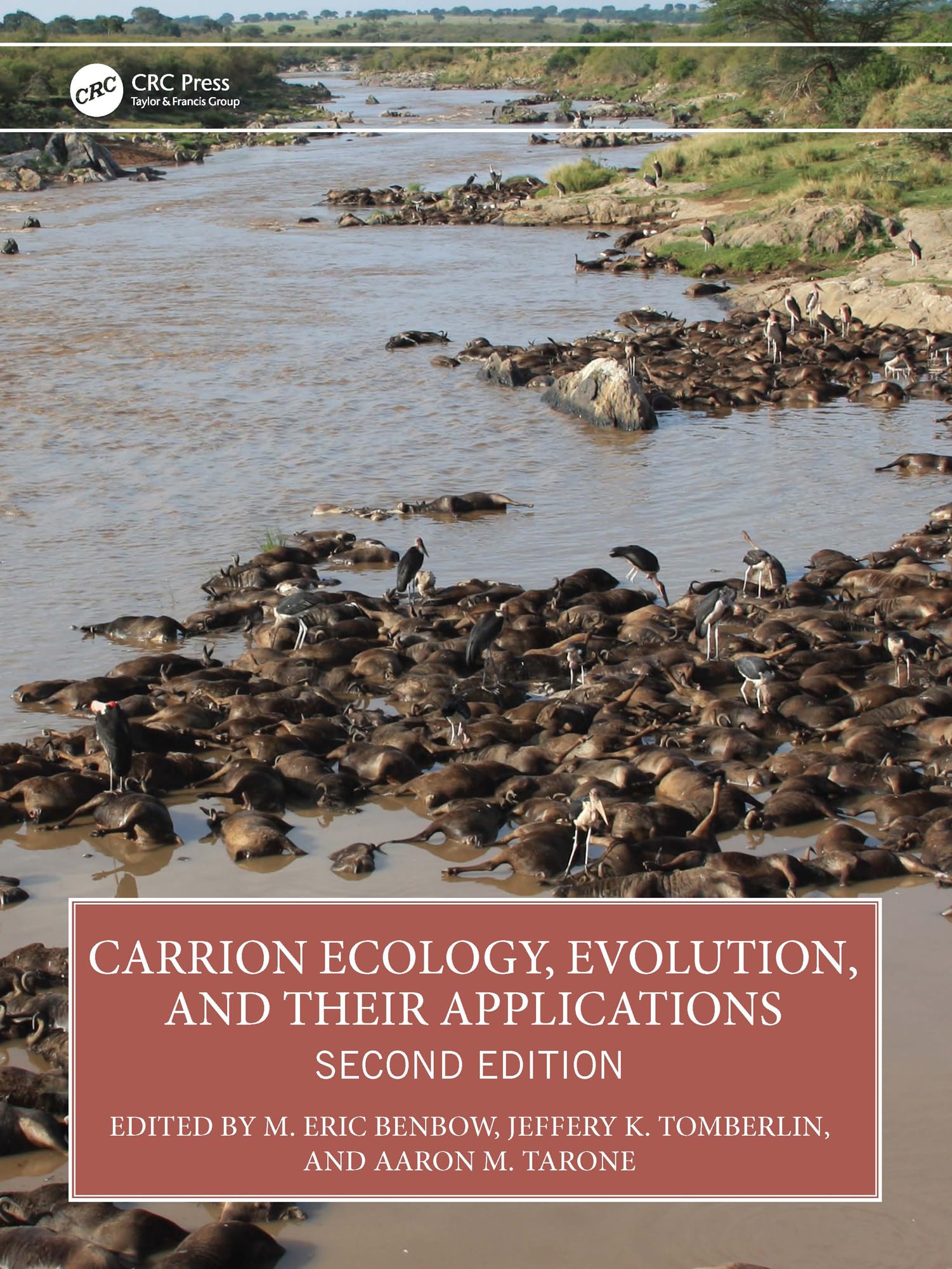



The first edition of Carrion Ecology, Evolution, and Their Applications brought together multiple scientific disciplines to shed light on the importance of carrion within the context of ecology and evolutionary biology, and through applications ranging from human mass disasters to habitat/ecosystem conservation. This second edition builds upon this foundation to include a huge amount of new research, consisting of 33 chapters―9 brand new and the remaining 24 substantially updated and expanded. One of the most significant changes for this edition is the coverage of aquatic ecosystems, both freshwater and marine. The book is now represented by 73 authors from eight countries, incorporating more diverse perspectives and engagement into this multidisciplinary and expanding science. The resulting new edition showcases a broader scope of topics, geographic areas, ecosystems and history of carrion ecology, evolution, and their applications for humanity. It provides the most comprehensive resource on carrion from all ecosystems of the world. The student, academic, and professional will find this book insightful, providing new insights for the fields of molecular ecology, microbiology, entomology, population biology, community and ecosystem ecology, as well as applications in forensics and human and environmental health. "I can report that there is no comparable standard reference for students and researchers. All the state-of-the-art information regarding carrion ecology can be found very quickly: in my student courses I only need this single book as a reference work for the whole story of carrion ecology. Furthermore, I think this book will pave the way for a more comprehensive understanding of necromass as a whole, independent of its origin, key to the understanding of whole ecosystem functioning.” Christian von Hoermann, Conservation and Research, Bavarian Forest National Park, Germany M. Eric Benbow is a Professor and Global Scholar at Michigan State University with a joint appointment between the Department of Entomology (College of Agriculture and Natural Resources) and the Department of Osteopathic Medical Specialties (College of Osteopathic Medicine). His research program addresses basic and applied insect and microbial biodiversity and community ecology, with a history of research in West Africa, East Africa, South Africa, South America, and throughout the USA. He is the author or coauthor of over 200 journal articles and technical papers, 30 book chapters, 5 edited books, 3 National Academies of Science, Medicine, and Engineering reports, and has received funding through NIH, NSF, USAID, NIJ, USDA, USGS, USFS, and multiple state and regional agencies. Professor Benbow has served on three National Academy of Science, Engineering, and Medicine appointed committees, and he is a Fellow of the American Academy of Forensic Sciences. He also participated in the semi-finals and finals of the 2019–2024 XPRIZE Rainforest biodiversity competition. The students and postdocs in the Benbow lab ask three general questions through coupled field and laboratory surveys and experiments: (1) Is insect fitness influenced by the community of microbes living in or on them? (2) What are the ecological interactions of insects with their microbiomes and microbial communities associated with habitat or food resources? and (3) How can understanding insect-microbe biodiversity relationships be used to inform natural resources management, human health, and agriculture, including insects as feed and food? The questions are answered within three general areas of inquiry: disease ecology, decomposition ecology, and forensic ecology. This work encompasses research in both aquatic and terrestrial ecosystems. A proponent of One Health science, Professor Benbow has spent over 25 years of collaborative research and teaching in countries with developing economies spanning the globe from Africa, Polynesia, Central America, South America, and Asia, with projects focused on biodiversity, the ecology of disease, forensics, and insects as feed and food. He has been a leader in understanding and predicting ecological and landscape influences on the aquatic mycobacterial pathogen responsible for Buruli ulcer disease endemic to many tropical and subtropical countries. New areas of research involve investigations related to managing insect pest and vector microbiomes and bacterial symbionts. He is passionate about using science, capacity building, and collaborations for improving lives in the most vulnerable regions of the world. The Benbow Lab is always open to new collaborations and hosting visiting scientists from around the world. Outside of academia and science, Benbow enjoys traveling with his family and friends, is an avid downhill skier, and enjoys hiking, cooking, and photography. Over the past few years, he has been involved with mixed martial arts, earning his first-degree black belt along with his youngest daughter. He may also be known