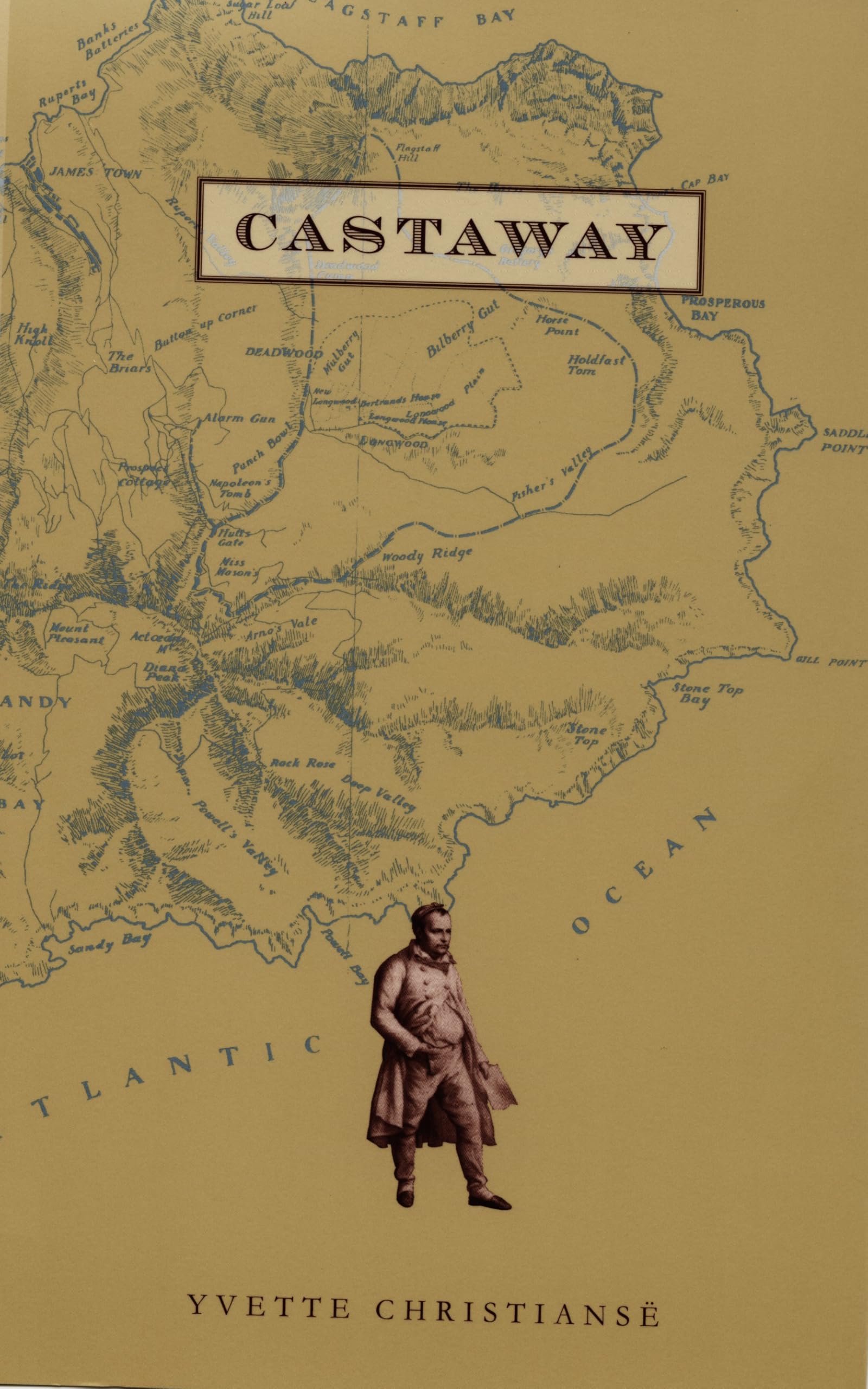



In Castaway Yvette Christiansë presents an epic yet fragmented poetic story set off the coast of Africa on the island of St. Helena: Napoleon Bonaparte’s final place of exile, a port of call for the slave trade, and birthplace of the poet’s grandmother. Amid echoes of racialized identity and issues of displacement, the poems in Castaway speak with a multiplicity of voices—from Ferñao Lopez (the island’s first exile) and Napoleon to that of a contemporary black woman. Castaway is simultaneously a song of discovery, an anthem of conquest, and a tortured lamentation of exiles and slaves. Instead of offering a linear narrative, Christiansë renders the poems as if they were emerging from the pages of imaginary books, documents now disrupted and scattered. An emperor’s point of view is juxtaposed with the perspectives of various explorers, sailors, and unknown slaves until finally they all open upon the book’s “castaway,” the authorial female voice that negotiates a way to write about love and desire after centuries of oppression and exploitation. Daring and sophisticated, Castaway challenges and captivates the reader with not only its lyrical richness and conceptual depth but also its implicit and haunting reflections on diaspora and postcolonialism. It will be highly regarded by readers and writers of poetry and will appeal to those engaged with issues of race, gender, exile, multiculturalism, colonialism, and history. Christians?'s debut volume is a personal/political/historical narrative that revolves around the poet's grandmother's birth on the island of St. Helena, near Africa (she's thought to be the child of a freed slave). First chronicled in 1502, St. Helena is best know as Napoleon's place of exile and death. Subsequently the site of a Portuguese insurrection against colonization, it became a British territory in which slavery was outlawed. Ironically, Chirstians?'s family relocated to South Africa, where apartheid became law and Yvette was born. The family's final destination is Australia. The poems are presented as fragments from found diaries, fanciful compendiums of travelers' tales and dramatic monologs by family members and historical figures such as Napoleon. This long, theatrical work sometimes sacrifices texture in its attempt to get through the material. But in the end, it remains an ambitious and often moving study of those held against their will. Recommended.AEllen Kaufman, Dewey Ballantine Law Lib., New York Copyright 1999 Reed Business Information, Inc. “A remarkable book. It’s a delight to discover a poet who makes use of all the techniques that have been too readily ceded to fiction: character development, a complex use of place and time, an interweaving of historical fact and writerly imagination, while deploying the compression and verbal legerdemain that are the particular province of the poet.”—Marilyn Hacker “Yvette Christiansë’s Castaway has a personal and historical trajectory that embraces the emotional velocity of this fine, urgent collection of poems. It conjures silence and great distance, emotionally and physically, but the poems are excursions through language and subject matter aimed at connecting the reader to the unimaginable by a finely-tuned and far-reaching imagination.”—Yusef Komunyakaa "Yvette Christianse's "Castaway" has a personal and historical trajectory that embraces the emotional velocity of this fine, urgent collection of poems. It conjures silence and great distance, emotionally and physically, but the poems are excursions through language and subject matter aimed at connecting the reader to the unimaginable by a finely-tuned and far-reaching imagination."--Yusef Komunyakaa Yvette Christianse was born and raised in South Africa. In her late teens her family moved to Australia to escape aparteid. She now lives in New York where she is an Assistant Professor of English at Fordham University. Castaway By Yvette Christiansë Duke University Press Copyright © 1999 Duke University Press All rights reserved. ISBN: 978-0-8223-2421-8 Contents The Name of the Island, The Island Sings Its Name, And All Things Come to Pass, On Being Restless, Letter to General D'Albuquerque—On the Pleasures of Taste, Letter to General D'Albuquerque—On the Pleasures of Touch, Letter to General D'Albuquerque—On Desire, Letter to General D'Albuquerque—On Solitude, Letter to General D'Albuquerque—On Forgiveness, For the Devout Mouth, For the Record, Sleigh Ride, The Enemies of Progress, Necessary Things, The Emperor Considers the Fate of His Book, Last Battles, A Very Sick Man, One More Mile, One More Town, Face to Face, Brotherhood, And What of Africa?, Another Strange Night, For the Arrival of a Serious Enemy, Gold, Sunday School, The Sleeper, Blow the Wind Southerly, And Bring Him to Me, Courtship, Fire on Board, Man in a Room, What the Girl Who was a Cabin Boy Heard or Said—Which is Not Clear, Geography Lesson, On Hearing of t