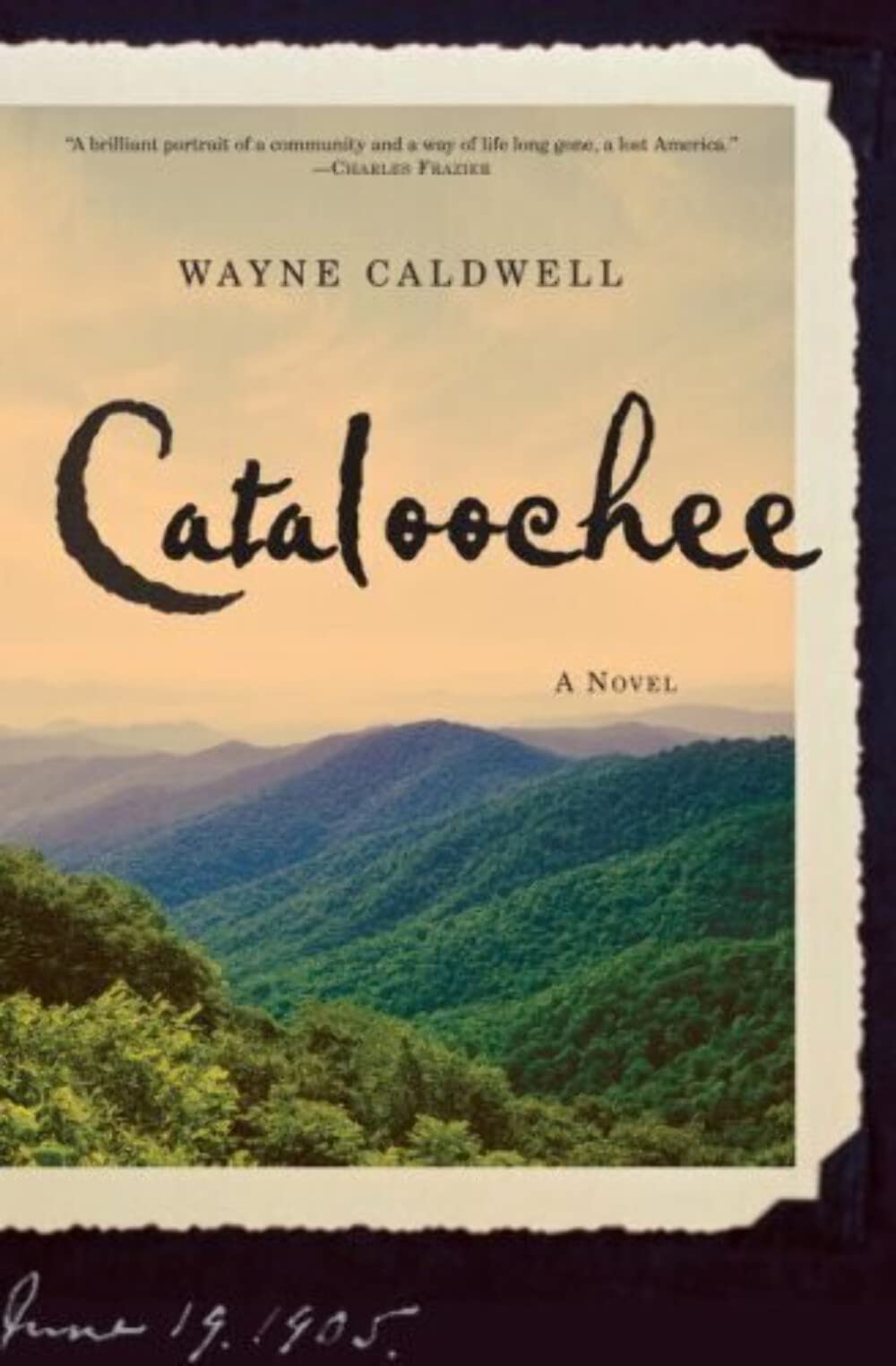



“A brilliant portrait of a community and a way of life long gone, a lost America.” –Charles Frazier Against the breathtaking backdrop of Appalachia comes a rich, multilayered post—Civil War saga of three generations of families–their dreams, their downfalls, and their faith. Cataloochee is a slice of southern Americana told in the classic tradition of Flannery O’Connor and William Faulkner. Nestled in the mountains of North Carolina sits Cataloochee. In a time when “where you was born was where God wanted you,” the Wrights and the Carters, both farming families, travel to the valley to escape the rapid growth of neighboring towns and to have a few hundred acres all to themselves. But progress eventually winds its way to Cataloochee, too, and year after year the population swells as more people come to the valley to stake their fortune. Never one to pass on opportunity, Ezra Banks, an ambitious young man seeking some land of his own, arrives in Cataloochee in the 1880s. His first order of business is to marry a Carter girl, Hannah, the daughter of the valley’s largest landowner. From there Ezra’s brood grows, as do those of the Carters and the Wrights. With hard work and determination, the burgeouning community transforms wilderness into home, to be passed on through generations. But the idyll is not to last, nor to be inherited: The government takes steps to relocate folks to make room for the Great Smoky Mountain National Park, and tragedy will touch one of the clans in a single, unimaginable act. Wayne Caldwell brings to life the community’s historic struggles and close kinships over a span of six decades. Full of humor, darkness, beauty, and wisdom, Cataloochee is a classic novel of place and family. *Starred Review* Set in the reclusive mountains of North Carolina, Caldwell's rootsy first novel follows the small triumphs and tragedies of three families from the Civil War to 1928, when the area was absorbed into the new Smoky Mountains National Park. Keeping track of four generations of Carters, Banks, and Wrights, with their bountiful legions of offspring, would be a chore if not for Caldwell's deft touch, indelibly detailing characters even if their particular branch of the family tree only rustles free to offer a momentary glimpse into the loves, lives, and deaths of these hardscrabble folk. That the central conflict of the novel--a patricide--does not arise until well near the end speaks to the strength of the rest of this sprawling saga, wherein moments of inspired tenderness abut moments of unspeakable vileness, where friend and foe alike are worked deep into the folds of kith and kin. Throughout, Caldwell's prose weathers the bountiful yet perilous land with the measured resolve of an old folk balladeer, without resorting to sentiment or stereotype. Greil Marcus coined the term "old, weird America" in reference to the sometimes eerie, always peculiar Appalachian songs recorded by Harry Smith; this, then, is a novel about the folk who lived out their songs in that older, weirder America. Ian Chipman Copyright © American Library Association. All rights reserved Wayne Caldwell was born in Asheville, North Carolina, and was educated at the University of North Carolina at Chapel Hill, Appalachian State University, and Duke University. He began writing fiction in the late 1990s. He has published four short stories and a poem, and won two short story prizes. Caldwell lives near Asheville with his wife, Mary. Cataloochee is his first novel. 1 Too Worn Out to Cry Ezra Banks sprang from a line of men pretty good at hunting and fishing and gambling and drinking. But at farming they piddled. Tenants. Ezra, third son in a brood of seven, knew early he didn't want to sharecrop. His father farmed ten or twelve hardscrabble acres near Spring Creek in Madison County, North Carolina. The land belonged to Bingham Wright, brother to Jonathan Wright next county over, in Cataloochee. Ezra's father, a bit too old to serve in the Confederate Army, had shown up just after the war started and leased Wright's poorest section. Some pasture was so steep a fellow needed two breeds of cattle, one with short right legs to stand in one direction and pick the thistle-ridden grass, the other with short left legs to pick going the opposite way. On level ground they could lean against each other to sleep. In 1864 Ezra looked older than fourteen, lanky, a bit of beard already and a badly bent nose. His father had broken it three years before when they moved to the Wright place. The old man was trying to fix a fence gate. He banged his thumb with the claw hammer and splintered its handle when he flung it at the barn in a rage. He ran to the back porch and yanked a piece from the middle of his wife's stove-wood stack and started to whittle a new handle. As he smoothed it with his rusty hawksbill, the stack dissolved around the missing stick and fell off the porch. He yelled, "Get out here, woman, and pick up yer goddamn