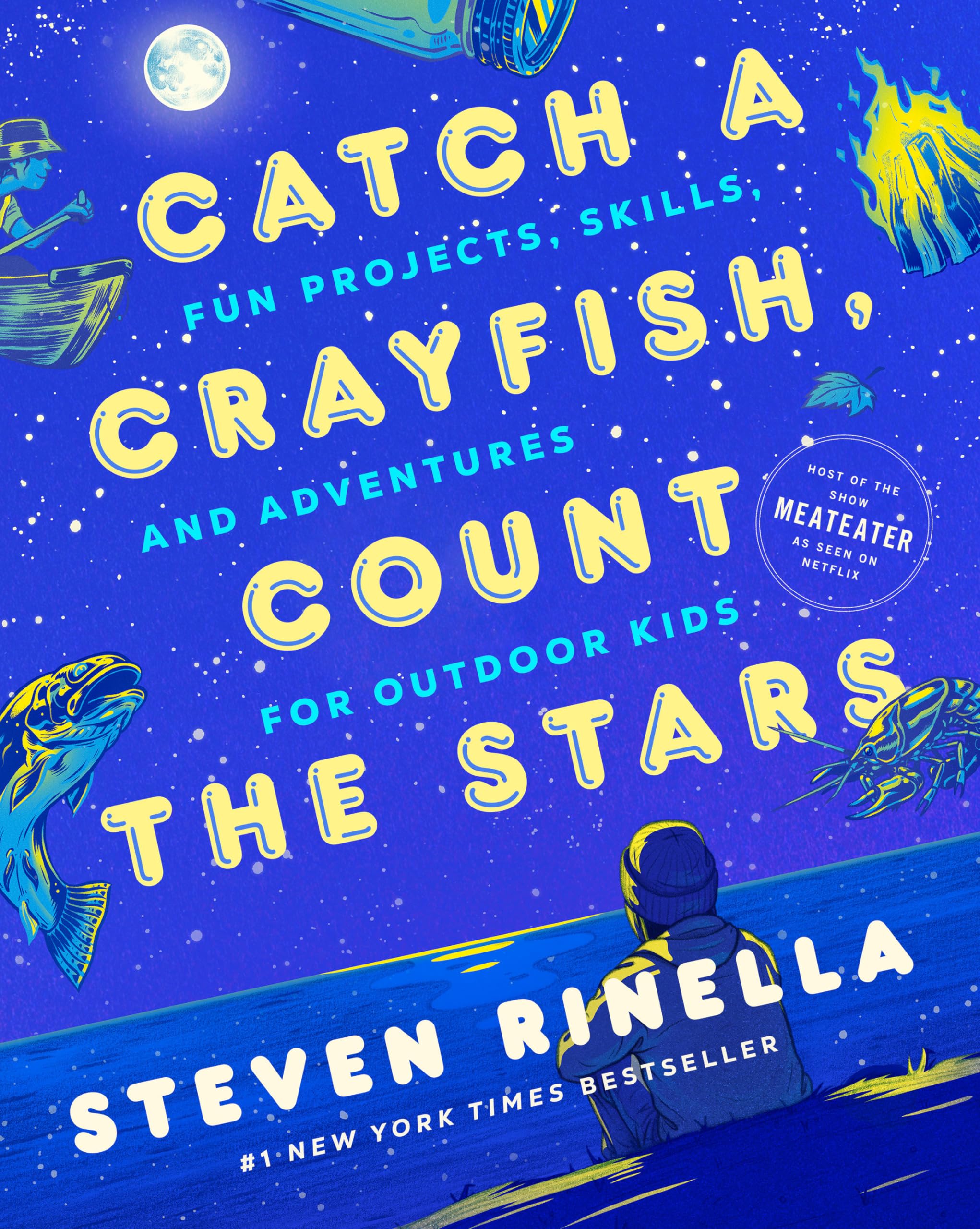
Catch a Crayfish, Count the Stars: Fun Projects, Skills, and Adventures for Outdoor Kids
$18.00
by Steven Rinella



#1 NEW YORK TIMES BESTSELLER • A hands-on, gloves-off, muddy-boots activity book for young adventurers ages eight and up, offering fun projects and adventures to build lifelong skills and knowledge about the natural world—from the host of MeatEater and author of The MeatEater Guide to Wilderness Skills and Survival Does climbing a tree, building a bug hotel, spearing a bullfrog, stalking wild animals, and scouting for petrified wood sound more fun than homework or chores? If so, this guide is your perfect companion to endless summer days and rainy fall afternoons alike. Filled with advice, insights, and activities to inspire wonder and excitement about the natural world, Catch a Crayfish, Count the Stars is a curious kid’s treasure trove, filled to the brim with outdoor projects, skills, and adventures complete with illustrations. The book presents a ton of fun and exciting ways to explore the natural world, like • building an outdoor exploration kit • identifying constellations and navigating using the sun and stars • collecting fossils and other geological wonders • tracking animals and following weather patterns • making your own compass • growing your own fruits and vegetables • building survival shelters and primitive hunting weapons • fishing, hunting, and foraging for wild foods • making cool art projects using natural materials A must-have guide for budding naturalists, scientists, gardeners, anglers, foragers, and hunters, Catch a Crayfish, Count the Stars helps get kids out into nature, imparting lifelong knowledge and skills along the way. Steven Rinella is an outdoorsman, writer, wild-foods enthusiast, and television and podcast personality who is a passionate advocate for conservation and the protection of public lands. Rinella is the host of the television show and podcast MeatEater; his last two books are the New York Times bestsellers Outdoor Kids in an Inside World and The MeatEater Guide to Wilderness Skills and Survival . His writing has appeared in many publications, including Outside , Field & Stream , and The New Yorker . Rinella lives in Bozeman, Montana, with his wife and their three kids. I Navigation and Exploration Ever wondered if you have what it takes to survive in the wilderness? That’s what the projects in the first part of this book are about. You’ll learn how to use the night sky to find your way home, follow the tracks of animals, build shelters out of natural materials, and start a fire that will heat and light your campsite. The more you practice these skills and the others in this section, the more comfortable and capable you’ll become in the outdoors. Build an Exploration Kit Early American explorers on the Great Plains were amazed to see that Native Americans could make boats big enough to carry an entire family using nothing but a knife and natural materials found along the riverbanks. They could turn the skin of a drowned buffalo into a boat by attaching the hide to a frame of willow limbs secured with cord made from the buffalo’s skin, sinews, and tail. If they needed to hunt for a buffalo, they could make arrow points from special types of stone known as flint, chert, and obsidian. They’d start by banging two stones together in order to chip away a piece that was the right shape and thickness. Then they’d shape and sharpen the piece into an arrowhead by carefully flaking away chips of stone with a sharp deer antler, a process called knapping. What could you accomplish in the wild, with the right tools and skills? The saw on a multi-tool could help you make a spoon out of a deer bone. A flashlight would let you see down into the burrow of a ground squirrel, so you could learn about how these animals prepare for winter—and maybe “borrow” a little dried grass for an emergency fire-starter. A water bottle is essential for hydration, and it’s also a great place to store wild blueberries. With the right pieces of gear, you can be ready for all kinds of adventures in the great outdoors. Whether you’re going on a big camping trip with your family or just riding your bike to the playground to meet a few friends, it’s a good idea to be prepared for whatever Mother Nature might send your way. That’s why the first project in this book is to build yourself an exploration kit. To keep things organized, pack the kit inside a small stuff sack or a big ziplock bag. Keep the kit in your backpack so it’s ready to grab the next time you head outside. Over time you’ll want to customize your kit, but here are some useful things to get you started. • Picture of family and parent contact info. Keep a picture of your family with your parent’s contact information written on the back in case of emergency. • Water bottle. It’s important to stay hydrated, and wide-mouth water bottles also make great containers for edible berries—or for a grasshopper that you might want to carry along with you as a pet for the day. • Snacks. You’ll need lot