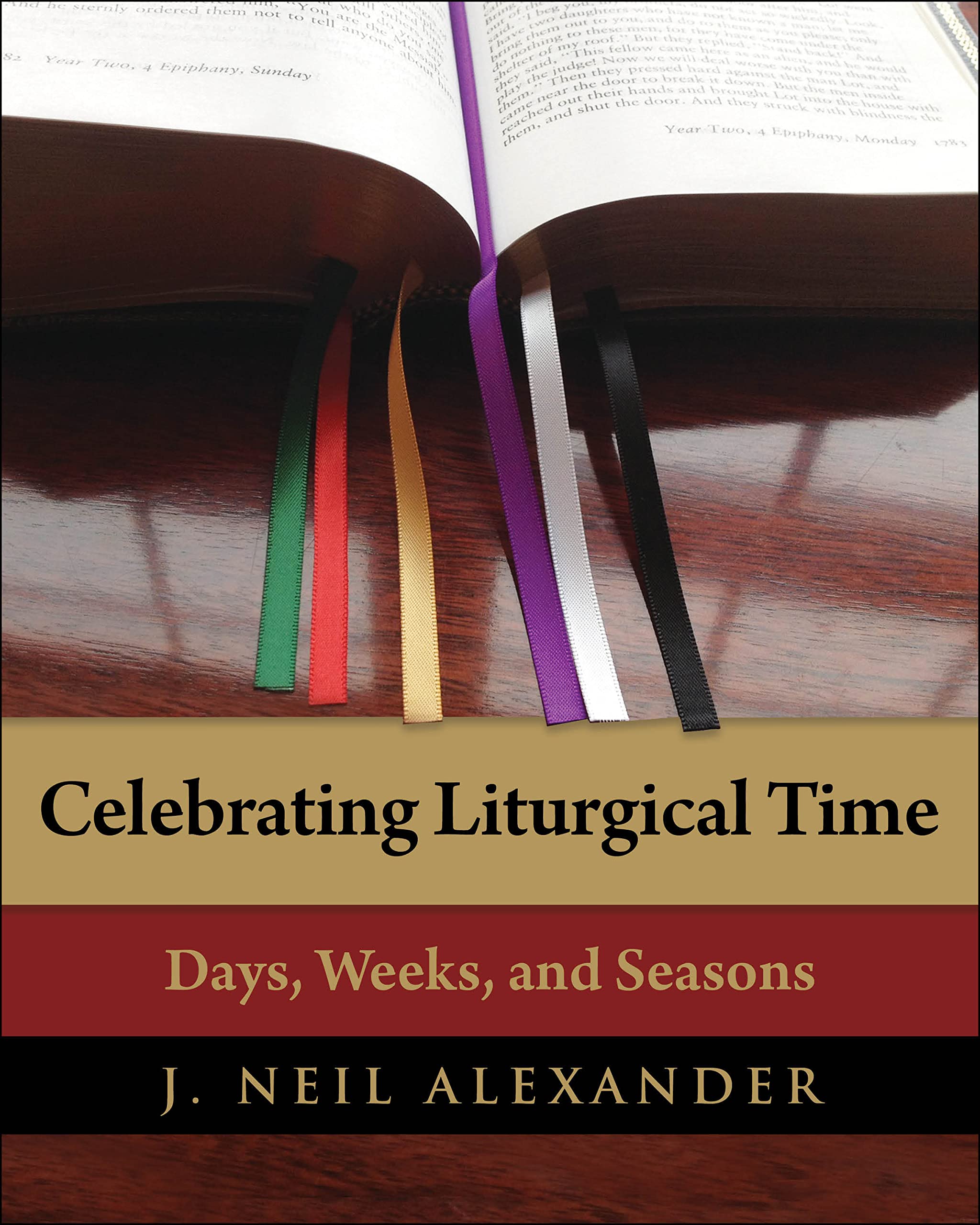



Celebrating Liturgical Time continues the standard of scholarship set by Patrick Malloy’s Celebrating the Eucharist . It is ideal for students, clergy, and church members who seek to strengthen their knowledge―and parochial practice―of liturgical timekeeping and the Daily Office. J. Neil Alexander is the former Dean of the School of Theology at the University of the South (Sewanee) and former bishop of the Diocese of Atlanta. He lives in Austin, Texas. Celebrating Liturgical Time Days, Weeks, and Seasons By J. Neil Alexander Church Publishing Copyright © 2014 J. Neil Alexander All rights reserved. ISBN: 978-0-89869-873-2 Contents Introduction, 1. Shaped by Time, 2. The Calendar: Sundays, Feasts, and Seasons, The Liturgical Day: Time-keeping, Principal Feast: Easter Day, Principal Feast: Ascension Day, Principal Feast: The Day of Pentecost: Whitsunday, Principal Feast: Trinity Sunday, Principal Feast: All Saints' Day, Principal Feast: Christmas Day, Principal Feast: Epiphany, Other Feasts of Note: Holy Name, Presentation, Transfiguration, Annunciation, A Brief Note about the Last Sunday after Pentecost, The Titles of the Seasons, Sundays, and Major Holy Days Observed in this Church throughout the Year, 3. Marking the Meantime: The Daily Offices and The Great Litany, Daily Morning Prayer, An Order of Service for Noonday, An Order of Worship for the Evening, Daily Evening Prayer, An Order for Compline, The Great Litany, Of the Personal Observance of the Daily Offices, 4. Proper Liturgies for Lent and Holy Week, The Proper Liturgy for Ash Wednesday, The Proper Liturgy for the Sunday of the Passion: Palm Sunday, The Triduum, CHAPTER 1 SHAPED BY TIME My days are swifter than a weaver's shuttle. So says the prophet Job in his description of the human condition. There is no cessation of the passage of time. There are good days and bad ones, times of plenty and times of desperation, seasons of agony and seasons of delight. Eventually, we presume, the weaver runs out of thread, a sign that things are coming to an end. But in the meantime, the passage of time is relentless. It cannot be made to go more slowly. It will not pass any faster than it already does. It is impossible to tame it. Our only hope is to mark it, sanctify it, relax into it, enjoy it, and allow life to be shaped by the inevitability of its passage. In our earliest records of ancient peoples, there is evidence of a strong sense of awareness with respect to the passage of time. A large part of this was rooted in the simple observation of natural phenomena. The daily rhythm of the sun's coming and going is hard to miss. The sun's "rising" brings light and warmth, makes work possible, and seems to energize the body and lift the spirit. The sun's "setting" steals the light and chills the air. It slows the body, pulls us toward rest, and tempts us with the fear of the unknown. The shadows come, they lengthen, they go, and, as if by promise, they return. The light and darkness that come with the sun's rising and setting are shaped into seasons, and gradually the cold days will give way to warmer ones. In time, the gentle warmth of the morning will give way to the sweltering heat of the afternoon sun. But sooner or later the cold will come again. As time passes the rains come and the crops grow. In other years the rains come again, but this time in such abundance that floods destroy even the sturdiest plantings. If next year, or the year after, the rains do not come, there will be no water to drink. When everything is dry and everyone is thirsty, death lurks in the background. Days, night, weeks, months, seasons, cycles, years, feast, famine, flood, and drought—human beings have always been fascinated by the passage of time and all that it brings with it. Longing and hope, anticipation and expectation, so vital to human thriving, are anchored in time. Ecstasy and delight are experienced as moments in time. And when deep disappointment, profound grief, and excruciating pain are our companions, we comfort one another by saying that "time heals." Often it does; sometimes it doesn't. As time unfolded, ancient peoples began to organize their thinking about its movement and organization. Some conceived of the passage of time as a cycle, visualized often by a circle. The relentless return of the sun and the moon, hot and cold, rain and dry, appeared to them as cyclical patterns with a certain consistency about them. In due course they began to conceive of larger blocks of time, and were often great observers of how these cycles of nature appeared to give a predictable, if uncontrollable, shape to their lives. There were also the linear thinkers. They conceived of the movement of time more like points on a line, from one sunrise to the next, in endless succession. For many linear thinkers, time had no beginning and no end, just measurable moments in the meantime. What to others seemed like repetition, lin