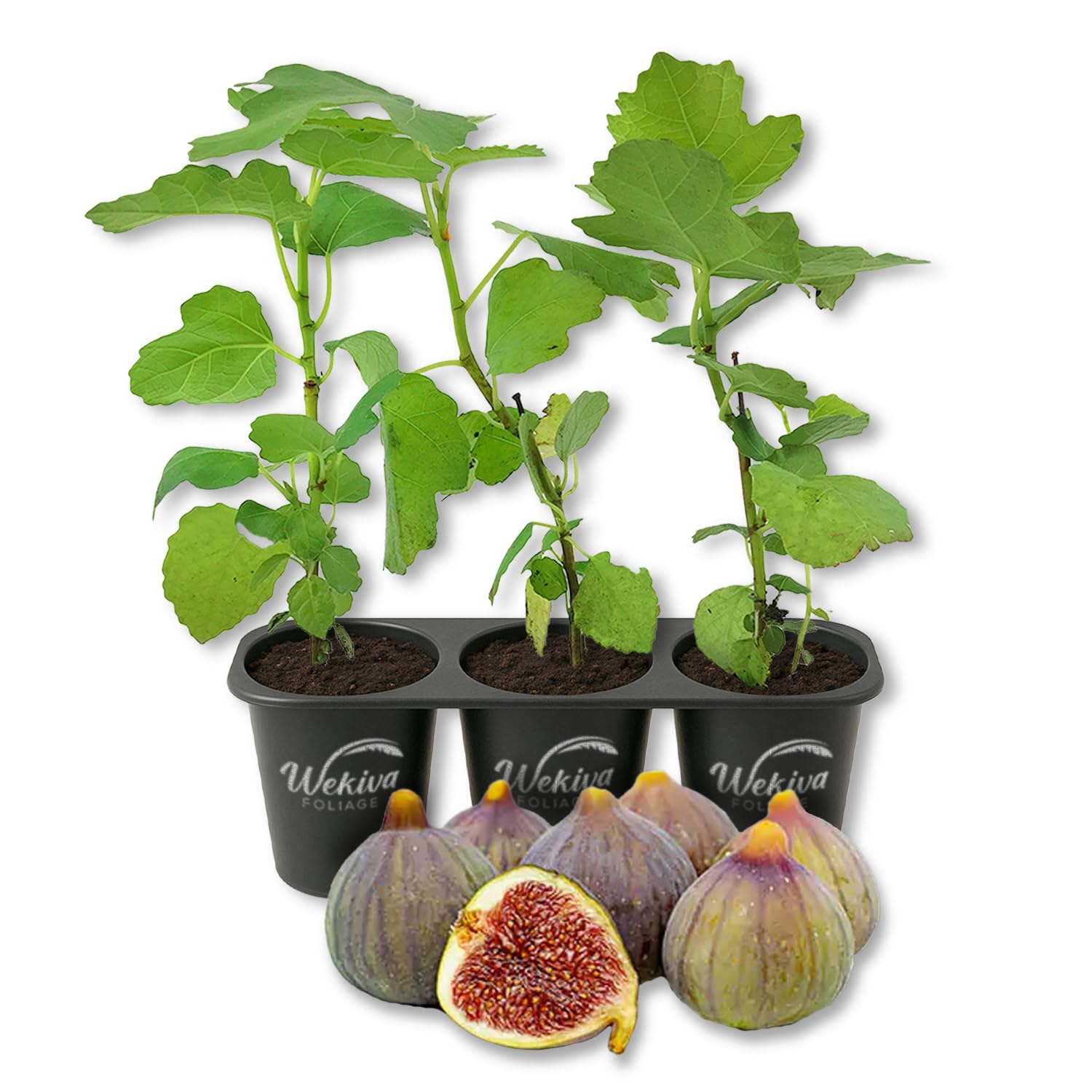
Celeste Fig Tree - 3 Live Starter Plants - Ficus Carica - Edible Fruit Tree for The Patio and Garden
$25.04
by Wekiva Foliage



Physical Characteristics: Distinguished by its bold, deeply lobed leaves that create a lush, sculptural canopy, the Fig Tree is as ornamental as it is productive. Its broad foliage provides dense coverage, casting welcome shade beneath its branches. Over time, its branching pattern becomes wide and graceful, while seasonal fruits develop in clusters along the wood, adding visual appeal throughout the warm growing months. Sunlight Requirements: Fig Trees flourish in bright, direct light and perform best when given at least six to eight hours of full sun daily. Positioning the plant in a south-facing location or a spot with unobstructed exposure ensures optimal energy for leaf production and fruiting. Adequate sun exposure also enhances the tree’s natural form, encouraging even growth and strong branching. Watering Guidelines: Regular watering is key to healthy growth, particularly during active summer months. The soil should remain evenly moist but not soggy, with a rhythm of deep watering followed by partial drying. Once established, the tree can tolerate short periods of dryness, though maintaining consistency in its moisture schedule supports strong roots and steady seasonal development. Soil Preferences: A well-draining soil blend is essential to accommodate the Fig Tree’s expanding root system. Loamy soil enriched with composted materials and moderate sand content promotes airflow and balanced moisture retention. Proper drainage prevents waterlogging while still holding enough hydration to sustain steady leaf and fruit growth, making this balance vital for overall tree performance. Growth Rate and Maintenance: The Fig Tree exhibits a moderate growth habit, making it manageable for a wide variety of planting spaces. With light annual pruning, gardeners can shape the tree for compact patio use or allow it to stretch into a fuller specimen outdoors. This adaptability makes it a flexible choice for containers, raised beds, or open landscapes, offering both control and natural expansion. The Fig Tree (Ficus Carica) is a time-honored fruiting tree admired for both its ornamental appeal and its rewarding harvests. Its broad, lobed leaves create a lush canopy that brings a Mediterranean charm to any setting, whether planted in the ground or grown in a large container. Known for producing plump, sweet figs with tender skin and soft, succulent flesh, this tree provides a striking focal point in the landscape while offering seasonal abundance. Its graceful branching structure and large, textured foliage give it a tropical look that remains attractive year-round, even when the tree naturally drops its leaves in colder climates.
A versatile grower, the Fig Tree adapts well to a wide range of environments and can thrive in warm, temperate zones or be overwintered indoors in cooler regions. It grows at a moderate pace and can be trained for compact patio culture or allowed to expand into a larger specimen in the garden. Beyond its handsome appearance, this tree is valued for its generous fruiting potential, often rewarding growers with multiple harvests per season in favorable conditions. Whether chosen for its beauty, shade, or fruit, the Fig Tree offers an enduring blend of elegance and productivity that makes it a favorite among gardeners and collectors.
A versatile grower, the Fig Tree adapts well to a wide range of environments and can thrive in warm, temperate zones or be overwintered indoors in cooler regions. It grows at a moderate pace and can be trained for compact patio culture or allowed to expand into a larger specimen in the garden. Beyond its handsome appearance, this tree is valued for its generous fruiting potential, often rewarding growers with multiple harvests per season in favorable conditions. Whether chosen for its beauty, shade, or fruit, the Fig Tree offers an enduring blend of elegance and productivity that makes it a favorite among gardeners and collectors.