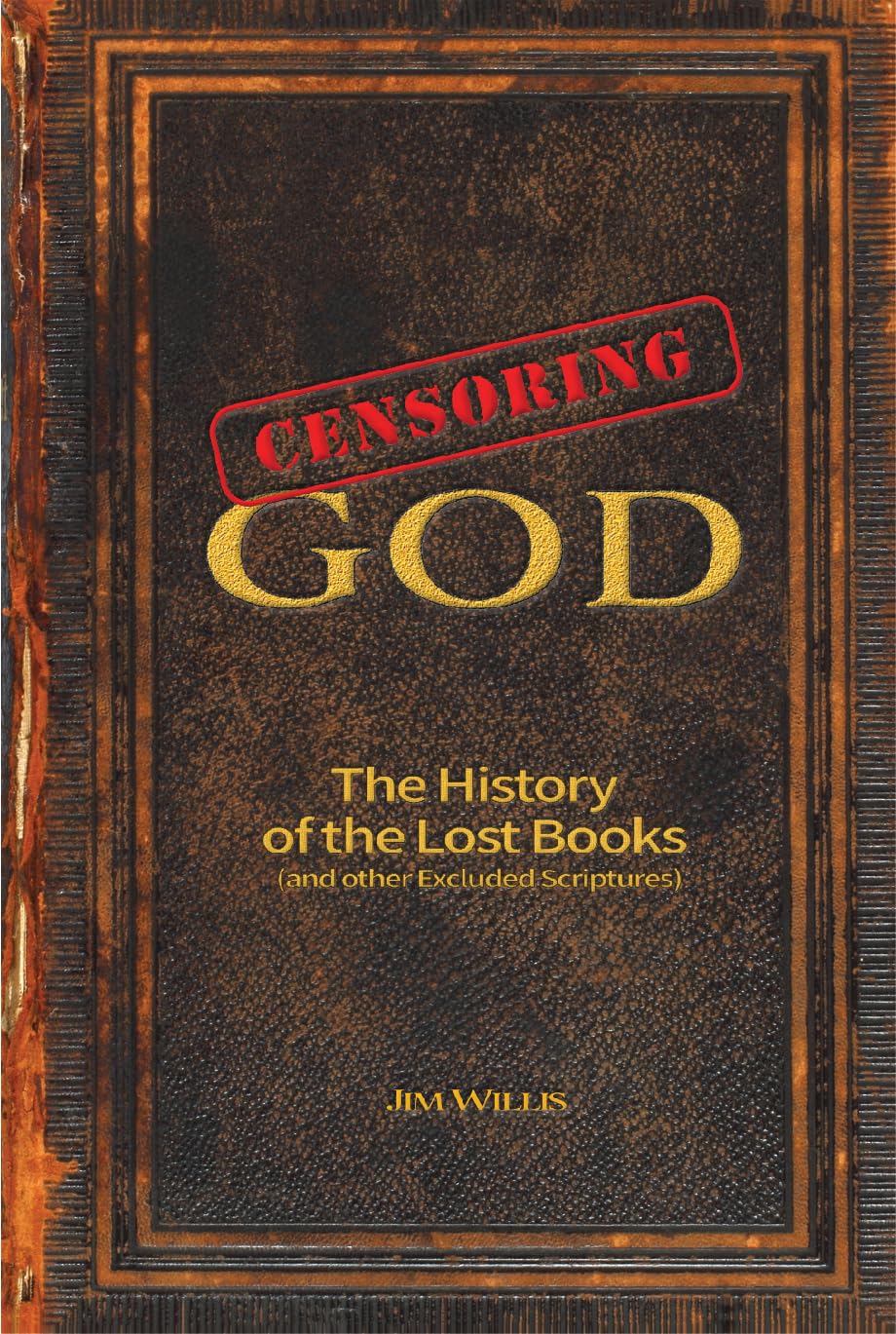
Censoring God: The History of the Lost Books (and other Excluded Scriptures) (The Real Unexplained! Collection)
$11.99
by Jim Willis



Why isn’t the Book of Enoch in the Holy Bible, even though Enoch is referenced multiple times? Why were texts considered sacred by many, excluded by others? Who made the decisions and why? There are more than 50 books―some of which exist only in fragments while others are complete and whole―that are not included in the biblical canon. Why were they discarded? Most Protestant denominations settled on 66 canonical books of the Bible, while there are 73 for Roman Catholics and 78 for Eastern Orthodox adherents. Why are there these differences of opinion? We are often taught that the Bible is, in the words of many religious catechisms, “the infallible word of faith and practice.” In reality, the Bible can also be seen as a political document as much as a spiritual one. Ordained minister and theologian Jim Willis examines the historical, political, and social climates that influenced the redactors and editors of the Bible and other sacred texts in Censoring God: The History of the Lost Books (and other Excluded Scriptures) . In analyzing why texts were censored, he uncovers sometimes surprising biases. He investigates enigmatic hints of Bible codes and ancient wisdom that implies a greater spiritual force might have been at work. Willis explores the importance of the Book of Enoch, its disappearance, and how it was rediscovered in Ethiopia. He analyzes over two dozen excluded texts, such as Jubilees and the Gospel of Thomas, along with the many references to books that we know about from fragments but remain lost. Thought-provoking and provocative, Censoring God scrutinizes how sacred texts might have been used to justify the power of the powerful, including the destruction of sacred writings of conquered indigenous cultures because they did not agree with the finished version of the Bible accepted by the Church establishment. This important book looks at the human failings in interpreting God’s words, and through a compassionate examination it brings a deeper understanding of the power and importance of the lost words. With more than 120 photos and graphics, this tome is richly illustrated. Its helpful bibliography provides sources for further exploration, and an extensive index adds to its usefulness. “ Censoring God is about books that didn’t make it into the Bible: not just the Apocrypha but apocryphal gospels, different versions of the Genesis Creation story and much more.” – Fortean Times Jim Willis earned his master’s degree in theology from Andover Newton Theological School, and he has been an ordained minister for over forty years. He has also taught college courses in comparative religion and cross-cultural studies. His background in theology and education led to his writing more than a dozen books on religion, the apocalypse, cross-cultural spirituality, and the mysteries of the unknown. His books include Visible Ink Press’ Ancient Gods: Lost Histories, Hidden Truths, and the Conspiracy of Silence ; Supernatural Gods: Spiritual Mysteries, Psychic Experiences, and Scientific Truths ; The Religion Book ; Hidden History: Ancient Aliens and the Suppressed Origins of Civilization ; and Lost Civilizations: The Secret Histories and Suppressed Technologies of the Ancients . Willis resides in the woods of South Carolina with his wife, Barbara. Jubilees When someone familiar with the Bible reads Jubilees for the first time, it almost seems as if they are reading the first-draft manuscript of whoever wrote the book of Genesis. Perhaps that’s why it is sometimes called the “Lesser Genesis” or “Little Genesis.” But there are fascinating details here that Genesis skips over. One of the most common questions people ask about the Bible, for instance, is, “If Adam and Eve had only two sons, Cain and Abel, and if Cain killed Abel, whom did he marry in order to go out and build a city so soon after he got kicked out of the house?” Well, Jubilees answers that question. It provides a list of the daughters of Adam and Eve. Apparently, according to an unknown author of long ago, Cain married his sisters. Or at least one of them. Why wasn’t Jubilees included in the Bible? It’s tempting to say it was because of the possibility of condoning incest. But that’s far too easy an explanation. The truth is that although it may have been written only in the first century or so BCE, the material it contains is far older. But aside from snippets of texts that have turned up here and there in Greek and Latin, it disappeared for a long while until a complete copy finally surfaced in, of all places, Ethiopia. The text is written in Ge’ez, the official liturgical language of Ethiopia. So, what we read today is translated from Ge’ez, Greek, Latin, and even some portions in Syriac. Nevertheless, most scholars are convinced it was originally written in Hebrew. If that’s the case, there are real historical discrepancies that might indicate why it was thrown out so early in its history. For one thing, Jews, espe