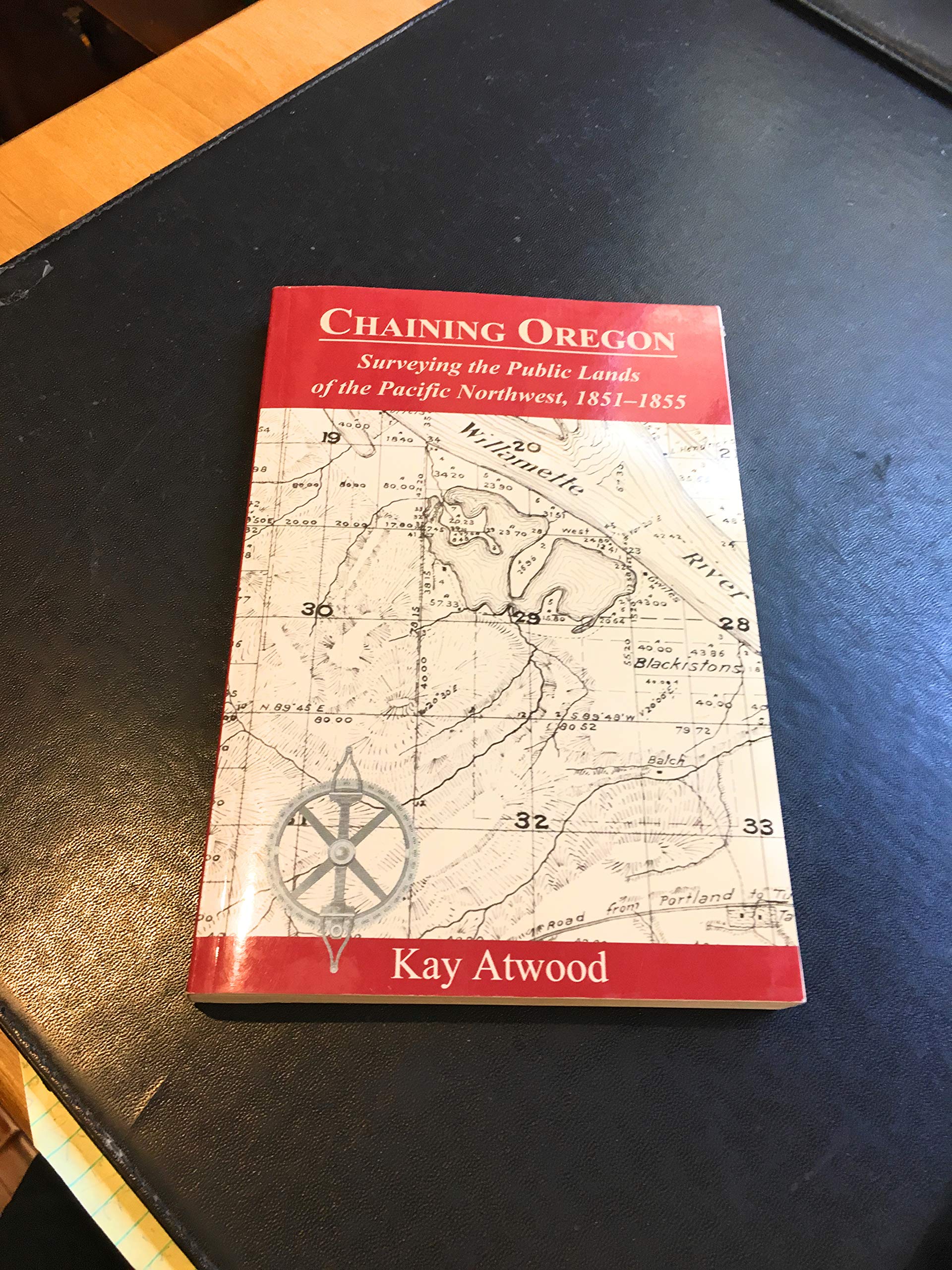



Chaining Oregon is the first comprehensive history of the early federal surveyors of the Pacific Northwest, the work they performed for the US General Land Office between 1851 and 1855, the contribution their efforts made to the westerly movement of American settlement, and the order they imposed on the land of the western valleys and adjacent mountains in what are now the states of Oregon and Washington. When Oregon Territory's Surveyor General John B. Preston and his cadre of engineers arrived in the Oregon region in 1851, there was little precedent for the legal systematic description of private landholding, but when the last of these surveyors left in 1855, much of the western interior valleys of Oregon and Washington territories, from Puget Sound to the Oregon-California border, lay measured in the precise pattern of townships and sections that characterized the US Rectangular Land Survey System. While inescapably having to work and survive within the political and social whorls and eddies of a frontier democracy, the surveyors themselves, traipsing for months at a time across what was to them marginally or completely unsettled land, typically were out of view of the general public and have frequently remained out of view of historians as well. With Chaining Oregon , Kay Atwood has brought the surveyors, their work, and their legacy out of the shadows of history into the deserved light of scholarship. Chaining Oregon is made up of eleven chapters, along with an Introduction and an Epilogue, notes, a bibliography, period photographs, and historic and contemporary maps. The work is both accessible and substantive; its flowing style will appeal to the general reader while its substance will be valued by historians, surveyors, geographers, archeologists, environmental historians, and others with interests in the people, the processes, and places that make up this work. The historic images provide views of the places that the surveyors worked, the tools that they used, and the maps that they made along with the elements of the landscape that they recorded as they went abut their work. "When the U.S. Congress first declared that the fertile lands of the Oregon Territory would be surveyed and donated to settlers with valid claims, the destiny of the Pacific Northwest was set. Author Kay Atwood describes in detail how the rectangular survey of the Territory, prescribed by the 1850 Donation Land Claim Act, became etched on maps and the land itself. Through painstaking research of the first surveyors' hand-written field notes, diaries, and correspondence, she documents the perseverance of those who meticulously measured America's new lands. Atwood's detailed account of the surveyors' personal, political, and physical struggles during the years from 1851 to 1855 fills a significant gap in Oregon's early cultural and environmental history... The surveyors' story was waiting to be told, and Atwood has done it well. ...For those interested in this aspect of Oregon's cultural and environmental history, the book has much to offer. Perhaps its best contributions for landscape reconstructionists, ecologists, and wildlife biologists are its maps and rich bibliography. General readers will find it engaging and informative, while historians will appreciate the archival research contributing to the physical and political conditions of this time... Atwood was exceptionally thorough in her archival research--not just the surveyors' original notes and maps, which are now easily available on the U.S. Bureau of Land Management cadastral survey website, but their letters, administrative correspondence, newspaper articles, personal diaries, and family archives... ...Kay Atwood brought their truth forward to our time--demanding our respect for her work as well as the maps and land boundaries we take for granted today." --Tina K. Schweikert, Oregon State University, Oregon Historical Quarterly, Spring 2009 "...Highly recommended, especially for college library American History shelves." --The Midwest Book Review: Small Press Bookwatch, August, 2008 "...I am suggesting it as reading material to many friends and associates. On behalf of the professional surveyors all over the United States and its territories, we thank you for this well-written and historically based documentary." --Norman C. Caldwell, P. S., Shiawassee County Surveyor (Michigan) "...Highly recommended, especially for college library American History shelves." --The Midwest Book Review: Small Press Bookwatch, August, 2008 "...I am suggesting it as reading material to many friends and associates. On behalf of the professional surveyors all over the United States and its territories, we thank you for this well-written and historically based documentary." --Norman C. Caldwell, P. S., Shiawassee County Surveyor (Michigan) Kay Atwood was born in Bakersfield, California, and lived there until leaving to attend Mills College in 1960. She holds degrees from bo