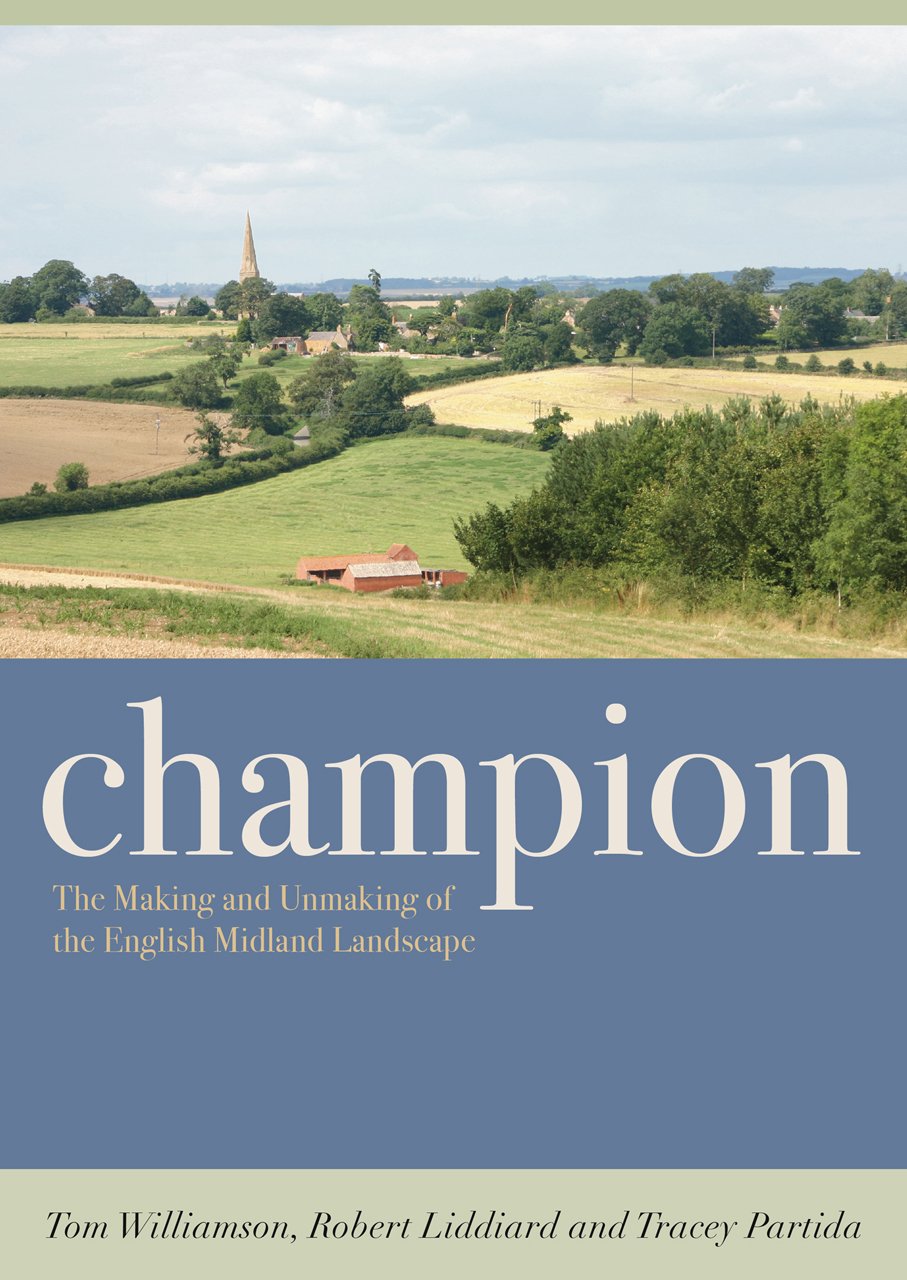
Champion: The Making and Unmaking of the English Midland Landscape
$160.00
by Tom Williamson



Champion: The pattern of nucleated settlements and extensive open fields most commonly found within the landscape of the Midlands. This book presents a radical reinterpretation of the origins of villages and open fields, and their development in the late medieval and post-medieval periods, in the Midland, ‘champion’ areas of England. Most landscape historians believe that villages were created in the middle or later Saxon periods through the ‘nucleation’ of a formerly dispersed pattern of settlement, that many villages were initially laid out as planned, regular settlements and that open fields probably came into existence at the same time. Re-examination and mapping of the data suggests ‘nucleation’ is a myth, ‘village planning’ an illusion and open fields were created, at least in their classic, ‘regular’ forms, only in the eleventh or twelfth centuries. A masterpiece of scholarship…using the best documented part of the ‘champion landscapes’ of the English Midlands, the authors have tackled what is arguably the most contentious topic in landscape history, the origins and development of villages and fields. The subject has been studied by historians, archaeologists and geographers for well over a century. Yet, despite the huge amount of work on it, especially over the last 20 years or so, no consensus has been reached on almost any aspect. This book is a truly great piece of work that would considerably advance the history of villages and fields. Christopher Tayler This book represents the major output of a landscape project that, despite being focused on just one county, is undoubtedly of national significance. Stephen Rippon ... the review quote to use is 'A substantial contribution to the literature ... Few studying the subject will be able to ignore such a book. ― Landscape History This is an important book for all those interested in the development of the English landscape. Clearly written and beautifully illustrated, Champion presents a strong central argument and a raft of stimulating secondary ideas. …This book enriches our understanding of landscape … Medieval Settlement Research Group The work of Williamson, Liddiard, and Partida represents another landmark in the controversy, and our understanding and interpretation of the subject will not be the same again. Mark Bailey, English Historical Review A masterpiece of scholarship?using the best documented part of the ?champion landscapes? of the English Midlands, the authors have tackled what is arguably the most contentious topic in landscape history, the origins and development of villages and fields. The subject has been studied by historians, archaeologists and geographers for well over a century. Yet, despite the huge amount of work on it, especially over the last 20 years or so, no consensus has been reached on almost any aspect. This book is a truly great piece of work that would considerably advance the history of villages and fields. Christopher Tayler This book represents the major output of a landscape project that, despite being focused on just one county, is undoubtedly of national significance. Stephen Rippon ... the review quote to use is 'A substantial contribution to the literature ... Few studying the subject will be able to ignore such a book. This is an important book for all those interested in the development of the English landscape. Clearly written and beautifully illustrated, Champion presents a strong central argument and a raft of stimulating secondary ideas. ?This book enriches our understanding of landscape ? Medieval Settlement Research Group The work of Williamson, Liddiard, and Partida represents another landmark in the controversy, and our understanding and interpretation of the subject will not be the same again. Mark Bailey, English Historical Review https://global.oup.com/academic/product/9780859898683?cc=us Tom Williamson is lecturer in landscape history at the University of East Anglia and has written widely on agricultural history, landscape archaeology and the history of garden design. Robert Liddiard is Professor of History at University of East Anglia. Tracey Partida is a consultant specializing in geographical information systems (GIS) and her PhD is in progress at University of Huddersfield. Used Book in Good Condition