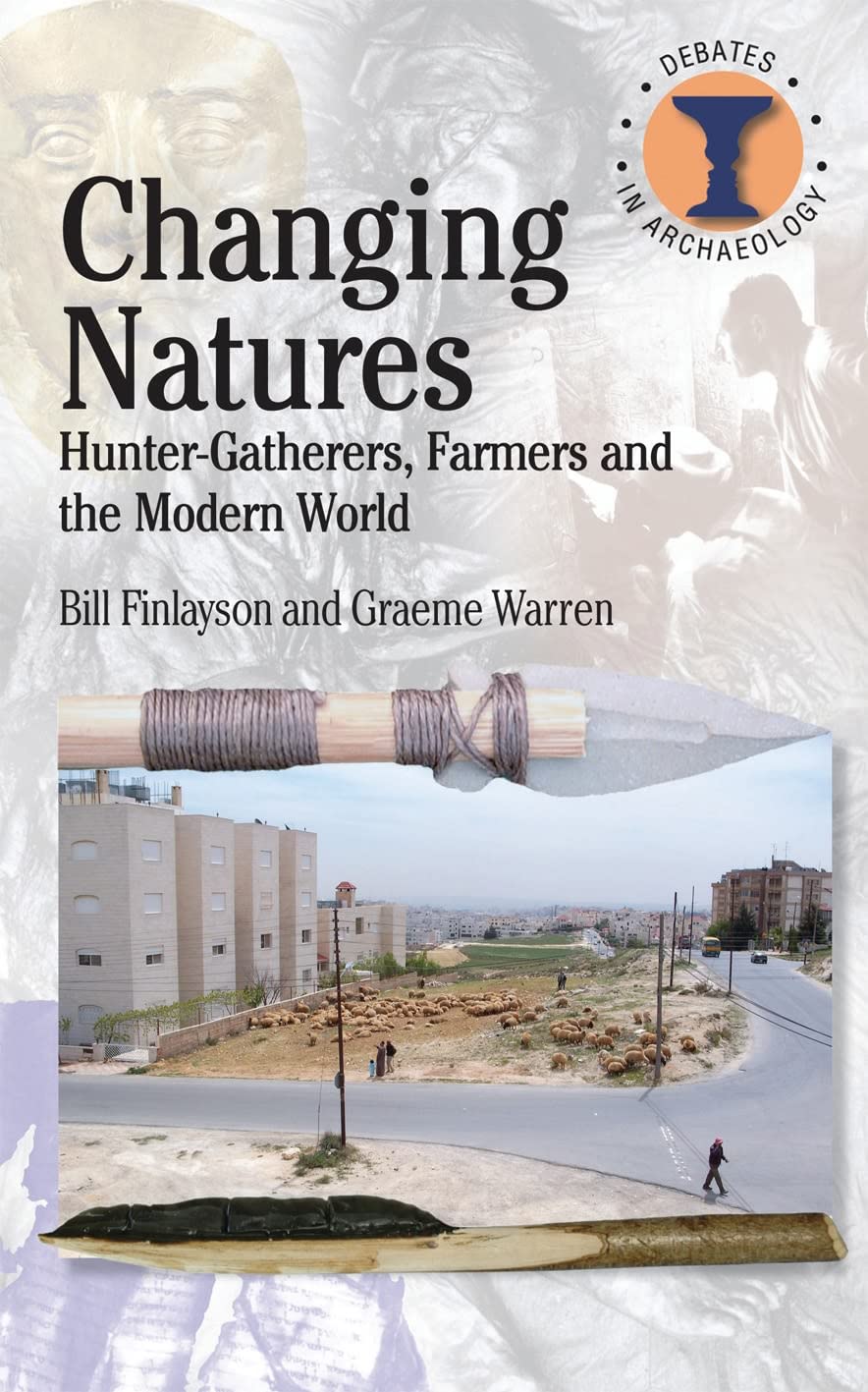
Changing Natures: Hunter-gatherers, First Famers and the Modern World (Debates in Archaeology)
$36.95
by Bill Finlayson



The adoption of agriculture is often described as one of the most fundamental revolutions in human history, the starting point for urbanisation and specialisation. More recently the structure of the Neolithic mind has been proposed as a new cognitive revolution, separating us fundamentally from preceding hunter-gatherers. Without doubting that the so-called Neolithic Revolution was significant, it is important to question how we conceptualise it. This book focuses on two themes central to creating a rounded understanding of the transition: our understandings of hunter-gatherer diversity and change over time, with emphasis on the adoption of agriculture; and the relationships between our understandings of the modern world, and ourselves, and the models we impose on prehistory. The broad geographical perspective adopted here allows important comparisons to be made between two primary study areas, the Near East and Europe. Bill Finlayson is Director, Council for British Research in the Levant, and Visiting Professor, University of Reading, UK. Graeme M. Warren is Lecturer in Archaeology, University College Dublin, Ireland. Richard Hodges OBE is Emeritus President of The American University of Rome, Italy. He is the editor of the Debates in Archaeology series; and his publications include Dark Age Economics (2012), The Anglo-Saxon Achievement (1991), Towns and Trade in the Age of Charlemagne (2000), Goodbye to the Vikings (2006) and (as co-author) Villa to Village (2003), all published by Bloomsbury Academic. He has previously been Director of Archaeology for the Butrint Foundation, Albania, and Director of the Pennsylvania Museum of Archaeology and Anthropology, USA. Used Book in Good Condition