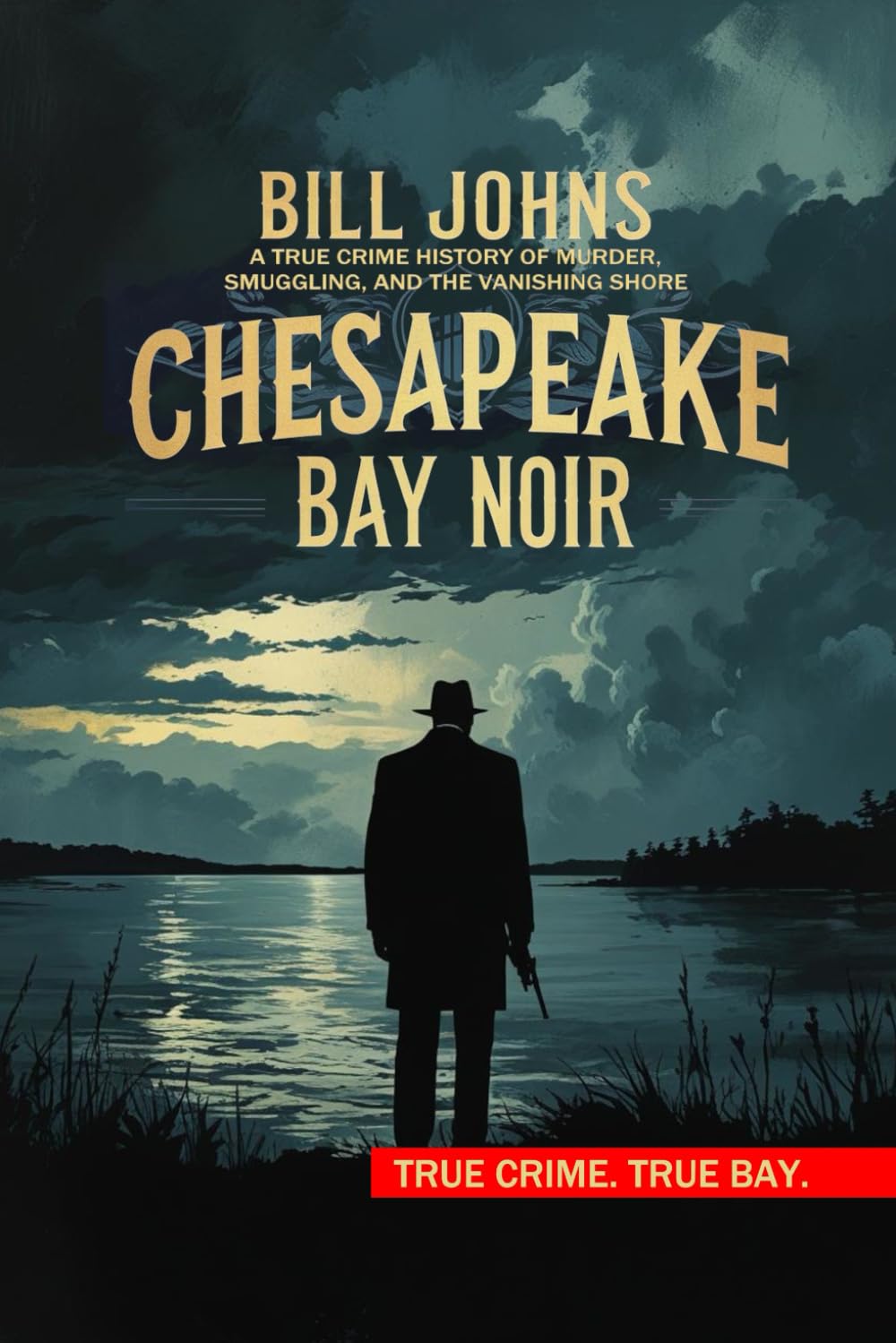
Chesapeake Bay Noir: A True Crime History of Murder, Smuggling, and the Vanishing Shore (Chesapeake Unwritten)
$19.99
by Bill Johns



Discover the forgotten true crime stories of the Chesapeake Bay—where fog conceals more than just the horizon, and silence is the region’s oldest code. In Chesapeake Bay Noir , author Bill Johns blends evocative cultural history with the raw edge of crime to uncover what the tide has tried to erase. From colonial smugglers slipping past crown patrols to modern arsons staged on boats with no past, these stories trace the shoreline's long complicity with crime—told not through police reports but through whispered memory, dockside rumor, and the geography of evasion. The Chesapeake Bay has always been more than a body of water—it is a narrative engine, a margin where official records dissolve and oral histories survive in dialect, caution, and omission. With chapters ranging from the Oyster Wars to narco boats in Tangier Sound, from waterfront contract killings to insurance fires set in disappearing marinas, this book is not a catalog of spectacle, but a reckoning with the Bay’s darker currents. The crimes chronicled here are not outliers. They are patterns—woven into the silt, repeated with the tide, and rarely admitted out loud. Where some regions boast forensic archives, the Chesapeake offers quiet glances toward where a skiff once drifted empty, a pier once caught fire, or a name was last spoken. Rooted in a deep personal connection to the Bay, Johns brings the authority of a native listener—a student of watermen and fog, trained not just to hear stories but to notice what stories avoid. His upbringing on boats named Evanthia and Catherine , his hours spent among Smith Island crabbers and Solomons dockhands, and his encounters in places like Bowen’s and Bunky’s Bait Shop shape a folklore-driven approach to nonfiction. These aren’t just crimes. They’re cultural records. The men and women who speak through these pages do so with the weight of generations, using metaphors older than maps and gestures meant only for those who already understand. Chesapeake Bay Noir is a book of crimes, yes—but also of atmospheres, margins, and silences. It explores the ethics of survival in a place where justice was often informal, where jurisdiction stopped at the edge of the water, and where the community's memory mattered more than the court’s. This is noir not in the urban sense, but in the estuarine—murky, shifting, and compromised by design. You’ll meet smugglers who vanished without trace, sheriffs who enforced justice by negotiation, and dockside informants who told only what the tide wouldn’t reveal. And you’ll travel through a geography of complicity, from the colonial creeks of Poplar Island to the burnt hulls of boats torched just offshore, never seen again. If you’ve ever stood at the edge of a foggy shoreline and wondered what stories lie just beneath the surface—if you’ve ever felt that certain places remember things no court has recorded—then this book is your map. But be warned: the Bay does not give up its secrets easily. You must listen carefully. And sometimes, the answers you find will raise more questions than they resolve. Step into a world where memory drifts, where geography erases, and where the tide carries not just water but truth. This is not merely a history of crime. It is an invitation to witness how silence endures—and to ask, finally, what we owe to the places that remember when people do not.