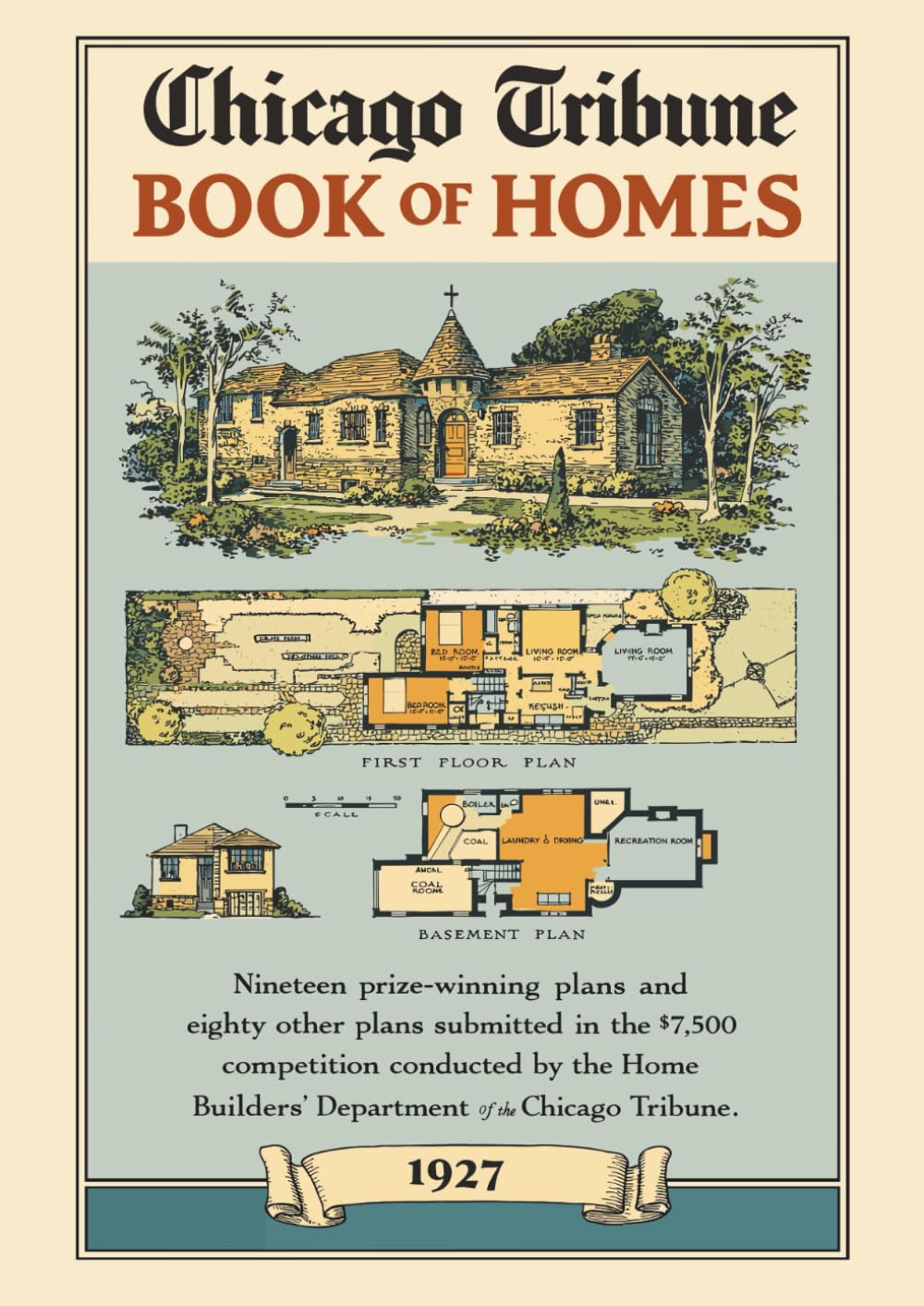



A Rare Window into 1920s American Domestic Architecture The Chicago Tribune Book of Homes (1927) represents a remarkable convergence of civic journalism, architectural excellence, and the democratization of professional design services. Published at the height of the 1920s building boom—when 883,000 new homes were constructed annually—this pattern book brought competition-winning architectural plans to middle-class families across America. What's Inside: This comprehensive architectural pattern book features 100 professionally designed house plans , with particular focus on five-room and six-room homes suited to families of moderate means. The publication showcases nineteen prize-winning designs from a Chicago Tribune architectural competition, supplemented by eighty additional quality plans. Each design includes detailed perspective views, complete floor plans (basement through second floor), elevation drawings, cross-sections, material specifications, and cost estimation guidance—making this a genuinely useful construction document, not merely inspirational material. Architectural Diversity: The designs reflect the stylistic eclecticism of the Jazz Age, drawing from English cottage and Tudor Revival traditions (steeply pitched roofs, prominent chimneys), Colonial Revival symmetry, Spanish Colonial stucco and tile, and Craftsman/Bungalow influences. This wasn't confusion but intentional richness—allowing families to select designs resonating with their cultural backgrounds or aspirational identities. Historical Significance: Published by the Chicago Tribune —the newspaper that hosted the famous 1922 Tribune Tower international design competition—this book extended the Tribune's architectural influence from its own headquarters to ordinary citizens' homes. The competition structure and individual architect credits elevated this beyond typical commercial pattern books, lending civic prestige and professional credibility to every design. Who Should Read This Book: Architectural historians researching 1920s residential design and the pattern book tradition - Preservationists and restoration specialists seeking authentic period details for 1920s homes - Students of American cultural history exploring domestic life during the Jazz Age - Designers and architects interested in early-to-mid-20th-century residential aesthetics - Homeowners restoring 1920s-era properties to period-appropriate standards A Snapshot of American Optimism: This book captures aspirational middle-class life at a unique historical moment—the peak of 1920s prosperity, just before the Great Depression transformed housing markets. When brick veneer construction made quality homes affordable, when automobiles enabled suburban expansion, and when publications like this democratized architectural services previously available only to the wealthy. The Chicago Tribune Book of Homes preserves the design thinking, material culture, and domestic aspirations of an era when ordinary Americans could, for the first time, access professionally designed homes suited to their needs and dreams.