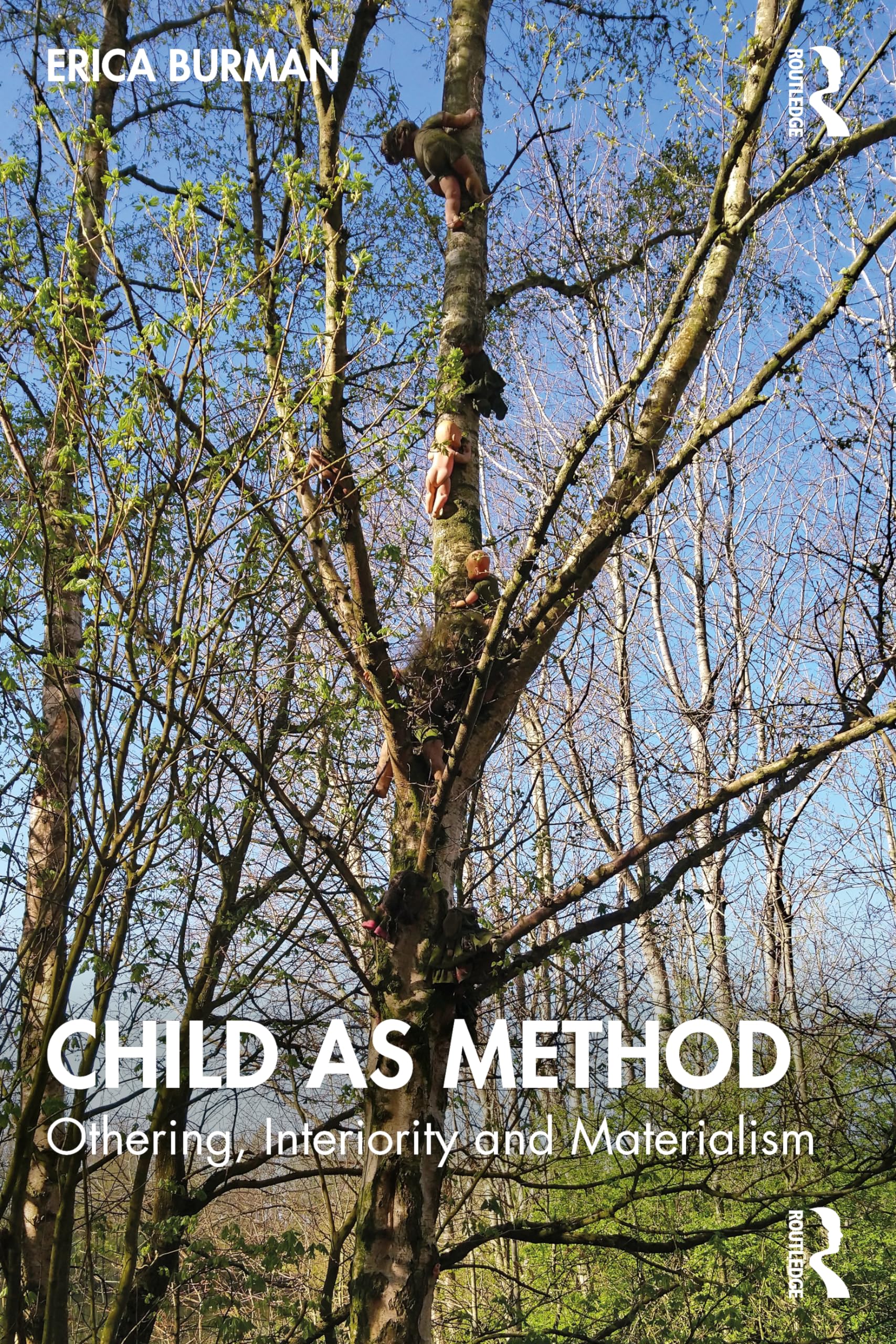



In this vital volume, Erica Burman presents a synthesis of her work developed over the past decade. Building from her path-breaking critiques of developmental psychology to the strategy of plural developments, her more recent work elaborates a new approach, generated from postcolonial, feminist intersectionality and migration studies: Child as method. This text amplifies the Child as method’s success as a distinct way of exploring the alignments of current ‘new materialist’ or posthumanist approaches with supposedly ‘older’ materialist analyses, including Marxist theory, feminist theory, anticolonial approaches and psychoanalytic perspectives. It assumes that childhood is a material practice, both undertaken by children themselves and by those who live and work with them, as well as by those who define politics, policies and popular culture about children. Key chapters interrogate historical legacies arising from the Eurocentric origins of what are now globalised models of modern childhood and evaluate the problems posed by the structure of emotion and affectivity that surrounds children and childhood – by tracing its evolution and indicating some of its unhelpful current effects in recentring white/Majority world subjectivities Child as Method provides key contributions to a range of disciplines and debates including developmental psychology, critical childhood studies, education studies, legal studies, health and social care and literature. The Open Access version of this book, available at http://www.taylorfrancis.com, has been made available under a Creative Commons [Attribution-Non Commercial-No Derivatives (CC BY-NC-ND)] 4.0 license. 'This book is both a culmination and expansion of Erica Burman’s previous, classic critiques of transcendental claims about the child and development: Burman here proposes and demonstrates “Child as Method” as an way of opening up and thinking through a range of naturalised and naturalising claims both overtly and obliquely in relation to the child, allowing a questioning of a hugely impressive range of theoretical, political and ideological assumptions underpinning key concerns of our time, including (post/colonial) power, the environment, gender and sexualities and “new” and “old” materialisms. This book is both for readers interested in truly original thinking about childhood but also anyone interested in truly original thinking about the state of “theory” today.' Karin Lesnik-Oberstein, Professor of Critical Theory and Director of the Graduate Centre for International Research in Childhood: Literature, Culture, Media (CIRCL) and the M(Res.) in Children’s Literature, Department of English Literature, University of Reading, UK 'Erica Burman’s superb analysis proposes childhood as threshold to and landscape for the politics of psycho-social life. With great care, honesty, and acumen, Child as Method juxtaposes critical readings of literature, memoir, historical accounts, and anthropological debates on materialism, political economy, and human-non-human exchange to deftly construct affecting frameworks for anti-racist, feminist investigations of ‘the child.’ Burman’s choice of topics is as expansive as her vocabulary. With nuance, Burman invites readers to consider new analogies that engage childhood as ground zero from which conceptions of gender, race, culture, and sexuality orient and confuse social, political, national, and educational practices. This is a brave and important intervention that works between fissures of political and psychical economies, with keen focus on ethical relations that tie the vicissitudes of childhood studies to contemporary interpretive challenges and political urgencies of care faced today.' Deborah P. Britzman, Distinguished Research Professor Emeritus at York University, Canada, and author of When History Returns: Psychoanalytic Quests for Humane Learning 'This book is powerful and provocative. It lays out in richly textured detail why the analytic framework of “Child as method” is essential for understanding the significance of childhoods for politics and societies. Through careful and subtle diagnoses of established assumptions, Burman’s brilliant work transforms how to think about decolonial, feminist, materialist, and posthumanist theory as well as scholarship across the social sciences and humanities. This is a must-read for anyone concerned about children and their importance for today’s world.' John Wall, Professor of Philosophy, Religion, and Childhood Studies, and Director of the Childism Institute, Rutgers University Camden, USA, author of Give Children the Vote: On Democratizing Democracy (2022) 'Moral panics and conflicts that implicitly say something about our social contract with each other today arguably plays out so emotively in the figure of the child. In Child as Method: Othering, Interiority and Materialism , Burman invites us to consider what markers the material and symbolic figure of the child offers to ou