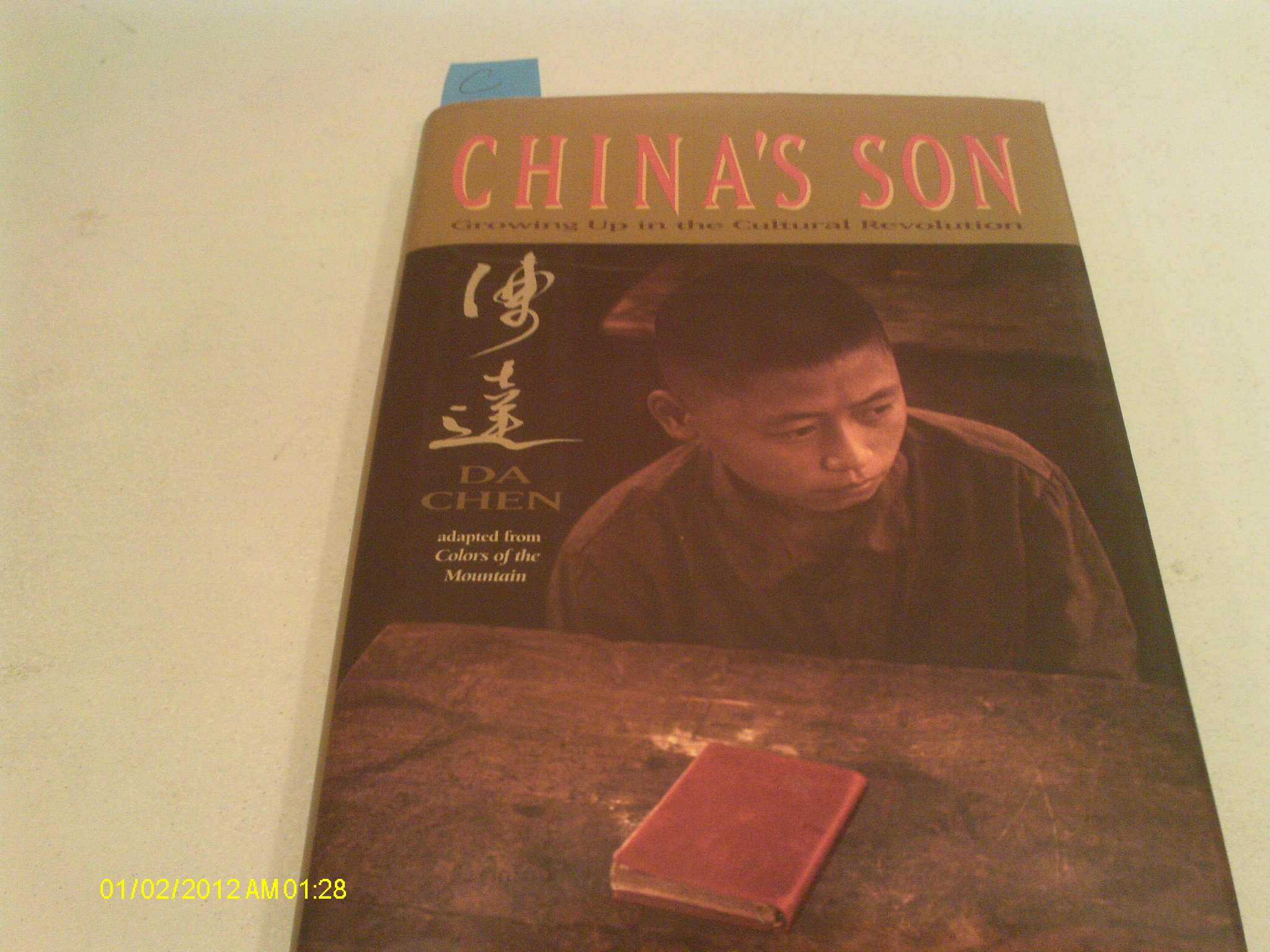



A candid memoir about growing up during the Chinese Cultural Revolution, adapted by the author from his Colors of the Mountain, published by Random House. Da Chen was born in China in 1962. The grandson of a landlord, he and his family were treated as outcasts in Communist China. In school, Da was an excellent student until a teacher told him that, because of his “family’s crimes,” he could never be more than a poor farmer. Feeling his fate was hopeless, Da responded by dropping out and hanging around with a gang. However, after Mao’s death, Da realized that an education and college might be possible, but he had to make up for the time he’d wasted. He began to study–all day and into the night. His entire family rallied to help him succeed, working long hours in the rice fields and going into debt to ensure that Da would have an education. When the final exam results were posted, he had one of the highest scores in the region and had earned a place at the prestigious Beijing University. Now his family’s past would not harm their future. Born in 1962 in southern China, Da Chen had monumental hurdles to overcome before he could even walk or talk. Mao Tse-tung's Cultural Revolution was in full swing, and the descendents of landlords, who were despised, were routinely stripped of their wealth, beaten, humiliated, and sent off to labor camps. Da Chen, the grandson of a landlord, lives several parallel lives: he excels in school but then gives up studying in the face of unbearable pressure and harassment from teachers, students, and administrators. He is a self-taught musician but also a member of a gang of toughs. His siblings, banned from school, work from before sunrise to sunset in the muddy, backbreaking rice fields. But eventually all the dichotomies in Da's life come together, and he makes a break for a new life, with higher education as his foundation for future success. Da Chen's engrossing memoir, adapted for younger readers from his book Colors of the Mountain , paints a colorful, painful, sometimes humorous picture of life during the 1960s and '70s, when formerly privileged Chinese families were at the mercy of Chairman Mao and his ruthless Red Guard soldiers. The writing is at times jerky, other times poetic, and Da Chen's time frame can be confusing. However, this is a book young readers will not soon forget, especially if it's their first glimpse of the Great Proletarian Cultural Revolution. (Ages 12 and older) --Emilie Coulter Gr 7 Up-China's Son is a retelling for young readers of Da Chen's memoir, Colors of the Mountain (Random, 2000), a book easily accessible to older middle and high school students without adaptation. During the Cultural Revolution, even people living in remote villages like Yellow Stone in southern China felt its effects. The author grew up in this small village, and because his grandfather was a landlord, his family was persecuted. Though he was a bright boy and remained in school for most of this period, he was mistreated by students and teachers alike. He eventually began hanging around with a gang of young gamblers and soon abandoned his lessons altogether though he continued to attend school. The Cultural Revolution ran its course, and college became an option. At this point, Da Chen realized how limited his future would be without an education, but by now, he was woefully behind his classmates. He and his older brother began a rigorous course of study to prepare for college entrance exams. Da Chen's admission to Beijing First Foreign Language Institute is the culmination of a powerful but dry coming-of-age story about a young man struggling to figure out just who he is in a society whose very structure is undergoing massive change. China's Son joins Ji-Li Jiang's Red Scarf Girl (HarperCollins, 1997) and Song Nan Zhang's A Little Tiger in the Chinese Night (Tundra, 1993) as part of a growing body of literature about children living during this difficult period of Chinese history. Barbara Scotto, Michael Driscoll School, Brookline, MA Copyright 2001 Cahners Business Information, Inc. Gr. 6-9. This memoir of growing up in southern China in the 1960s is taken from Chen's adult book, Colors of the Mountain (1996). It's about 100 pages shorter, and strong language has been toned down. There is a new historical note, but it does little to clarify the reasons behind the Cultural Revolution. Much of the book details the slights and injustices Chen had to endure, and Chen explains that his family was targeted because they were landlords. But the narrative is occasionally disjointed and confusing, and without a strong context. For instance, readers may wonder how, despite the cruelty and rigor of the regime, Chen manages to spend a fair amount of time goofing off with a rough group of older boys. What's great is an engaging writing style that pulls readers right into the story. Chen struggles to understand how his loving family can be perceived as bad; how he can be so brigh