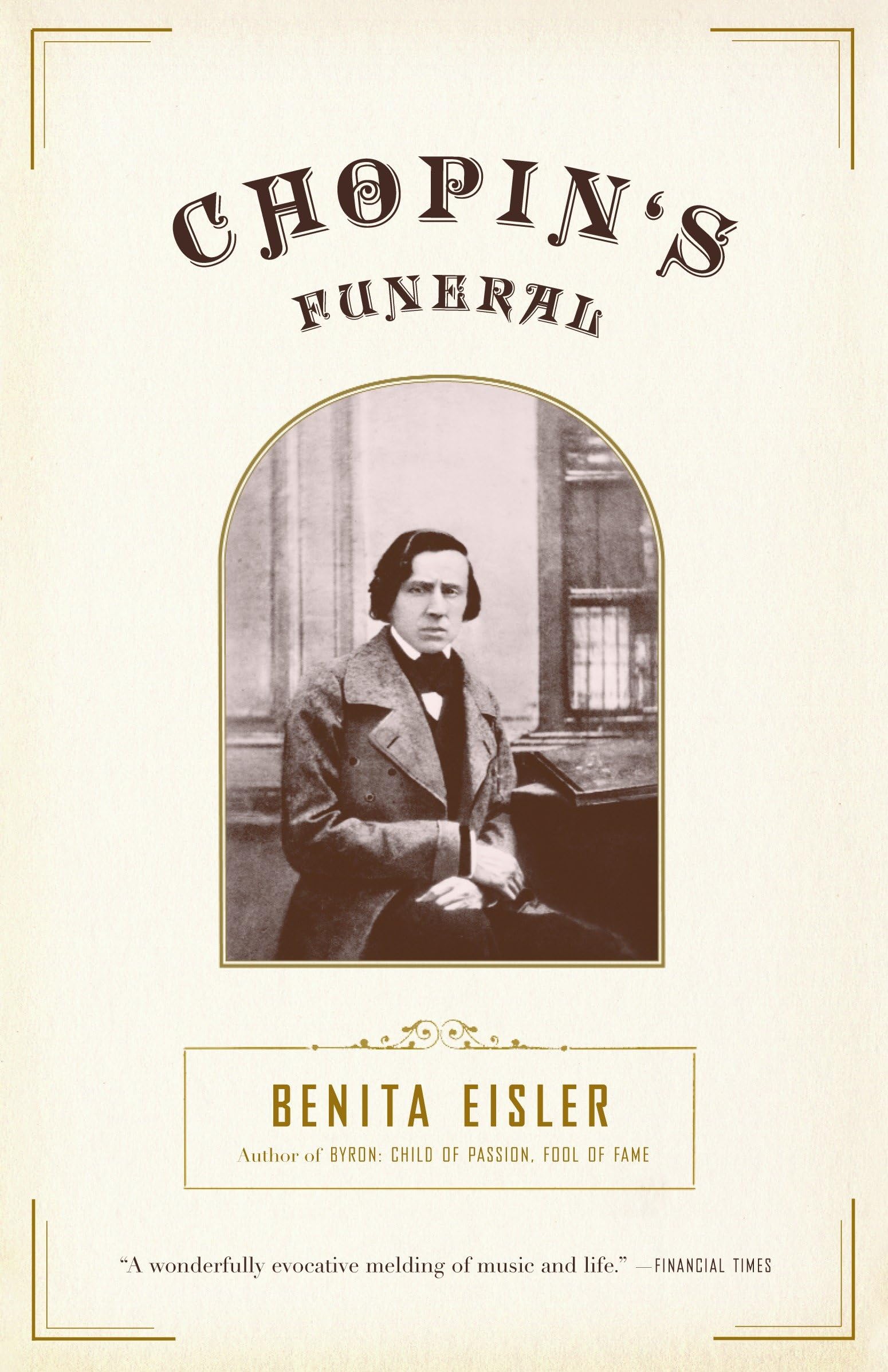



Frédéric Chopin’s reputation as one of the Great Romantics endures, but as Benita Eisler reveals in her elegant and elegiac biography, the man was more complicated than his iconic image. A classicist, conservative, and dandy who relished his conquest of Parisian society, the Polish émigré was for a while blessed with genius, acclaim, and the love of Europe’s most infamous woman writer, George Sand. But by the age of 39, the man whose brilliant compositions had thrilled audiences in the most fashionable salons lay dying of consumption, penniless and abandoned by his lover. In the fall of 1849, his lavish funeral was attended by thousands—but not by George Sand. In this intimate portrait of an embattled man, Eisler tells the story of a turbulent love affair, of pain and loss redeemed by art, and of worlds—both private and public—convulsed by momentous change. “A wonderfully evocative melding of music and life.” — Financial Times “[Written] with poetic insight and admirable brevity, combining analytical skill with that of a novelist.” — New York Times Book Review “A captivating narrative. . . . [Eisler] manages to infuse cultural history with heartbreak.” — New York Sun “Psychologically compelling. . . . Eisler writes beautifully about Chopin’s music.” -- The Christian Science Monitor The author of the acclaimed biography Byron: Child of Passion, Fool of Fame brings to life a closely fo- cused portrait of another great romantic artist, Frédéric Chopin. At twenty-one, Chopin fled Russian-occupied Poland for exile in France. He would never see his native country again. With only two public concerts in as many years, he became a star of Parisian society and a legendary performer at its salons, revered by his great contemporaries Schumann, Liszt, and the painter Eugène Delacroix. Blessed with genius, success, and the love of Europe?s most famous?and infamous?woman novelist, George Sand, Chopin?s years of triumph ended with his expulsion from paradise: less than two decades after his conquest of Paris, the composer lay destitute and dying in the arms of Sand?s estranged daughter, Solange. Chopin?s Funeral is the story of this fatal fall from grace, of an Oedipal tragedy unfolding, and of illness and loss redeemed by the radical breakthrough of the composer?s last style. Richly textured and artfully compressed, Chopin?s Funeral is an intimate close-up of an embattled man, grappling with conflict on all sides: family violence, political passions, and, not least, his own dependency and pride. With consummate skill Benita Eisler tells the story of the artist as exile, of an explosive love affair, and of worlds?private and public?convulsed by momentous change. From the Hardcover edition. Frederic Chopin's reputation as one of the Great Romantics endures, but as Benita Eisler reveals in her elegant and elegiac biography, the man was more complicated than his iconic image. A classicist, conservative, and dandy who relished his conquest of Parisian society, the Polish emigre was for a while blessed with genius, acclaim, and the love of Europe's most infamous woman writer, George Sand. But by the age of 39, the man whose brilliant compositions had thrilled audiences in the most fashionable salons lay dying of consumption, penniless and abandoned by his lover. In the fall of 1849, his lavish funeral was attended by thousands--but not by George Sand. In this intimate portrait of an embattled man, Eisler tells the story of a turbulent love affair, of pain and loss redeemed by art, and of worlds--both private and public--convulsed by momentous change. Benita Eisler is the author of O’Keeffe and Stieglitz: An American Romance and Byron: Child of Passion, Fool of Fame . She lives in New York City. ONE Lacrymosa ies illa: "What weeping on that day" On a sparkling Paris morning, Tuesday, October 30, 1849, crowds poured into the square in front of the Church of the Madeleine. The occasion was the funeral of Frédéric Chopin, and for it, the entire facade of the great neoclassical temple had been draped in swags of black velvet centered with a cartouche bearing the silver-embroidered initials FC. Admission was by invitation only: Between three thousand and four thousand had received the black-bordered cards. Observing the square with its crush of carriages, the liveried grooms and sleek horses, the throngs converging on the porch, Hector Berlioz reported that "the whole of artistic and aristocratic Paris was there." But another who surveyed the crowd, the music critic for the Times of London, suspected that of the four thousand who filled the pews, a large number had been admitted just before noon, strangers to the dead man, mere bystanders even, "many of whom, perhaps, had never heard of him." If death is a mirror of life, Chopin's funeral reflected all the disjunctions of his brief existence. The most private of artists, his genius was mourned in a public event worthy of a head of state. Canonized