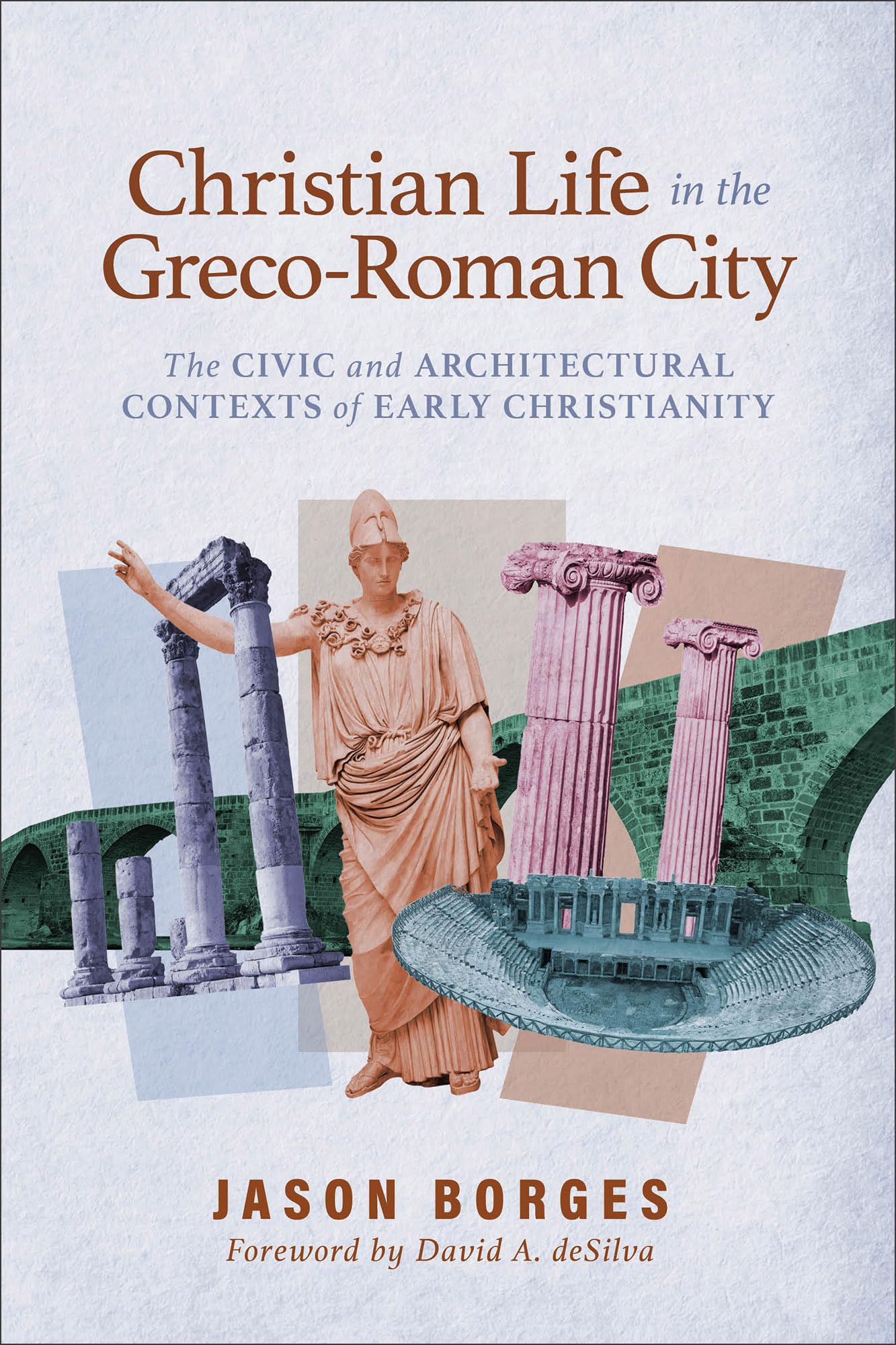
Christian Life in the Greco-Roman City: The Civic and Architectural Contexts of Early Christianity (Understanding New Testament Backgrounds Through
$27.99
by Jason Borges



Explore the Archaeological Evidence Behind Early Christianity in Ancient Roman Cities In this fascinating book, Jason Borges offers an original and engaging analysis of life in the Greco-Roman city as seen through its public spaces: ● agoras ● temples ● baths ● prisons ● theaters ● libraries ● cemeteries Drawing on primary sources and archeological evidence, he explores how these seven key civic structures shaped the lives, writings, and theology of early Christians. From lively agoras to magnificent temples and luxurious baths, civic buildings were more than just physical settings for everyday life; they were spaces imbued with social and political meaning. Informed by the author's research and his experience leading tours to ancient sites, this book explores how early Christians interacted with and understood their urban environment. The result is fresh insight into the cultural background of the New Testament and other early Christian writings. Each chapter explains a specific structure, provides an extant example, and discusses its significance for reading the New Testament. The book includes black and white images, informative diagrams, and a foreword by David A. deSilva. This helpful supplementary textbook illuminates the architectural and civic background of the New Testament and early Christianity so that readers can better understand the writings and theology of early Christians. "The early Christian social environment comes alive in a wholly fresh way" This book offers an original and engaging analysis of life in the Greco-Roman city as seen through its public spaces. Drawing on primary sources and archeological evidence, Jason Borges explores how seven key civic structures--the agora, temple, bath, prison, theater, library, and cemetery--shaped the lives, writings, and theology of early Christians. "It is a brilliant idea for Jason Borges to conduct his readers on a tour of civic structures in the ancient city to explain not just their architecture but their function and social significance in everyday life. The early Christian social environment comes alive in a wholly fresh way. I thoroughly recommend this book--well-researched, clearly written, and excellently illustrated." -- John M. G. Barclay , Durham University (emeritus) "Blending his academic training as a church historian with his personal experiences living in Asia Minor, Borges shows us the New Testament world through its buildings. He goes beyond general facts, describing how these structures played a role in early Christianity and offering insights for specific biblical texts. With each chapter--whether discussing temples, prisons, or theaters--Borges becomes your perfect personal tour guide." -- E. Randolph Richards , Palm Beach Atlantic University (emeritus); coauthor of Misreading Scripture with Western Eyes "A well-researched, amply documented, and user-friendly book that helps the modern reader easily imagine what life was like for the earliest Christians living in the Greco-Roman world. Numerous New Testament texts become instantly more understandable in light of Borges's captivating introductions to such key first-century institutions as the city, agora (ancient town square), temple, bath, prison, theater, library, and necropolis (cemetery). A valuable resource for layperson and scholar alike!" -- Jeffrey A. D. Weima , Calvin Theological Seminary Jason Borges (PhD, Durham University) is associate director of the Asia Minor Research Center in Antalya, Turkey. He has traveled extensively to biblical sites throughout the Mediterranean world, conducting research and leading study tours, and has lived in Turkey since 2017.