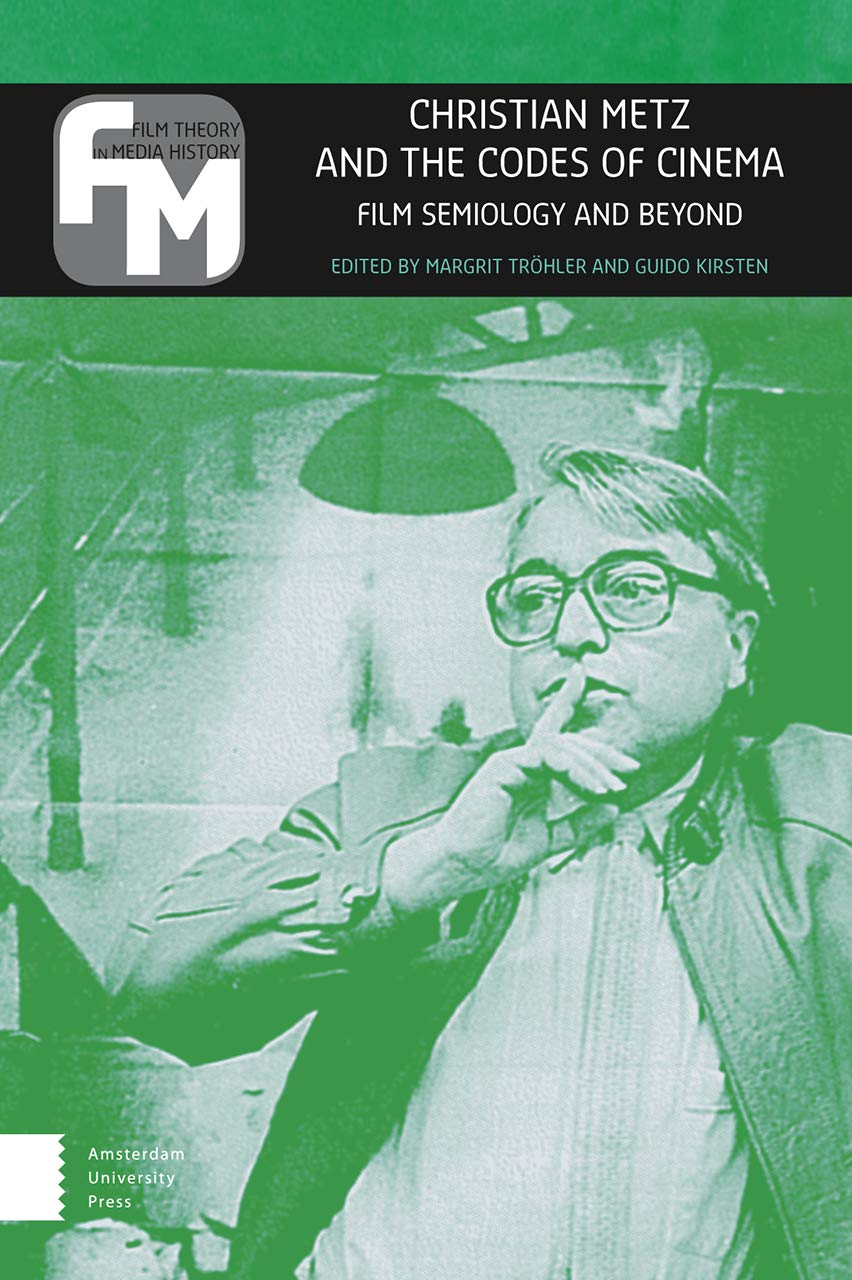
Christian Metz and the Codes of Cinema: Film Semiology and Beyond (Film Theory in Media History)
$89.99
by Margrit Tröhler



A pioneering figure in film studies, Christian Metz proposed countless new concepts for reflecting on cinema, rooted in his phenomenological structuralism. He also played a key role in establishing film studies as a scholarly discipline, making major contributions to its institutionalisation in universities worldwide. This book brings together a stellar roster of contributors to present a close analysis of Metz's writings, their theoretical and epistemological positions, and their ongoing influence today. This book brings together a stellar roster of contributors to present a close analysis of Metz's writings, their theoretical and epistemological positions, and their ongoing influence today. This book offers an extensive, encompassing reflection and analysis of Metz's oeuvre in English [...] The complexity and thematic variety of contributions grants this book the potential of becoming core reading both for film students and film theorists.- Marija Weste, Linkoping University, Historical Journal of Film, Radio and Television , Vol. 39, No. 3, 2019, The book is conceived both as an homage and as a contribution to current film and media theoretical debates. [=] The readers are offered a material-rich and detailed discussion of Metz including documents from his archived inheritance. The book indicates links and possibilities of application of his reflections to contemporary audiovisual productions of meaning and it offers readers not yet familiar with Metz an introduction to his thinking on a high theoretical and analytical level.- Philipp Blum (Zürich), MEDIENwissenschaft 03/2019 A pioneering figure in film studies, Christian Metz proposed countless new concepts for reflecting on cinema, rooted in his phenomenological structuralism. He also played a key role in establishing film studies as a scholarly discipline, making major contributions to its institutionalisation in universities worldwide. This book brings together a stellar roster of contributors to present a close analysis of Metz's writings, their theoretical and epistemological positions, and their ongoing influence today. Margrit Tröhler is a professor in the Department of Film Studies at the University of Zurich.