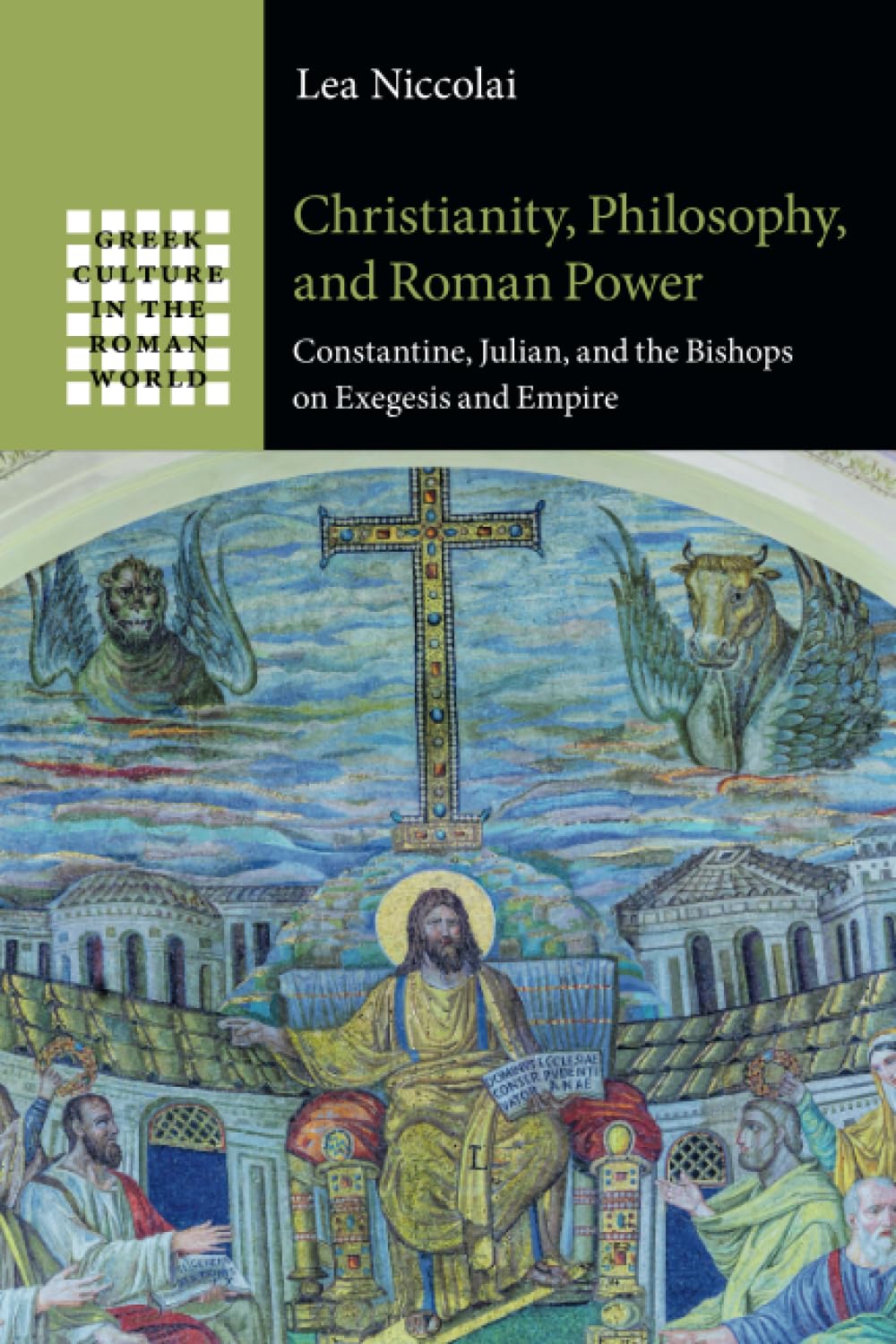
Christianity, Philosophy, and Roman Power (Greek Culture in the Roman World)
$32.99
by Lea Niccolai



This book rethinks the Christianisation of the late Roman empire as a crisis of knowledge, pointing to competitive cultural re-assessment as a major driving force in the making of the Constantinian and post-Constantinian state. Emperor Julian's writings are re-assessed as key to accessing the rise and consolidation of a Christian politics of interpretation that relied on exegesis as a self-legitimising device to secure control over Roman history via claims to Christianity's control of paideia. This reconstruction infuses Julian's reaction with contextual significance. His literary and political project emerges as a response to contemporary reconfigurations of Christian hermeneutics as controlling the meaning of Rome's culture and history. At the same time, understanding Julian as a participant in a larger debate re-qualifies all fourth-century political and episcopal discourse as a long knock-on effect reacting to the imperial mobilisation of Christian debates over the link between power and culture. ‘Christianity, Philosophy, and Roman Power is filled with insight and fresh thinking that breathes new life into the study of kingship literature and the way Christians successfully adapted classical values to their own uses.’ Harold Drake, Sehepunkte Rethinks Rome's Christianisation as a crisis of knowledge propelled by Constantine, with Emperor Julian as its key interpreter and catalyst. LEA NICCOLAI is Assistant Professor in Late Antique History at the University of Cambridge and a Fellow of Trinity College.