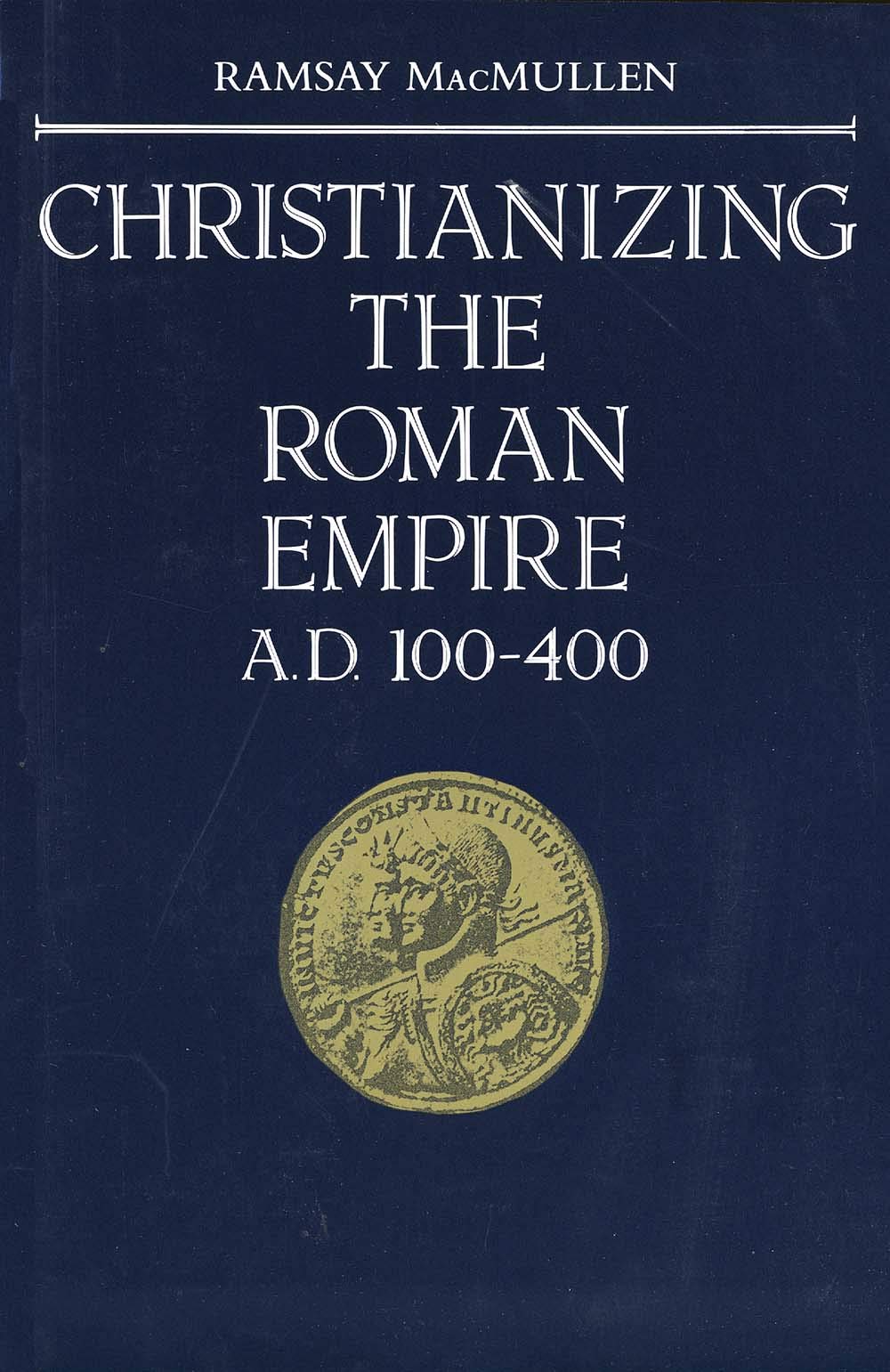



“Fresh and vigorous . . . an admirable survey of some major aspects of the history [of the early Christian church].”—Robert M. Grant, New York Times Book Review “One of the most outstanding historians of the ancient world.”—Anthony A. Barrett, The Historian How did the early Christian church manage to win its dominant place in the Roman world? In his newest book, an eminent historian of ancient Rome examines this question from a secular—rather than an ecclesiastical—viewpoint. Ramsay MacMullen’s provocative conclusion is that mass conversions to Christianity were based more on the appeal of miracle or the opportunity for worldly advantages than simply on a “rising tide of Christian piety.” “Written in a fresh and vigorous style, . . . [this book] offers an admirable survey of some major aspects of the history [of the early Christian church].”—Robert M. Grant, New York Times Book Review “Gently provocative. . . . MacMullen has written an instructive and enjoyable book on a great theme.”—Henry Chadwick, Times Literary Supplement “[An] illuminating and insightful survey. . . . MacMullen’s erudition is vast and his judgement careful.”— Journal of Religion “It is without any doubt one of the most readable books in the field of Church History. MacMullen consciously writes as a historian, and not as a theologian.”—Jakob J. Petuchowski, Jewish Spectator “One of the most outstanding historians of the ancient world.”—Anthony A. Barrett, The Historian “Provocative to the Christian religious scholar and the nonreligious historian alike. . . . MacMullen’s style is lucid, and the story of a period with its own innate interest is narrated with compelling feeling. . . . An important book, and highly recommended for the general reader of history as well as the Christian who wonders how the ‘Jesus movement’ came, by Constantine’s time, to be the church we know.”— Choice “A carefully argued and well-written study.”—Jackson P. Hershbell, Library Journal “MacMullen’s account of this vast cultural shift allows the specialist or general reader to move beyond the tenacious assumptions of Christian apologetics or secular reductionism.”—J. Rebecca Lyman, America “[This] fine and very readable study offers an effective challenge to the stereotyped image of pagans in the Roman period.”—Robert A. Wild, S.J., Biblical Archaeological Review “The book is vintage MacMullen. . . . Well-written and well-informed with numerous interesting anecdotes and perceptive observations. . . . A valuable contribution to this fascinating and important problem.”—Jan Bremmer, De Novis Libris Iudicia “[MacMullen’s] books provide a much-needed perspective on Graeco-Roman religiosity as a social and cultural phenomenon. . . . Historians of religion and classical historians alike will find this book not only provocative but indispensable to their understanding of a complex period and a complex subject.”—Gail Paterson Corrington, Classical World “This is a highly readable book. . . . All students of early Christianity will learn from it, but, perhaps more importantly, they will provoked by it to further analyses of the Church’s success.”—D. F. Wright, History “A readable and provocative work. . . . MacMullen has placed scholars lastingly in his debt.”—W. H. C. Frend, Downside Review “Ramsay MacMullen has done a superb job showing us how a religious majority became a religious minority and a religious minority a religious majority. The explanation helps us enhance our understanding of this important epoch in world history; it in no way changes the impact or development of that historical event for which there was additionally ample religious and theological foundation.”—John E. Rexine, Greek Orthodoxy Theological Review How did the early Christian church manage to win its dominant place in the Roman world? In his newest book, an eminent historian of ancient Rome examines this question from a secular-rather than an ecclesiastical-viewpoint. MacMullen's provocative conclusion is that mass conversions to Christianity were based more on the appeal of miracle or the opportunity for worldly advantages then simply on a 'rising tide of Christian piety.' Ramsay MacMullen (1928–2022), a widely regarded historian of Rome and early Christianity, was Dunham Professor Emeritus of History and Classics at Yale University. His many books include Corruption and the Decline of Rome ; Roman Social Relations, 50 B.C. to A.D. 284 ; Christianity and Paganism in the Fourth to Eighth Centuries ; Romanization in the Time of Augustus ; and Voting About God in Early Church Councils .