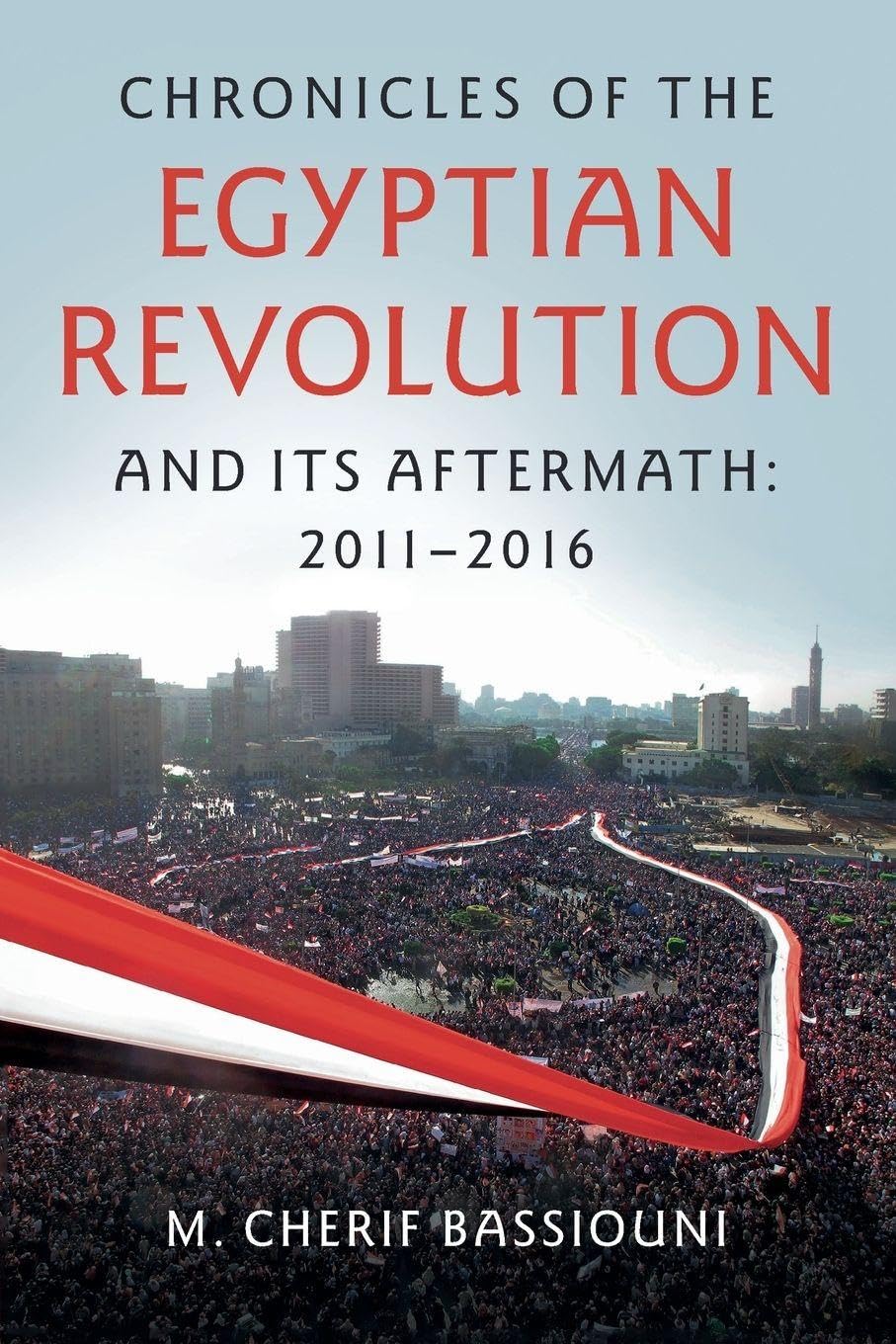
Chronicles of the Egyptian Revolution and its Aftermath: 2011–2016
$29.96
by M. Cherif Bassiouni



This book is about the Egyptian people's 2011 Revolution for freedom, justice, and human dignity, and its aftermath. The Revolution succeeded in toppling the authoritarian Mubarak regime in less than three weeks. It was then co-opted by the Muslim Brotherhood through Egypt's first free and fair elections in 2012, which was in turn crushed in 2013 by a popularly supported military regime whose practices of repression negatively impacted the justice system and human rights. The problems facing the country and its people are daunting, particularly economic, demographic, and social pressures. The contextual analysis of these and other historic and contemporary issues give the reader a comprehensive understanding of what has occurred in the last five years and an insight into where the country is heading. Even though the Revolution has been suppressed and the promise of democracy shunted aside, the majority of the Egyptian people continue to hope for the unachieved dreams of social justice, human dignity, and freedom. Egypt's geopolitical importance makes it indispensable to the stability of the Middle East, and thus important to the world. 'This book provides a coherent account and analysis of the genesis, time-line and main events of the Egyptian Revolution.' Khalifa A. Alfadhel, Asian Affairs '… Bassiouni weaves the historical account with detailed footnotes, excerpts from speeches, passages from legislation, and reporting by local and international media to provide a fuller picture of the Egyptian revolution and its consequences.' Middle East Journal This book analyses Egypt's 2011 Revolution, highlighting the struggle for freedom, justice, and human dignity in the face of economic and social problems, and an on-going military regime. M. Cherif Bassiouni was born and raised in Egypt and comes from a prominent family; his father was an Ambassador and his grandfather led Egypt's first nationalist revolution in Southern Egypt in 1919 and then became President of the Senate. M. Cherif Bassiouni taught International Law at DePaul University for 45 years. He is the author of 28 books and 266 academic articles and was, in 1999, a nominee for the Nobel Peace Prize for his contribution to the establishment of the International Criminal Court at the Hague. He served as chairman of the Security Council Commission of Inquiry into War Crimes and Genocide in the former Yugoslavia, and he chaired four further UN and national Commissions of Inquiry in Afghanistan, Iraq, Libya and Bahrain. He has received ten honorary degrees and sixteen medals from eight countries.